Does Purple Teeth Whitening Trend Really Work? Or Is It Just a Scam?
A purple-coloured toothpaste, serum, gel or whitening product promising a brighter smile can look almost too good to be true. The idea is simple: apply purple to yellow-looking teeth and somehow make them appear whiter. But does purple teeth whitening actually whiten the teeth, or is it simply another viral beauty trend?
The answer is a little more nuanced than a simple yes or no.
Purple whitening products are based on the principle of colour correction. Purple and yellow sit opposite each other on the colour wheel, so a purple pigment can temporarily counteract yellow tones and make teeth appear brighter. This is different from conventional teeth whitening, which uses bleaching agents to chemically break down certain stains and lighten the actual tooth colour.
That distinction matters.
If a purple whitening serum makes the teeth look brighter immediately, it doesn’t necessarily mean that the underlying stains have been removed. The effect may be temporary and largely visual. At the same time, calling every purple whitening product a “scam” would also be inaccurate. Colour-correcting products can have a cosmetic effect, but their ability to provide genuine, lasting tooth whitening is not comparable to professionally supervised whitening treatments.
So, does purple teeth whitening really work? It can create a short-term colour-correcting effect, particularly on teeth that look slightly yellow. But for people looking for significant or lasting whitening, it is important to understand what these products can and cannot do.
What Is Purple Teeth Whitening?
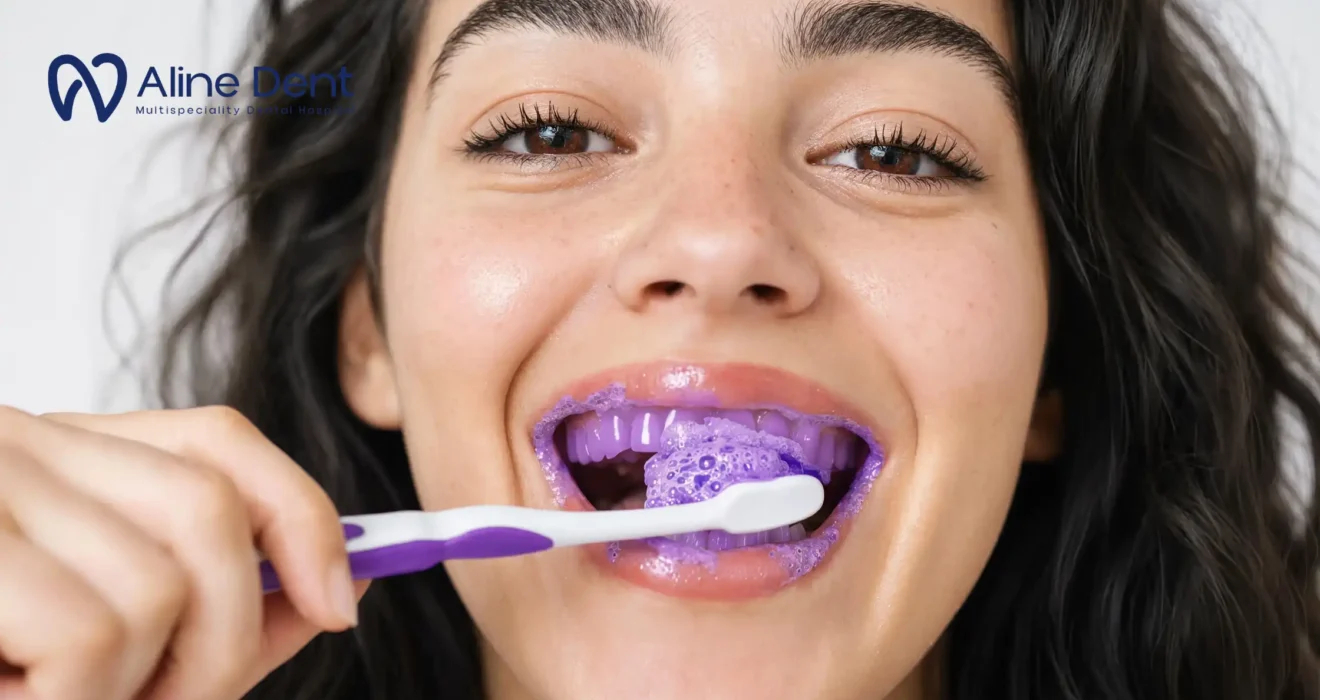
Purple teeth whitening refers to oral-care products that contain purple or violet pigments designed to visually neutralise yellow tones on the teeth.
You may find this concept in products such as:
- Purple toothpaste
- Purple whitening serum
- Purple whitening gel
- Purple teeth-whitening foam
- Colour-correcting whitening treatments
- Purple whitening strips or similar cosmetic products
These products became particularly popular through social media, where videos often show a noticeable difference immediately after application.
However, the visible change needs to be interpreted correctly.
The purple pigment doesn’t necessarily remove the stain responsible for the yellow colour. Instead, it can alter how the colour is perceived.
Think of it as applying a colour filter rather than repainting the surface.
The distinction between colour correction and actual tooth bleaching is one of the most important things to understand before purchasing a purple whitening product.
How Does Purple Teeth Whitening Work?
The science behind the trend is based on colour theory.
Purple is positioned opposite yellow on the traditional colour wheel. When a purple pigment is placed over a surface with yellow tones, it can visually reduce the appearance of that yellow colour.
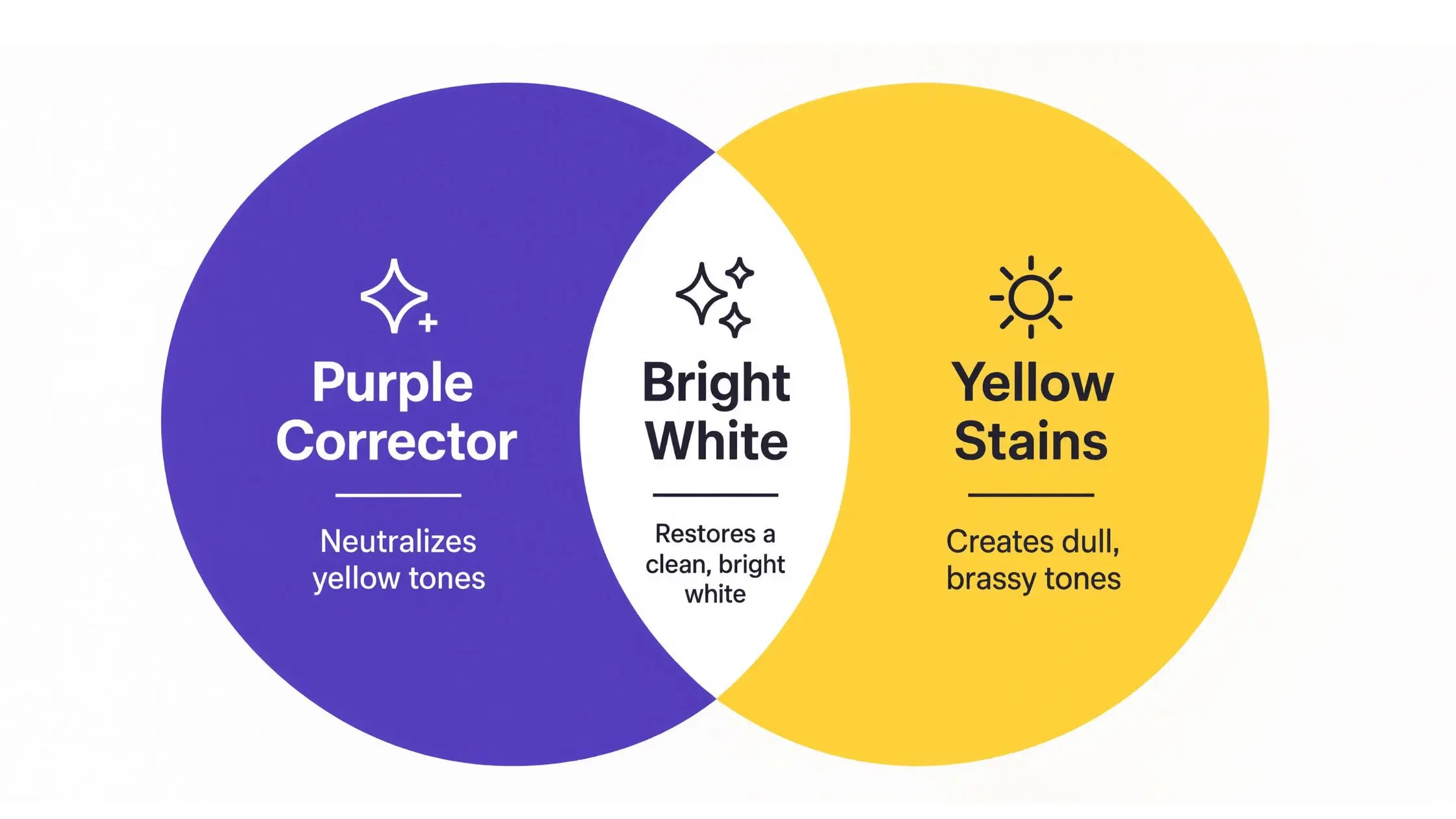
The same basic concept is used in cosmetics. Purple shampoos, for example, are commonly used to visually counteract unwanted yellow or brassy tones in blonde or lightened hair.
Purple oral-care products attempt to apply a similar colour-correction principle to teeth.
When the pigment is left on the tooth surface, it may temporarily alter the appearance of the enamel and make the smile look brighter.
But there is an important limitation:
Changing the appearance of a tooth is not the same as changing its underlying shade.
Once the pigment is removed, the original colour may become visible again.
Does Purple Teeth Whitening Actually Whiten Your Teeth?
This depends on what is meant by “whiten.”
– If whitening means making teeth look temporarily brighter, purple colour correction may achieve that.
– If whitening means removing stains or chemically lightening the natural tooth colour, the answer is different.
Traditional professional teeth whitening generally relies on peroxide-based bleaching agents. These agents can penetrate the tooth structure and break down certain compounds responsible for discoloration.
Purple pigments don’t work in the same way.
They primarily provide a temporary optical effect.
Therefore, purple whitening can be useful as a cosmetic quick fix, but it should not necessarily be considered a replacement for evidence-based professional teeth whitening.
Purple Whitening vs Professional Teeth Whitening
Understanding the difference between these two approaches can prevent unrealistic expectations.
| Purple Teeth Whitening | Professional Teeth Whitening |
| Primarily uses colour correction | Uses whitening agents to lighten certain stains |
| Creates a temporary visual effect | Can produce a more substantial whitening result |
| Usually intended for cosmetic use | Performed or supervised by dental professionals |
| Does not necessarily change natural tooth colour | Can chemically break down certain discoloration |
| Results may fade quickly | Results can last longer with appropriate care |
| Convenient for occasional use | Requires professional assessment and treatment |
| Effect varies depending on the product | Treatment can be customised according to the patient |
Neither approach should be confused with simply removing plaque or tartar.
If yellow teeth are caused by plaque accumulation or tartar, a purple product won’t solve the underlying problem.
Why Do Teeth Become Yellow in the First Place?
Before deciding whether purple teeth whitening is worth trying, it helps to understand why teeth may look yellow.
Not all yellow teeth are caused by poor oral hygiene.
Natural Tooth Colour
Healthy teeth aren’t naturally pure white.
The enamel covering the teeth is partially translucent. Underneath it is dentin, which has a naturally yellowish colour.
As enamel becomes thinner with age, the underlying dentin may become more visible.
This means a person can have healthy teeth and still have a naturally warm or slightly yellow shade.
Food and Drinks
Certain foods and beverages can contribute to surface staining over time.
Common examples include:
- Coffee
- Tea
- Cola and other dark beverages
- Certain sauces
- Berries
- Coloured foods
The effect depends on frequency, oral hygiene, and individual factors.
Tobacco Use
Smoking and other forms of tobacco use can cause noticeable tooth staining.
Tobacco-related discoloration can become difficult to remove through ordinary brushing alone.
Plaque and Tartar
Poor plaque control can make teeth appear dull or yellow.
When plaque hardens into tartar, it cannot be safely removed with an ordinary toothbrush.
A professional dental cleaning may be necessary.
Age-Related Changes
Over time, enamel naturally undergoes wear and may become thinner.
This can make the yellowish dentin underneath more visible.
Certain Medications and Dental Conditions
Some types of tooth discoloration can be associated with medications, excessive fluoride exposure during tooth development, trauma, or changes within the tooth itself.
These stains may not respond to ordinary whitening products.
Can Purple Toothpaste Remove Yellow Stains?
Purple toothpaste may help the teeth look temporarily brighter, but its ability to remove deeper discoloration is limited.
Some purple toothpastes also contain conventional toothpaste ingredients designed to clean surface deposits or provide mild stain removal.
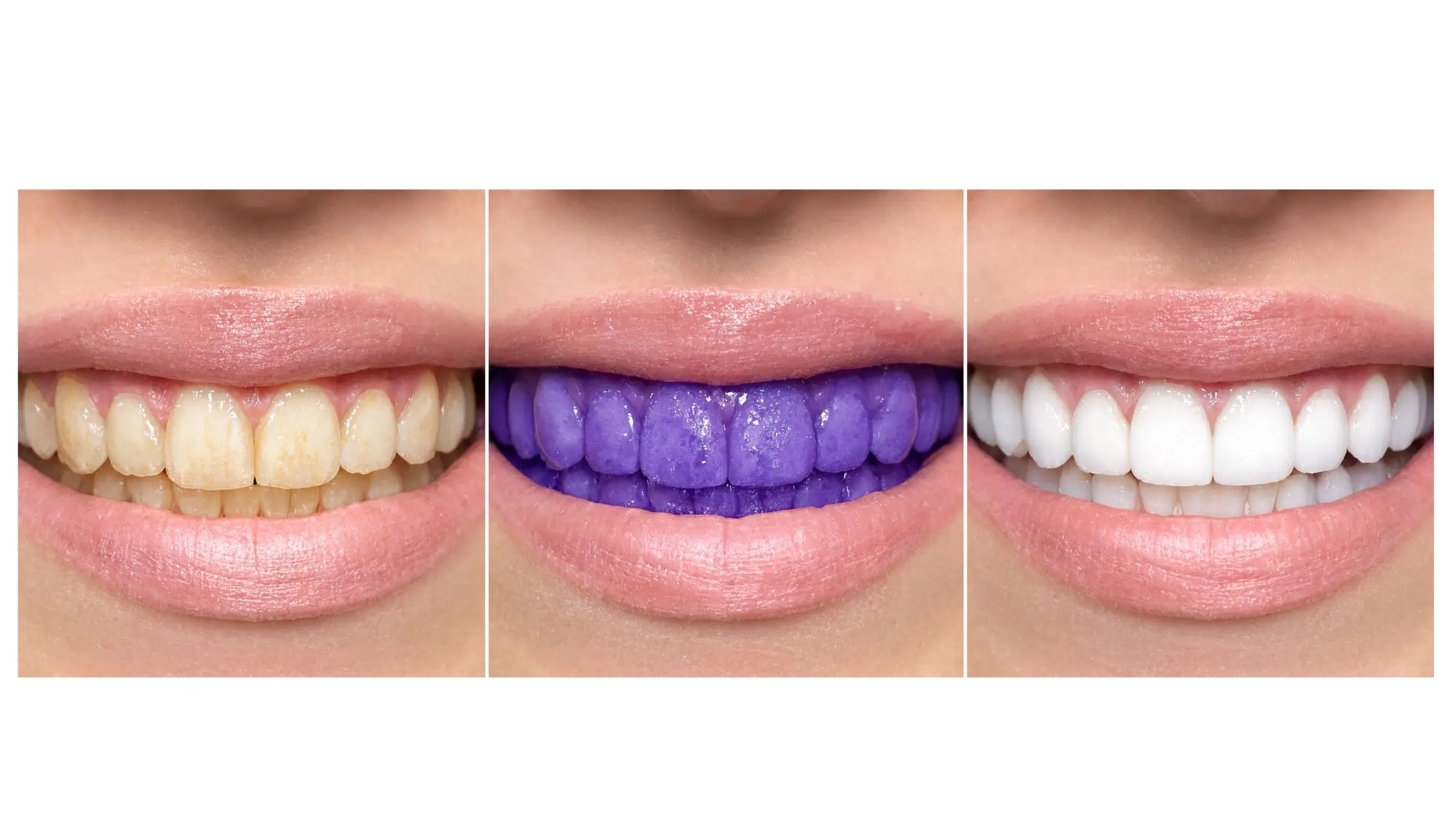
In that situation, any improvement may come from a combination of:
- Removing surface debris
- Removing some extrinsic stains
- Colour correction from the purple pigment
However, toothpaste generally cannot dramatically change the natural colour of teeth.
If the yellow appearance comes from the natural dentin showing through enamel, simply brushing with purple toothpaste won’t fundamentally change that colour.
How Long Does Purple Whitening Last?
The colour-correcting effect is generally temporary.
How long the effect lasts depends on the product, how it is used and the individual’s teeth.
Because the purple pigment isn’t necessarily changing the intrinsic colour of the tooth, the visual effect can disappear after eating, drinking, brushing or simply over time.
This is why some people notice that their teeth look brighter immediately after using a purple whitening product but return to their usual appearance later.
It is better to think of purple whitening as an appearance-enhancing product rather than a permanent whitening treatment.
Is Purple Teeth Whitening Safe?
The safety of a purple whitening product depends largely on its ingredients and how it is used.
A reputable oral-care product used according to its instructions is different from applying an unknown cosmetic substance to the teeth.
Before using a product, check:
- The ingredient list
- Manufacturer information
- Usage instructions
- Whether the product is specifically intended for oral use
- Whether it has appropriate regulatory clearance for the market where it is sold
People with sensitive teeth, gum problems, enamel defects, existing dental restorations or untreated dental problems should be particularly cautious about experimenting with whitening products.
If a product causes persistent irritation, burning, gum discomfort or significant tooth sensitivity, discontinue use and consult a dentist.
Can Purple Whitening Damage Tooth Enamel?
Purple pigment itself is not the same thing as a bleaching agent, so the colour alone isn’t what determines whether a product can damage teeth.
The formulation matters.
Some whitening products may contain abrasive ingredients or other active ingredients that can contribute to sensitivity or enamel wear if used excessively or incorrectly.
This is one reason it is important not to assume that a product is completely harmless simply because it is marketed as a natural, gentle or viral whitening solution.
More whitening is not necessarily better whitening.
Following the manufacturer’s directions and maintaining good dental care are important.
Does Purple Whitening Work on All Types of Stains?
No.
The type of discoloration matters.
Surface Stains
These are stains on the outer surface of the teeth. They may respond to good brushing, professional cleaning and certain whitening products.
Purple colour correction may temporarily make some of these stains look less noticeable.
Internal Tooth Discoloration
Discoloration originating within the tooth is more difficult to address with surface products.
Examples can include certain medication-related stains, trauma-related discoloration and changes associated with tooth development.
These cases may require professional evaluation and a different cosmetic treatment.
Tartar-Related Yellowing
If the yellow material is hardened tartar, purple whitening isn’t the solution.
Tartar requires professional removal.
This is particularly important because attempting to scrape tartar off at home with sharp instruments can injure the gums or damage the tooth surface.
What Is the Difference Between Whitening and Stain Removal?
These terms are often used interchangeably, but they don’t mean exactly the same thing.
Stain removal involves removing deposits or discoloration from the surface of the tooth.Whitening generally refers to making teeth appear lighter than their existing colour, often through a bleaching process.
For example, professional dental cleaning can remove tartar and surface stains, making teeth look cleaner and brighter without actually bleaching the natural tooth colour.
A bleaching treatment, on the other hand, can change the shade of natural tooth structure.
Purple colour correction is different again because it can alter the appearance of colour without necessarily removing the underlying discoloration.
What Should You Do If Your Teeth Are Yellow?
The first step shouldn’t necessarily be buying a whitening product.
Start by figuring out why your teeth look yellow.
A dentist can check for:
- Plaque accumulation
- Tartar
- Tooth decay
- Gum disease
- Enamel wear
- Existing fillings or crowns
- Intrinsic discoloration
- Natural tooth shade
If the teeth are healthy and the issue is mainly cosmetic, your dentist can discuss suitable whitening options.
Depending on your needs, this may include professional teeth whitening, home whitening under dental supervision, cleaning and polishing, or other cosmetic dental treatments.
Professional Teeth Whitening: When Is It a Better Choice?
Professional whitening can be a more appropriate option when someone wants a noticeable and longer-lasting improvement in tooth colour.
A dental professional can first determine whether whitening is appropriate.
This is important because whitening isn’t suitable for every situation.
For example, crowns, veneers and fillings don’t whiten in the same way as natural teeth. If visible restorations are present, whitening may create a difference in colour between the natural teeth and restorations.
A dentist can identify these issues before treatment and help set realistic expectations.
Can You Use Purple Whitening Before an Event?
This is where purple colour correction may have a practical role.
If someone wants their smile to appear slightly brighter for a short period before:
- A wedding
- A photograph
- A party
- A presentation
- A special event
a colour-correcting product may provide a temporary cosmetic effect.
However, it shouldn’t be mistaken for a treatment that permanently changes tooth colour.
If the goal is significant whitening for an important event, professional whitening should ideally be planned in advance rather than relying on a last-minute viral product.
Natural Ways to Maintain a Brighter Smile
You don’t need an elaborate whitening routine to keep your teeth looking clean and healthy.
Focus on the basics:
Brush Twice a Day
Use a fluoride toothpaste and brush thoroughly twice a day without applying excessive pressure.
Clean Between the Teeth
Floss or use another interdental cleaning method recommended by your dentist.
Limit Frequent Staining Drinks
If coffee or tea is consumed frequently, reducing exposure can help minimise future staining.
Don’t Smoke or Use Tobacco
Tobacco can contribute significantly to tooth discoloration as well as oral health problems.
Attend Regular Dental Checkups
Professional examinations allow dental problems to be identified before they become more serious.
Get Professional Cleaning When Necessary
If tartar has accumulated, a dental professional can remove it safely.
These habits are much more important for long-term oral health than any viral whitening trend.
Purple Teeth Whitening: Scam or Legit?
Calling purple teeth whitening a complete scam isn’t quite accurate.
There is a legitimate concept behind the trend: optical colour correction.
Purple pigments can make yellowish tones appear less prominent, which can temporarily make teeth look brighter.
The problem is the way some products are marketed.
A temporary colour-correcting effect can be presented in advertising as though the product has permanently whitened the teeth. Those are two very different claims.
So the most accurate conclusion is:
Purple whitening isn’t necessarily a scam, but it isn’t a substitute for professional teeth whitening either.
It can provide a temporary visual improvement, while professionally supervised whitening is designed to produce a more meaningful change in the colour of natural teeth.
Aline Dent: Professional Guidance for a Whiter, Healthier Smile
At Aline Dent Multispeciality Dental Hospital, teeth whitening and other cosmetic dental concerns can be assessed as part of a comprehensive dental examination.
Rather than treating tooth colour in isolation, a dentist can first determine whether the discoloration is caused by surface stains, tartar, natural tooth colour, enamel changes or another dental issue.
This matters because the right approach depends on the cause.
For someone considering purple teeth whitening, professional guidance can help determine whether a colour-correcting product is likely to meet their expectations or whether another treatment would be more appropriate.
Aline Dent provides a range of dental services, including preventive care, cosmetic dentistry, restorative treatments, orthodontics and other specialised dental procedures. The team can assess the condition of the teeth and gums before recommending a suitable cosmetic treatment.
Professional evaluation is particularly important when yellowing is accompanied by:
- Tooth sensitivity
- Bleeding gums
- Persistent bad breath
- Tooth pain
- Visible tartar
- Dark patches
- Enamel damage
- Discolouration affecting only one tooth
Whitening should ideally begin with healthy teeth and gums. Treating underlying dental problems first can help achieve a safer and more predictable cosmetic result.
For patients who want a brighter smile, the goal shouldn’t simply be “the whitest teeth possible.” A good cosmetic dental plan considers the person’s natural tooth shade, facial appearance, existing restorations and overall oral health.
Final Verdict: Should You Try Purple Teeth Whitening?
Purple teeth whitening can work, but not necessarily in the way social media advertisements suggest.
The purple pigment can temporarily counteract yellow tones and create the appearance of a brighter smile. That optical effect is real, but it shouldn’t be confused with permanently removing stains or bleaching the teeth.
If the aim is a quick cosmetic boost before an occasion, a suitable colour-correcting product may have a place in an oral-care routine.
If the goal is genuinely whiter teeth, especially when there is noticeable discoloration, professional assessment is a better starting point. Your dentist can identify the reason behind the colour change and determine whether cleaning, professional whitening or another cosmetic treatment is appropriate.
Ultimately, a brighter smile isn’t just about finding the latest whitening trend. Healthy teeth, healthy gums and an appropriate treatment plan should come first.
Frequently Asked Questions About Purple Teeth Whitening
Does purple teeth whitening actually work?
Purple whitening can temporarily make yellowish teeth appear brighter through colour correction. However, it generally doesn’t work like professional bleaching and may not permanently change the natural colour of the teeth.
Is purple toothpaste better than normal toothpaste?
Not necessarily. Purple toothpaste may provide a temporary colour-correcting effect, but it doesn’t automatically provide better cleaning or better oral health than a good fluoride toothpaste.
Can purple toothpaste whiten yellow teeth?
It may make yellow tones appear less noticeable temporarily. However, it cannot necessarily remove deeper stains or significantly change the natural colour of the tooth.
How often can purple teeth whitening be used?
This depends on the specific product and its instructions. It is important not to use whitening products more frequently than recommended, particularly if they cause sensitivity or gum irritation.
Is purple whitening safe for sensitive teeth?
It depends on the ingredients in the particular product. People with sensitive teeth should check the formulation carefully and speak with a dentist if they experience discomfort.
Does purple whitening remove tartar?
No. Purple whitening products cannot safely remove hardened tartar. Tartar should be professionally removed by a dentist or dental hygienist.
Can purple whitening remove coffee stains?
It may temporarily make the appearance of yellowish staining less noticeable, while some formulations may also help with surface stains. Significant or persistent coffee staining may require professional cleaning or whitening.
How long does purple teeth whitening last?
The colour-correcting effect is generally temporary. The duration varies depending on the product and individual circumstances, and the teeth can return to their normal appearance after the pigment wears away.
Can I use purple whitening instead of professional teeth whitening?
If the goal is significant and longer-lasting whitening, purple colour correction should not be considered an equivalent replacement for professional whitening. A dentist can recommend an appropriate whitening method based on the condition and colour of your teeth.
Is professional teeth whitening permanent?
No whitening treatment permanently prevents teeth from changing colour. New stains can develop over time, and the natural ageing process continues. Good oral hygiene and limiting staining habits can help maintain the result.