

How Long Does a Root Canal Take? A Complete Guide to the Procedure, Treatment Time, and Recovery
Many people feel anxious as soon as they hear the words “root canal.” This reaction is often driven by the belief that the treatment will be painful. For others, it’s the uncertainty of the procedure itself. One of the most common questions dentists hear from patients before scheduling treatment is: How long does a root canal take?
It’s a reasonable concern. Whether you’re planning treatment around work, school, or family commitments, knowing how much time to set aside can make the experience far less stressful.
The good news is that modern root canal treatment is typically much quicker and more comfortable than most people expect. Thanks to advances in dental technology, digital imaging, and improved treatment techniques, many root canals can now be completed efficiently while preserving your natural tooth.
However, there isn’t a single answer that applies to every patient. The duration of a root canal depends on several factors, including the tooth being treated, the severity of the infection, the number of root canals inside the tooth, and whether additional procedures are required.
In this guide, we’ll explain how long does a root canal take, what happens during the procedure, what can affect treatment time, and why choosing an experienced dental team plays an important role in achieving successful results.
Root Canal Treatment: A Quick Intro
A root canal treatment (RCT) is a procedure performed to save a tooth that has become infected or severely inflamed.
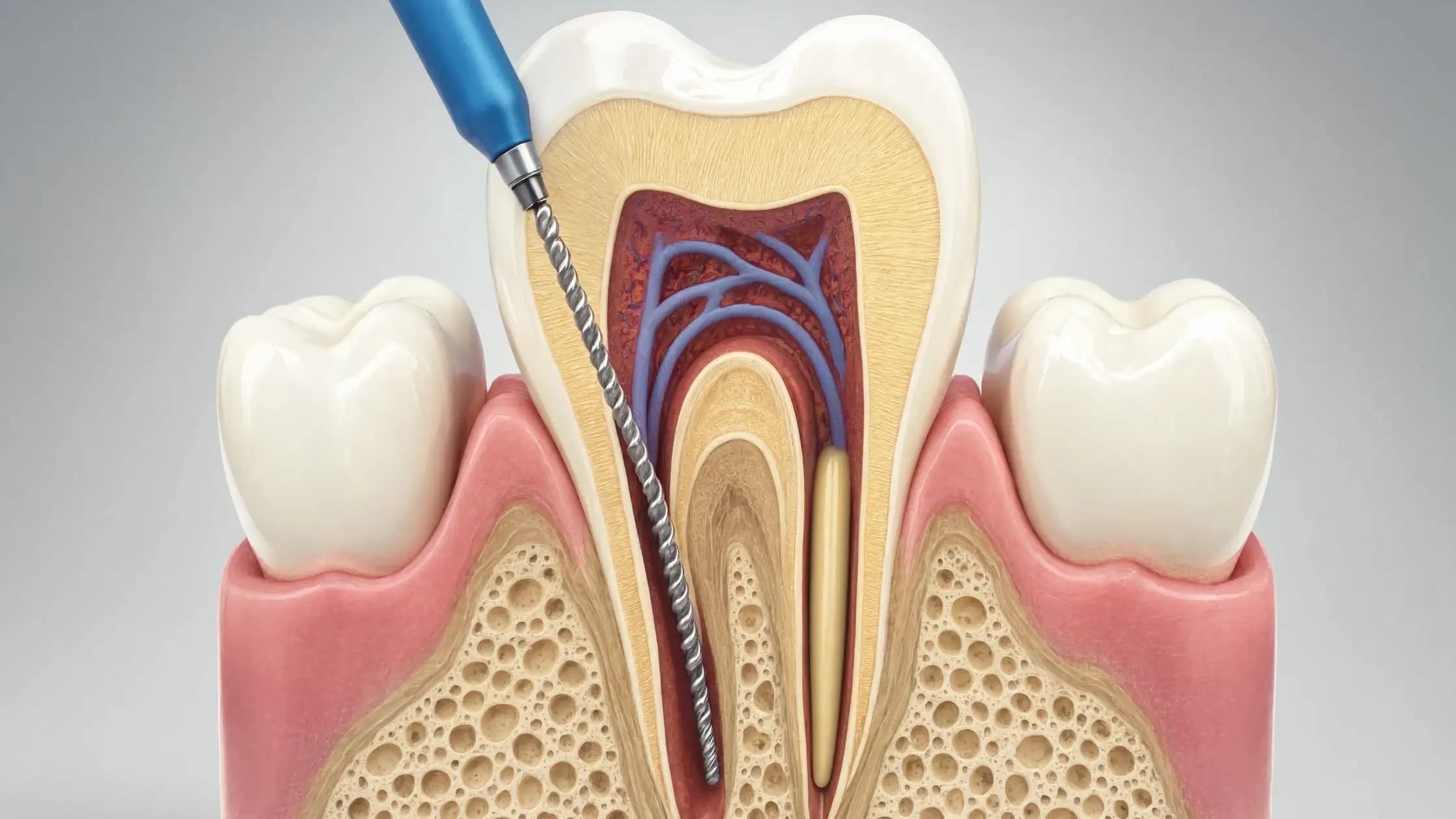
Beneath the hard outer layers of each tooth lies a soft tissue called the pulp, which contains:
- Blood vessels
- Nerves
- Connective tissue
When bacteria enter the pulp through deep decay, a cracked tooth, repeated dental procedures, or trauma, infection can develop.
Without treatment, this infection may lead to:
- Persistent tooth pain
- Swelling
- Dental abscess
- Bone loss around the tooth
- Tooth extraction
The purpose of a root canal is to remove the infected pulp, disinfect the inside of the tooth, and seal it to prevent future infection while preserving the natural tooth.
How Long Does a Root Canal Take?
The answer depends on the complexity of the case.
In many situations, a root canal treatment can be completed in approximately 60 to 90 minutes. Simpler cases may require only a single appointment, while more complex cases may need two visits to ensure the tooth is thoroughly cleaned and properly restored.
Rather than focusing only on the clock, it’s important to remember that the dentist’s priority is removing the infection completely and protecting the tooth for the long term.
Why Does the Treatment Time Vary?
Every tooth is different, and no two root canal procedures are exactly the same.
Several factors determine how long the appointment will take.
The Type of Tooth Being Treated
Front teeth usually have a single root canal, making treatment relatively straightforward.
Premolars often have one or two canals.
Molars are generally more complex because they may contain three or four canals that each require careful cleaning and shaping.
As a result, treating a molar typically takes longer than treating a front tooth.
The Severity of the Infection
If the infection has spread extensively or caused significant inflammation, additional cleaning and disinfection may be necessary.
In some cases, medication may be placed inside the tooth between appointments before the final sealing is completed.
Previous Dental Treatment
A tooth that has already undergone root canal treatment and requires retreatment is often more complex than an untreated tooth.
Removing old filling materials and managing persistent infection can increase treatment time.
Tooth Anatomy
Some patients naturally have curved or narrow root canals.
These variations require careful attention to ensure the canals are cleaned thoroughly without damaging the tooth.
What Happens During a Root Canal Procedure?
Understanding each step often helps patients feel more relaxed about treatment.
Initial Examination
The dentist first evaluates:
- Your symptoms
- Digital X-rays
- The condition of the tooth
- The extent of the infection
This information helps create an appropriate treatment plan.
Local Anesthesia
Before treatment begins, the affected tooth is completely numbed.
With these measures in place, patients can experience a smooth and comfortable treatment process.
Contrary to popular belief, the treatment itself is generally no more uncomfortable than receiving a routine filling.
Cleaning the Root Canals
A carefully placed opening is made in the tooth so the infected pulp can be safely reached and treated.
The damaged tissue is carefully removed, and the canals are cleaned, shaped, and disinfected using specialized instruments.
Filling the Root Canals
Once the canals are completely cleaned, they are filled with a biocompatible material to seal the tooth and prevent reinfection.
Final Restoration
In many cases, particularly for back teeth, a dental crown is recommended after root canal treatment.
The crown strengthens the tooth and helps restore normal chewing function.
Can a Root Canal Be Completed in One Visit?
Yes, many root canals can be completed during a single appointment.
However, some situations may require two visits, especially when:
- The infection is extensive
- The tooth has multiple canals
- Additional disinfection is required
- Significant inflammation is present
Your dentist will recommend the most appropriate approach based on your specific case.
Does a Longer Procedure Mean a More Serious Problem?
Not necessarily. Some teeth simply have more complex anatomy.
For example, a healthy molar with multiple canals may naturally require more treatment time than an infected front tooth.
The goal is not speed, it’s thoroughness.
Proper cleaning and sealing are essential for long-term success.
How Long Does It Take to Recover After a Root Canal?
Recovery is generally much quicker than many patients expect.
Some mild tenderness is normal for a few days, particularly while chewing.
Most patients:
- Resume your normal work routine the same day or by the next day.
- Resume normal daily activities quickly
- Experience gradual improvement within a few days
Complete healing of the surrounding tissues continues over time, even though the procedure itself is finished.
Tips for a Smooth Recovery
Following your dentist’s instructions can help support comfortable healing.
Avoid Chewing on the Treated Tooth Initially
Until the final restoration is completed, it’s best to avoid putting excessive pressure on the treated tooth.
Take Prescribed Medication if Needed
Your dentist may recommend medication to help manage temporary discomfort.
Maintain Good Oral Hygiene
Brush and floss regularly, paying special attention to the treated area without applying too much pressure.
Keeping the mouth clean supports healing and helps prevent future problems.
Attend Follow-Up Appointments
If a crown or permanent restoration is planned, completing treatment is important for protecting the tooth.
Expert Root Canal Treatment at Aline Dent
If you’re looking for the best root canal treatment in Thalassery or Kuttiyadi, choosing an experienced dental team can make a significant difference in both comfort and long-term success.
At Aline Dent, every root canal procedure begins with a detailed clinical examination and digital imaging to accurately diagnose the condition of the tooth and plan treatment accordingly.
The clinic provides:
- Comprehensive root canal evaluation
- Digital dental X-rays
- Advanced endodontic treatment
- Precision cleaning of infected canals
- Crown restoration after root canal treatment
- Personalized treatment planning
- Comfortable, patient-focused care
The team understands that many patients are concerned about how long a root canal takes and whether the root canal procedure will be painful. People seeking expert rct treatment in Kerala often want a clinic that combines modern technology with a gentle approach. The team at Aline Dent understands these concerns and uses careful treatment planning to make root canal therapy as efficient and comfortable as possible while preserving the natural tooth whenever feasible.
Whether you’re experiencing persistent tooth pain or have been advised to undergo an RCT, early treatment can help prevent more extensive dental problems and improve the chances of saving your tooth.
Also Read: How to Avoid Root Canal: Protect Your Teeth Before Serious Damage Happens!
Myths VS Facts About Root Canal Treatment Time
“Root Canals Always Take Several Hours”
Many procedures are completed within one appointment, although complex cases may require additional visits.
“Longer Root Canal Appointments Mean the Treatment Is Failing”
Treatment duration often reflects the complexity of the tooth rather than any problem with the procedure.
“It’s Better to Remove the Tooth Instead”
Whenever possible, preserving your natural tooth is usually the preferred option because it helps maintain normal function and jaw health.
“Recovery Takes Weeks”
Most patients recover quickly and return to their usual routine within a day or two.
Final Thoughts
If you’ve been wondering how long does a root canal take, the reassuring answer is that modern treatment is usually much faster and more comfortable than many people imagine.
While the exact duration depends on the complexity of the tooth and the severity of the infection, most root canal procedures are completed within one or two appointments. More importantly, the goal isn’t simply to finish quickly, it’s to thoroughly eliminate infection, preserve your natural tooth, and restore long-term oral health.
Delaying treatment often allows infection to progress, potentially leading to increased discomfort and more complex dental procedures. Seeking timely care from an experienced dental team gives you the best opportunity to save your tooth and return to a healthy, pain-free smile.
Frequently Asked Questions
How long does a root canal take?
Most root canal treatments take approximately 60 to 90 minutes, although the exact duration depends on the tooth being treated and the complexity of the case.
Can a root canal be completed in one visit?
Yes. Many simple cases can be completed in one appointment, while more complex infections may require two visits.
Why do molar root canals take longer?
Molars usually have three or four root canals that require careful cleaning, making the procedure more time-consuming than treatment on front teeth.
Is a root canal painful?
Modern root canal treatment is generally performed under local anesthesia, making the procedure comfortable for most patients.
How long should I wait before eating after a root canal?
Your dentist will provide specific instructions, but many patients are advised to wait until the numbness wears off before eating.
Do I always need a crown after a root canal?
Back teeth often benefit from a crown because it helps strengthen the tooth after treatment. Your dentist will determine whether one is necessary.
How long does it take to recover from a root canal?
Most patients experience only mild discomfort for a few days and can return to normal daily activities shortly after treatment.