
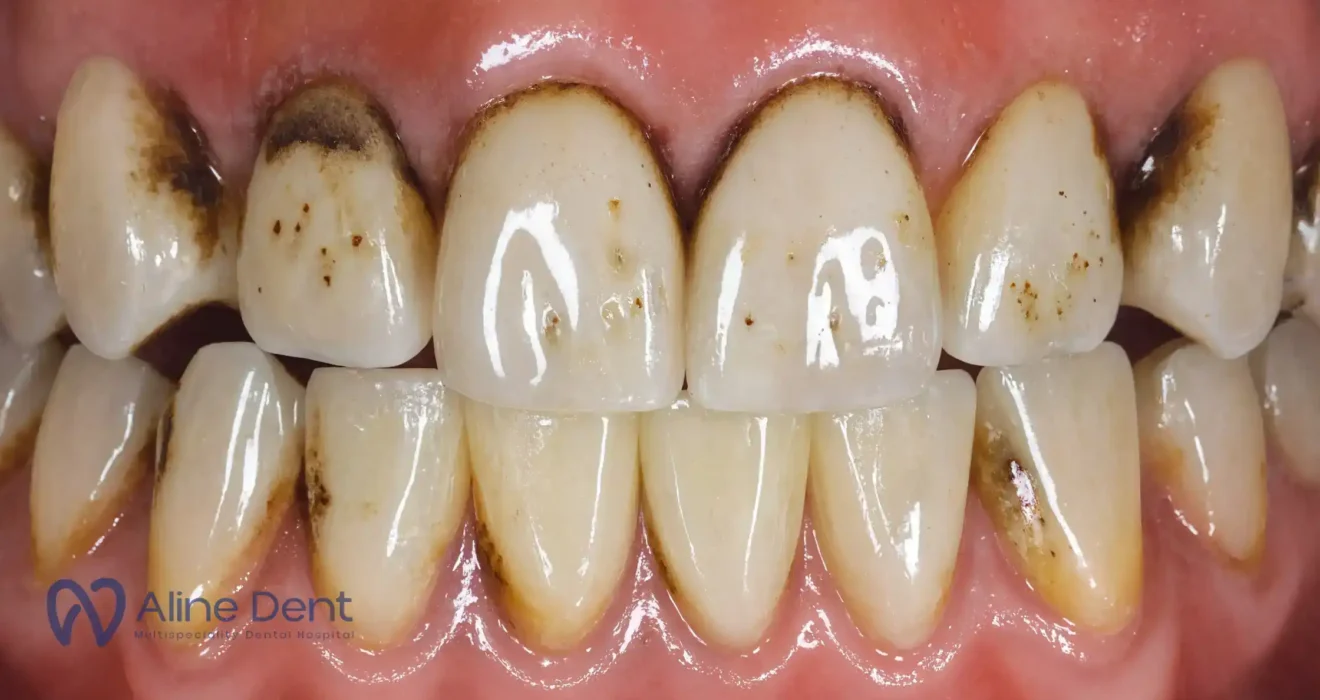
Dark Spots on Teeth That Aren’t Cavities: From Causes To Treatment!
While brushing your teeth, you catch sight of a small dark mark on a tooth in the mirror. Instantly, you wonder, “Could this be a cavity?” While cavities are a common cause of dark discoloration, they are far from the only explanation.
In fact, dark spots on teeth that aren’t cavities are more common than many people realize. In many cases, these spots are caused by surface discoloration, tartar deposits, normal variations in tooth enamel, ageing, earlier dental work, or other benign conditions. In some cases, they are purely cosmetic, while in others, they may indicate an underlying dental issue that deserves professional attention.
The challenge is that it’s almost impossible to determine the exact cause simply by looking at the spot. Two dark marks may appear very similar, yet one may be a superficial stain that can be removed with professional cleaning, while the other may require restorative treatment.
If you’ve been wondering whether every dark spot means tooth decay, the answer is no. Understanding the possible causes can help you know when there’s no reason to worry and when it’s time to schedule a dental examination.
In this guide, we’ll explore the most common causes of dark spots on teeth that aren’t cavities, explain how dentists diagnose them, discuss available treatment options, and share practical tips to help prevent new stains from developing.
What Are Dark Spots on Teeth?
Dark spots are localized areas of discoloration that appear darker than the surrounding tooth surface.
Depending on the cause, they may appear:
- Brown
- Black
- Dark grey
- Deep yellow-brown
They can develop on:
- Front teeth
- Back teeth
- Along the gumline
- Between teeth
- Inside grooves on chewing surfaces
- Around old fillings or dental restorations
Not every dark spot is a sign of tooth decay, which is why professional evaluation is important.
Can Dark Spots Appear Without Cavities?
Yes.
Many people assume that every black or brown mark automatically means a cavity. However, there are several situations where dark spots on teeth that aren’t cavities can develop without any active tooth decay.
Some are completely harmless cosmetic stains, while others are signs that your teeth would benefit from professional cleaning or monitoring.
Common Causes of Dark Spots on Teeth That Aren’t Cavities
1. Surface Stains from Food and Drinks
One of the most common reasons for dark tooth discoloration is external staining.
Highly pigmented foods and beverages can gradually stain the outer layer of enamel.
Common culprits include:
- Coffee
- Tea
- Red wine
- Cola
- Berries
- Soy sauce
- Dark-colored spices
These stains usually develop slowly and often respond well to professional dental cleaning or cosmetic whitening, depending on their severity.
2. Tobacco Use
Smoking and chewing tobacco are among the leading causes of persistent brown and black tooth stains.
Nicotine and tar penetrate the outer enamel over time, producing discoloration that regular brushing often cannot remove.
Professional cleaning can reduce some stains, although long-term tobacco use may require additional cosmetic treatment.
3. Tartar (Dental Calculus)
Plaque that isn’t removed effectively can harden into tartar.
Although tartar often appears yellow, it may gradually become brown or even black due to staining from food, beverages, or tobacco.
Dark tartar commonly develops:
- Along the gumline
- Behind the lower front teeth
- Between teeth
Unlike plaque, tartar cannot be removed at home with brushing or flossing.
Professional scaling is usually required.
4. Natural Grooves in Teeth
Molars contain deep pits and grooves that naturally appear darker than the surrounding enamel.
Food pigments may collect inside these grooves over time, creating the appearance of dark spots.
In many cases, these grooves are completely healthy and do not represent tooth decay.
However, because cavities can also begin in these areas, a dental examination is important to distinguish between normal staining and decay.
5. Age-Related Tooth Changes
As people age, the outer enamel gradually becomes thinner.
This allows the naturally darker dentin beneath the enamel to become more visible.
The result may be teeth that appear:
- More yellow
- Slightly brown
- Less bright than before
These changes are usually a normal part of ageing rather than signs of disease.
6. Old Dental Fillings
Older silver (amalgam) fillings can sometimes create grey or dark discoloration around the treated tooth.
This does not necessarily indicate a new cavity.
Your dentist can determine whether the filling remains healthy or requires replacement.
7. Certain Medications
Some medications can contribute to tooth discoloration.
For example:
- Certain antibiotics during tooth development
- Iron supplements
- Chlorhexidine mouth rinses (with prolonged use)
The appearance varies depending on the medication and duration of use.
8. Previous Dental Trauma
A tooth that has experienced injury may gradually darken over time.
Even if the tooth initially appears normal after trauma, changes inside the tooth may lead to discoloration months or even years later.
When a tooth darkens due to trauma, it is important to have it checked by a dentist promptly.
9. Developmental Tooth Defects
Some people naturally develop areas of darker enamel due to variations in tooth formation.
Conditions affecting enamel development may produce:
- Brown spots
- White patches
- Dark streaks
- Uneven coloration
These are not always associated with active tooth decay.
You may also like to read: White Spots on Teeth: What Causes Them and How to Get Rid of Them?
How Can You Tell If It’s a Stain or a Cavity?
Unfortunately, it’s difficult to determine the difference at home.
A cavity may cause:
- Soft areas
- Tooth sensitivity
- Pain while eating
- Visible holes
- Progressive darkening
A simple stain may:
- Remain unchanged for years
- Feel smooth
- Cause no symptoms
- Be removable during professional cleaning
Only a clinical examination and, when necessary, dental X-rays can provide an accurate diagnosis.
Treatment Options for Dark Spots on Teeth
Treatment depends entirely on the underlying cause.
Professional Teeth Cleaning
If surface stains or tartar are responsible, professional cleaning is often the first step.
Scaling and polishing remove plaque, tartar, and many external stains that cannot be eliminated through brushing alone.
Teeth Whitening
Professional whitening may improve discoloration caused by certain external stains.
However, whitening is not effective for every type of dark spot, particularly those caused by internal tooth changes.
Dental Bonding
For cosmetic discoloration that does not respond to cleaning or whitening, tooth-colored composite resin may improve the appearance of the affected tooth.
Veneers
When discoloration is extensive or affects the front teeth, porcelain veneers may provide a long-lasting cosmetic solution.
Replacement of Old Restorations
If old fillings or restorations are contributing to discoloration, your dentist may recommend replacing them when clinically appropriate.
Root Canal Treatment (If Necessary)
If a tooth has darkened because the pulp has become damaged after trauma or infection, root canal treatment followed by restoration may be recommended.
Not every dark tooth requires root canal treatment; this depends on the health of the tooth.
Can Dark Spots on Teeth Be Prevented?
Many forms of tooth staining can be minimized through healthy daily habits.
Brush Twice Daily
Brushing twice per day helps remove plaque before it hardens into tartar.
Floss Every Day
Cleaning between teeth removes food particles and bacterial plaque from areas your toothbrush cannot reach.
Limit Staining Foods and Drinks
Coffee, tea, red wine, and dark-coloured beverages can stain enamel over time.
Drinking water afterwards may help reduce staining.
Avoid Tobacco
Quitting smoking benefits not only your teeth but also your overall health.
Schedule Regular Dental Cleanings
Professional cleanings help remove plaque, tartar, and stains before they become more noticeable.
Why Self-Diagnosis Isn’t Always Reliable?
Searching online for photos of dark spots on teeth that aren’t cavities may provide ideas, but it cannot replace a professional examination.
A stain, a cavity, a crack, and a developmental enamel defect can all appear surprisingly similar.
Trying whitening products or home remedies without knowing the true cause may delay appropriate treatment—or even make the problem worse.
If you notice a new dark spot, especially one that changes in size, causes sensitivity, or appears after an injury, it’s best to have it assessed by a dentist.
Professional Diagnosis and Treatment at Aline Dent
If you’ve noticed dark spots on teeth that aren’t cavities, the first step is understanding what’s causing them. At Aline Dent, every patient receives a thorough clinical examination to determine whether the discoloration is simply a surface stain or a sign of an underlying dental condition.
The dental team uses modern diagnostic techniques to evaluate the affected tooth and recommend the most appropriate treatment based on the cause rather than the appearance alone.
Services include:
- Comprehensive dental examinations
- Digital dental X-rays
- Professional teeth cleaning
- Scaling and polishing
- Cosmetic dentistry
- Teeth whitening
- Tooth-colored restorations
- Preventive dental care
Whether the dark spot is caused by staining, tartar, ageing, trauma, or another condition, early evaluation helps ensure the right treatment while preserving the health and appearance of your smile.
Final Thoughts
Discovering dark spots on teeth that aren’t cavities can be worrying, but not every dark mark is a sign of tooth decay. Many are caused by harmless surface stains, tartar buildup, natural enamel variations, or previous dental treatments. Others, however, may point to underlying conditions that require professional care.
Because different causes can look remarkably similar, self-diagnosis is rarely reliable. Rather than making assumptions, have any long-lasting or newly formed dark spot assessed by a dentist, who can pinpoint the cause and advise the appropriate treatment.
Maintaining good oral hygiene, limiting stain-causing foods and tobacco, and attending regular dental checkups can go a long way in preventing discoloration and keeping your smile healthy. With timely diagnosis and the right care, most dark spots can be effectively managed while preserving both the appearance and health of your teeth.
Frequently Asked Questions
Are dark spots on teeth always cavities?
No. Dark spots can be caused by stains, tartar, ageing, trauma, old fillings, developmental enamel changes, or other conditions that are not related to tooth decay.
Can coffee and tea cause dark spots on teeth?
Yes. Regular consumption of coffee, tea, and other highly pigmented beverages can gradually stain tooth enamel.
Can tartar appear black?
Yes. Tartar may become brown or black over time due to staining from tobacco, coffee, tea, or other pigments.
Will teeth whitening remove dark spots?
It depends on the cause. Whitening can improve some external stains but may not be effective for internal discoloration or old dental restorations.
How can I tell if a dark spot is a cavity?
It’s difficult to determine at home. A dentist can evaluate the tooth through a clinical examination and, if necessary, dental X-rays.
Can a damaged tooth become darker over time?
Yes. Teeth that have experienced trauma may gradually darken due to changes within the tooth and should be examined by a dentist.
When should I see a dentist about a dark spot?
You should schedule an appointment if the spot is new, changing in size, associated with pain or sensitivity, or if you’re unsure about its cause.