
First Signs of Wisdom Teeth Coming In: A Simple Guide to Early Detection and Care!
Recognizing the first signs of wisdom teeth coming in can help you understand what’s happening and, more importantly, when it’s time to seek professional advice. In some cases, wisdom teeth erupt normally without causing any issues. In others, they may become impacted, grow at an angle, or create problems for the surrounding teeth and gums.
The early symptoms can vary from person to person. Some people notice mild tenderness that comes and goes, while others experience swelling, jaw discomfort, or difficulty chewing. Because these symptoms can resemble other dental conditions, it’s important not to assume that every ache at the back of your mouth is caused by wisdom teeth.
This guide explains the first signs of wisdom teeth coming in, why these symptoms occur, what complications to watch for, when wisdom teeth should be evaluated, and how professional dental care can help prevent future problems.
What Are Wisdom Teeth?
Wisdom teeth, also known as third molars, are the last permanent teeth to develop.
Most adults have four wisdom teeth:
- One in the upper right
- One in the upper left
- One in the lower right
- One in the lower left
They usually begin to erupt between the ages of 17 and 25, although some people develop them earlier, later, or not at all.
Unlike other permanent teeth that erupt during childhood, wisdom teeth often appear when the jaw has already finished developing. Because of limited space, they are more likely to become impacted or erupt only partially.
When Do Wisdom Teeth Usually Come In?
Most wisdom teeth begin developing beneath the gums during the teenage years.
They commonly erupt between 17 and 25 years of age, but this timeline can vary significantly.
Some people:
- Develop all four wisdom teeth
- Develop only one or two
- Never develop wisdom teeth at all
- Have wisdom teeth that remain completely buried beneath the gums
Even if wisdom teeth never fully erupt, they can still cause dental problems if they become impacted.
First Signs of Wisdom Teeth Coming In
The earliest symptoms are often subtle and may appear gradually over several weeks or months.
Here are the most common first signs of wisdom teeth coming in.
1. Tenderness at the Back of the Mouth
One of the earliest signs is mild discomfort behind the last visible molar.
You may notice:
- Tender gums
- Mild soreness
- Sensitivity while chewing
- A dull ache that comes and goes
This discomfort occurs because the tooth is beginning to push through the gum tissue.
2. Swollen or Inflamed Gums
As wisdom teeth start erupting, the surrounding gum tissue may become swollen.
You may notice:
- Puffy gums
- Redness
- Mild bleeding while brushing
- Tenderness when touching the area
If only part of the tooth erupts, food and bacteria can become trapped beneath the gum flap, increasing the risk of infection.
3. Jaw Pain or Stiffness
Some people experience discomfort that extends beyond the gums.
Growing wisdom teeth may place pressure on nearby structures, leading to:
- Jaw soreness
- Difficulty opening the mouth fully
- Tightness near the jaw joint
- Mild facial discomfort
Persistent or worsening jaw pain should be evaluated by a dentist.
4. Pressure Behind Your Back Teeth
Many patients describe a feeling of pressure rather than sharp pain.
As the wisdom tooth attempts to erupt, it may press against the neighbouring second molar.
This sensation may feel like:
- Tightness
- Dull pressure
- Mild aching
- Sensitivity while chewing
5. Difficulty Chewing Certain Foods
Tender gums may make chewing uncomfortable, particularly when eating hard, crunchy, or chewy foods.
Some people instinctively begin chewing on the opposite side of the mouth to avoid discomfort.
6. Headaches or Ear Discomfort
Although not everyone experiences these symptoms, pressure from erupting wisdom teeth may contribute to:
- Mild headaches
- Ear discomfort
- Pain radiating toward the jaw
These symptoms can also have other causes, so professional evaluation is recommended if they persist.
7. Bad Breath or an Unpleasant Taste
Partially erupted wisdom teeth can create areas where bacteria and food particles become trapped.
This may result in:
- Persistent bad breath
- An unpleasant taste
- Localized gum inflammation
Good oral hygiene becomes especially important during this stage.
What Is an Impacted Wisdom Tooth?
An impacted wisdom tooth is one that cannot erupt properly because there isn’t enough room in the jaw.
It may:
- Remain completely beneath the gums
- Partially erupt
- Grow sideways
- Push against neighbouring teeth
Impacted wisdom teeth are relatively common and may increase the risk of pain, infection, and damage to adjacent teeth.
Signs That a Wisdom Tooth May Be Impacted
While mild discomfort can be a normal part of eruption, certain symptoms may indicate impaction.
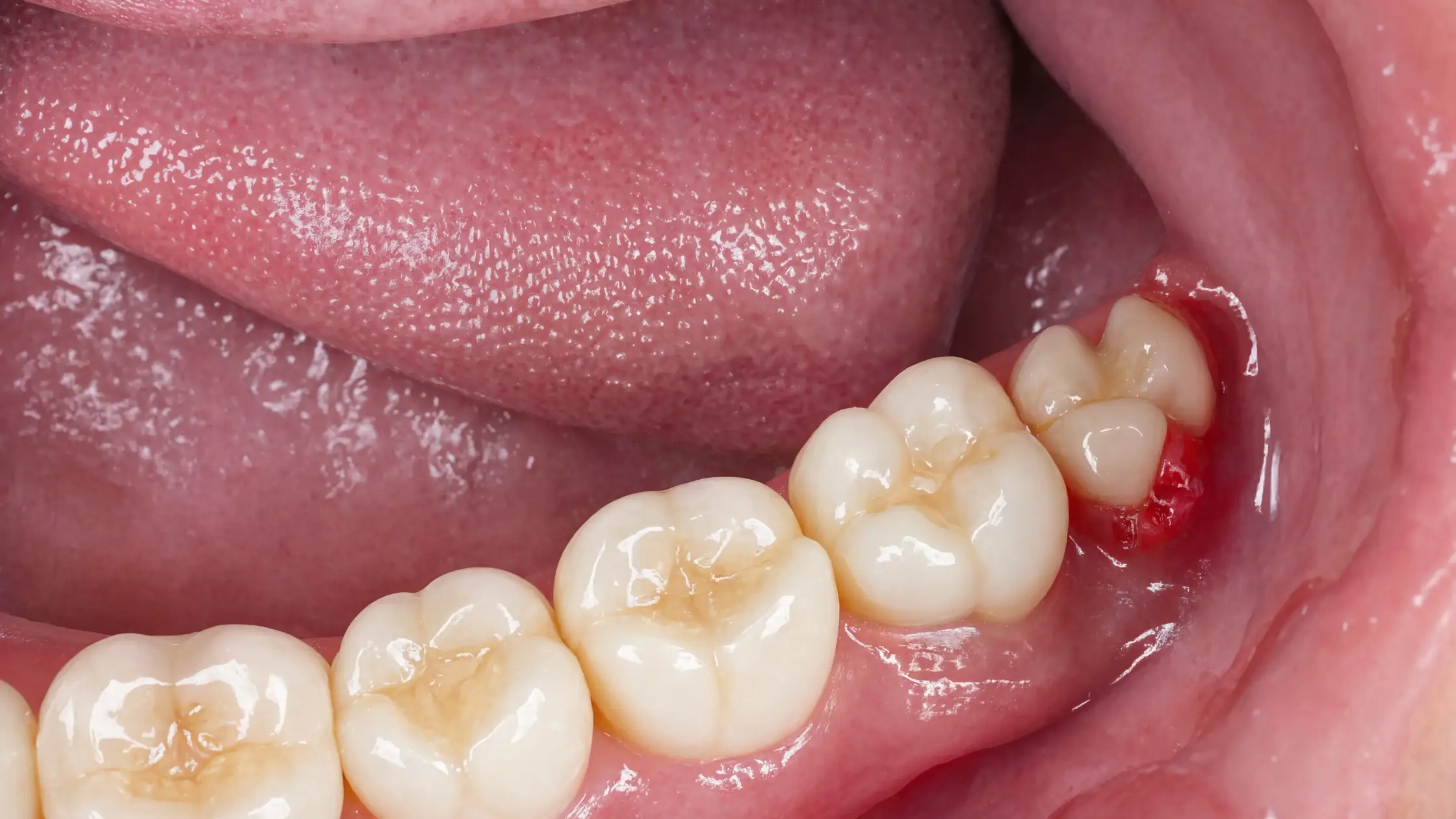
These include:
- Severe or persistent pain
- Swelling around the jaw
- Difficulty opening the mouth
- Swollen lymph nodes
- Repeated gum infections
- Pain while chewing
- Swelling around the back molar
If these symptoms occur, prompt dental evaluation is recommended.
Can Wisdom Teeth Grow In Without Pain?
Yes.
Not every wisdom tooth causes symptoms.
Some erupt:
- Completely
- In the correct position
- With enough space
- Without affecting nearby teeth
Even when no symptoms are present, regular dental examinations remain important because impacted wisdom teeth may not always cause immediate discomfort.
How Are Wisdom Teeth Evaluated?
During your appointment, the dentist will perform a comprehensive examination.
This typically includes:
Clinical Examination
The gums are checked for swelling, tenderness, infection, and partial eruption.
Digital Dental X-rays
X-rays allow the dentist to determine:
- Whether wisdom teeth are present
- Their position
- Their angle of eruption
- Available space
- Any effects on neighbouring teeth
Early diagnosis helps prevent future complications.
Do All Wisdom Teeth Need to Be Removed?
No. Wisdom teeth removal is not always necessary or does not always require extraction.
They may be left in place if they are:
- Healthy
- Fully erupted
- Properly aligned
- Easy to clean
- Not causing damage
However, removal may be recommended if the wisdom teeth are:
- Impacted
- Causing repeated infections
- Damaging nearby teeth
- Associated with cysts
- Difficult to clean properly
- Contributing to crowding or other complications
The decision is based on clinical findings rather than age alone.
What Happens If Wisdom Teeth Are Left Untreated?
Ignoring problematic wisdom teeth may lead to complications such as:
- Recurrent gum infections (pericoronitis)
- Tooth decay
- Damage to neighbouring teeth
- Gum disease
- Jaw pain
- Difficulty cleaning the area
- Cyst formation in rare cases
Early evaluation allows dentists to monitor eruption and recommend treatment before complications become more serious.
Tips for Managing Mild Wisdom Tooth Discomfort
If your wisdom teeth are beginning to erupt and symptoms are mild, these measures may help provide temporary relief:
- Brush gently around the affected area.
- Rinse with warm salt water if recommended by your dentist.
- Keep the area as clean as possible to reduce plaque buildup.
- Avoid very hard foods if chewing causes discomfort.
- Stay hydrated and maintain good oral hygiene.
These measures may help reduce temporary irritation, but they do not replace professional evaluation if symptoms persist or worsen.
Expert Wisdom Tooth Evaluation and Treatment at Aline Dent
If you’re experiencing the first signs of wisdom teeth coming in, an early dental evaluation can help determine whether your wisdom teeth are erupting normally or whether they may require closer monitoring or treatment.
At Aline Dent, patients receive a comprehensive assessment using modern diagnostic tools to evaluate the position, development, and condition of their wisdom teeth. The dental team carefully assesses whether the teeth have enough space to erupt properly and whether they pose any risk to neighbouring teeth or surrounding gum tissue.
Services include:
- Comprehensive wisdom tooth examinations
- Digital dental X-rays
- Evaluation of impacted wisdom teeth
- Monitoring of erupting third molars
- Wisdom tooth removal when clinically necessary
- Management of wisdom tooth infections
- Personalized treatment planning
Whether your wisdom teeth are causing occasional discomfort or significant pain, timely evaluation helps prevent complications and supports better long-term oral health.
Final Thoughts
Experiencing the first signs of wisdom teeth coming in can be both confusing and uncomfortable, especially if you’re unsure whether the symptoms are a normal part of tooth eruption or a sign of a more serious problem.
While mild tenderness or swelling may simply indicate that your wisdom teeth are beginning to emerge, persistent pain, repeated infections, jaw stiffness, or difficulty chewing should never be ignored. Early evaluation allows your dentist to determine whether your wisdom teeth are erupting normally or whether intervention is needed to prevent future complications.
With regular dental checkups, good oral hygiene, and timely professional care, many wisdom tooth problems can be managed before they affect your overall oral health. If you’ve noticed new discomfort at the back of your mouth, consulting your dentist is the best way to protect your smile and make informed decisions about your wisdom teeth.
Frequently Asked Questions
What are the first signs of wisdom teeth coming in?
Common early signs include tenderness behind the back teeth, swollen gums, jaw discomfort, pressure in the back of the mouth, difficulty chewing, and mild pain that comes and goes.
At what age do wisdom teeth usually erupt?
Most wisdom teeth begin erupting between the ages of 17 and 25, although the timing varies from person to person.
Can wisdom teeth come in without causing pain?
Yes. Some wisdom teeth erupt normally without causing any symptoms or complications.
How do I know if my wisdom tooth is impacted?
Only a dental examination and X-rays can confirm whether a wisdom tooth is impacted. Persistent pain, swelling, or difficulty opening the mouth may indicate impaction.
Should I remove my wisdom teeth as soon as they appear?
Not necessarily. Wisdom teeth are removed only when they cause problems or are likely to create complications in the future.
Can wisdom teeth cause headaches?
In some individuals, pressure from erupting or impacted wisdom teeth may contribute to jaw discomfort and headaches.
When should I see a dentist about my wisdom teeth?
You should schedule an appointment if you experience persistent pain, swelling, bad breath, difficulty chewing, jaw stiffness, or any other symptoms around the back of your mouth.