

Is It Necessary to Remove Wisdom Teeth? Your Queries Answered!
For many people, wisdom teeth become a topic of concern long before they actually cause any problems. A routine dental X-ray reveals an impacted tooth, a friend talks about a painful extraction, or a dentist mentions monitoring the back of your mouth. Suddenly, a common concern arises: Is it necessary to remove wisdom teeth?
The answer isn’t as straightforward as many people think.
Contrary to popular belief, not every wisdom tooth needs to be removed. Some wisdom teeth erupt normally, function properly, and remain healthy for years without causing any issues. Others can become a source of recurring pain, infection, crowding, gum problems, and damage to neighboring teeth.
This is why wisdom tooth removal should never be viewed as a one-size-fits-all recommendation. The decision depends on factors such as the position of the tooth, available space in the jaw, oral hygiene, symptoms, and long-term dental health risks.
In this comprehensive guide, we’ll explore what wisdom teeth are, why they sometimes cause problems, when removal becomes necessary, when it may not be needed, and how dentists evaluate wisdom teeth before recommending extraction.
What Are Wisdom Teeth?
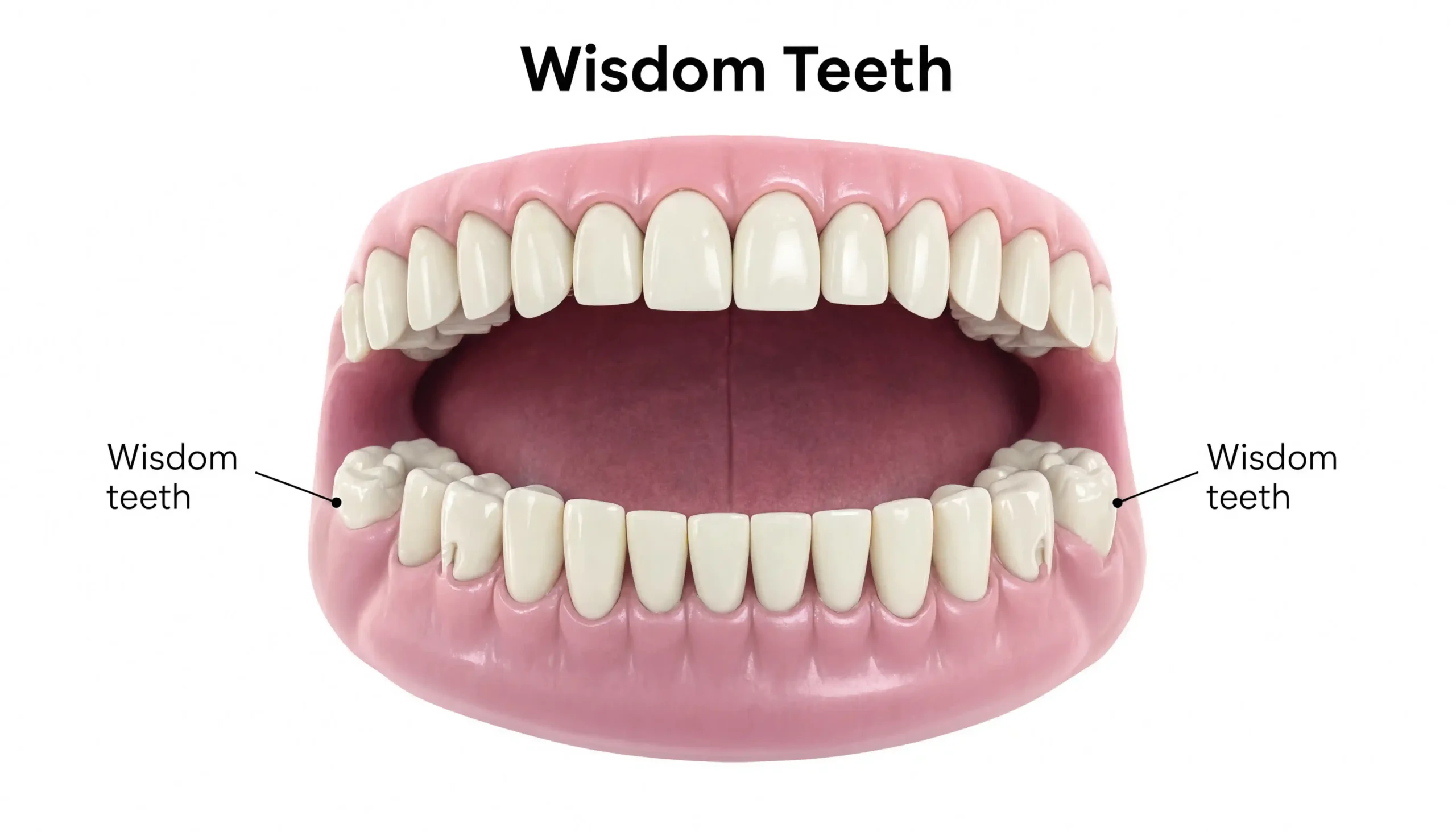
Wisdom teeth are the third and final set of molars that typically develop between the ages of 17 and 25.
Most adults have four wisdom teeth:
- Upper right wisdom tooth
- Upper left wisdom tooth
- Lower right wisdom tooth
- Lower left wisdom tooth
Thousands of years ago, wisdom teeth played a more significant role in helping humans chew tougher foods. However, modern diets and evolutionary changes have resulted in smaller jaws, leaving less room for these extra molars.
As a result, wisdom teeth often struggle to erupt properly.
Why Do Wisdom Teeth Cause Problems?
The biggest challenge with wisdom teeth is a lack of space.
When there isn’t enough room for a wisdom tooth to erupt normally, it may become:
- Partially erupted
- Impacted
- Angled incorrectly
- Trapped beneath the gums
- Pressed against neighboring teeth
These situations can create a variety of dental complications.
Is It Necessary to Remove Wisdom Teeth in Every Case?
The simple answer is no. A healthy wisdom tooth that:
- Has fully erupted
- Is properly aligned
- Functions normally
- Can be cleaned effectively
- Does not affect the surrounding teeth
may not require removal at all.
Dentists often monitor these teeth through regular examinations and X-rays rather than recommending immediate extraction.
The key factor isn’t whether the tooth exists; it’s whether the tooth is creating or likely to create problems.
Situations Where Wisdom Tooth Removal Is Often Necessary
While some wisdom teeth remain harmless, others can cause significant oral health issues.
Persistent Pain and Discomfort
One of the most common reasons for removal is recurring pain.
Wisdom tooth pain may occur due to:
- Pressure against neighboring teeth
- Infection
- Gum inflammation
- Partial eruption
Pain that repeatedly returns often indicates an underlying issue that should be addressed.
Impacted Wisdom Teeth
A wisdom tooth is considered impacted when it stays partially or completely trapped under the gums or within the jawbone.
Impacted teeth can lead to:
- Swelling
- Jaw pain
- Infection
- Cyst formation
- Damage to nearby teeth
Some impacted teeth remain symptom-free for years, while others eventually require extraction.
Repeated Gum Infections
Partially erupted wisdom teeth often create a flap of gum tissue that traps food and bacteria.
This condition, known as pericoronitis, can cause:
- Swelling
- Redness
- Pain
- Difficulty chewing
- Bad breath
When infections become recurrent, extraction is frequently recommended.
Damage to Adjacent Teeth
An improperly angled wisdom tooth can press against the second molar in front of it.
Over time, this pressure may contribute to:
- Tooth decay
- Root damage
- Bone loss
- Increased cavity risk
Protecting healthy neighboring teeth is often a strong reason for removing problematic wisdom teeth.
Cysts and Other Complications
Although less common, impacted wisdom teeth can sometimes contribute to cyst formation around the tooth.
If left untreated, these cysts may damage:
- Jawbone
- Adjacent teeth
- Surrounding tissues
Early diagnosis helps prevent more serious complications.
When Wisdom Teeth May Not Need Removal
Not all wisdom teeth are problematic. Many patients successfully keep their wisdom teeth when they are:
Fully Erupted and Functional
If a wisdom tooth emerges completely and aligns properly with the opposing tooth, it may function just like any other molar.
Easy to Clean
One major concern with wisdom teeth is hygiene.
If the tooth can be brushed and flossed effectively, the risk of decay and infection decreases significantly.
Free from Symptoms
A wisdom tooth that causes no pain, infection, decay, or structural damage may simply be monitored over time.
Regular dental evaluations help ensure the tooth remains healthy.
Common Signs That a Wisdom Tooth Needs Evaluation
Even if you’re unsure whether extraction is necessary, certain symptoms should never be ignored.
Watch for:
- Pain at the back of the mouth
- Swollen gums
- Difficulty opening the mouth
- Jaw discomfort
- Bad breath
- Unpleasant taste in the mouth
- Recurrent infections
- Food frequently getting trapped behind molars
These signs may indicate that the wisdom tooth requires professional assessment.
What Happens If You Ignore a Problematic Wisdom Tooth?
Some people delay treatment because symptoms come and go. Unfortunately, temporary relief does not always mean the problem has resolved.
Untreated wisdom tooth issues can lead to:
- Chronic infections
- Gum disease
- Tooth decay
- Bone loss
- Damage to neighboring teeth
- More complex future extractions
Early intervention is often simpler than waiting for complications to develop.
Does Wisdom Tooth Removal Hurt?
This is a question that comes up frequently among patients.
With today’s advanced extraction methods, wisdom tooth removal is often easier and less uncomfortable than expected.
During the procedure:
- Local anesthesia is used
- Patients should not feel pain during treatment
- Advanced techniques help minimize discomfort
Most post-procedure discomfort can be managed with medications, rest, and proper aftercare instructions.
For many patients, the relief from chronic wisdom tooth pain outweighs the temporary recovery period.
Wisdom Tooth Removal at Aline Dent
When wisdom teeth become painful, impacted, infected, or difficult to maintain, professional evaluation is essential. At Aline Dent, wisdom tooth assessment begins with a thorough clinical examination and digital imaging to understand the exact position of the tooth and its relationship to surrounding structures.
The clinic provides:
- Wisdom tooth evaluation
- Digital dental X-rays
- Impacted wisdom tooth management
- Surgical wisdom tooth extraction
- Infection management
- Comprehensive post-operative care
The dental team focuses on patient comfort throughout the process and ensures that every extraction recommendation is based on clinical necessity rather than routine removal. For patients experiencing recurring wisdom tooth pain, swelling, infections, or concerns about impacted teeth, early evaluation can help prevent more complex dental problems in the future.
Whether a wisdom tooth needs monitoring or extraction, personalized treatment planning plays a critical role in achieving the best outcome.
Recovery After Wisdom Tooth Removal
Most patients recover well after extraction when they follow post-operative instructions carefully.
Common recovery tips include:
- Resting for the first 24 hours
- Avoiding smoking
- Eating soft foods
- Maintaining oral hygiene carefully
- Following medication instructions
- Avoiding vigorous rinsing initially
While mild swelling and discomfort are normal, these symptoms generally improve within a few days.
Myths About Wisdom Teeth
“Everyone Must Have Their Wisdom Teeth Removed”
False.
Many wisdom teeth never require extraction if they remain healthy and functional.
“If It Doesn’t Hurt, There’s No Problem”
Not always.
Some impacted wisdom teeth cause damage silently without obvious symptoms.
Regular dental evaluations remain important.
“Wisdom Tooth Removal Is Extremely Painful”
Modern techniques and anesthesia have made wisdom tooth extraction significantly more comfortable than many people imagine.
Final Thoughts
So, is it necessary to remove wisdom teeth?
The answer depends entirely on the individual tooth and the patient’s oral health.
Some wisdom teeth remain healthy and functional for life without requiring treatment. Others can create ongoing problems that affect neighboring teeth, gums, and overall oral health.
The most important step is regular dental monitoring. Early evaluation allows dentists to identify potential problems before they become serious.
If a wisdom tooth is causing pain, infection, swelling, crowding, or damage, removal may be the best option to protect your long-term dental health. And when extraction is necessary, modern techniques make the process far safer, more comfortable, and more predictable than ever before.
Frequently Asked Questions
Is it necessary to remove wisdom teeth if they are not causing pain?
Not always. If the wisdom teeth are healthy, properly positioned, and easy to clean, they may simply be monitored.
How do I know if my wisdom tooth needs removal?
A dentist can determine this through clinical examination and X-rays. Symptoms such as pain, infection, swelling, or crowding often indicate a need for evaluation.
Can wisdom teeth cause headaches?
In some cases, impacted or infected wisdom teeth may contribute to jaw tension and referred pain that feels like headaches.
What age should wisdom teeth be removed?
There is no universal age. Removal depends on the condition of the tooth rather than age alone.
Can I keep impacted wisdom teeth?
Some impacted wisdom teeth can be monitored, but others may require removal if they pose a risk to oral health.
How long does wisdom tooth recovery take?
Most patients return to normal activities within a few days, although complete healing may take several weeks.
What happens if a wisdom tooth infection is left untreated?
Untreated infections can spread, damage nearby teeth, affect gum health, and lead to more serious complications.