

Is RCT Painful? The Truth About Root Canal Treatment That Most Patients Don’t Know!
Few dental procedures are surrounded by as many myths and misconceptions as root canal treatment. For decades, movies, television shows, and second-hand stories have portrayed root canals as something painful and frightening. As a result, many people feel anxious the moment their dentist mentions the possibility of an RCT.
Naturally, one of the first questions patients ask is: Is RCT painful?
The short answer is: modern root canal treatment is usually not painful.
In fact, most patients are surprised to discover that the procedure itself is often far more comfortable than the severe toothache that led them to seek treatment in the first place.
The confusion typically stems from not distinguishing between two different things.
- The pain caused by an infected tooth
- The treatment used to eliminate that pain
Root canal treatment doesn’t create pain. It is performed because the tooth is already infected, inflamed, or damaged, and is causing discomfort.
Advancements in dental technology, local anesthesia, digital imaging, and treatment techniques have transformed root canal procedures significantly over the years. Today, for most patients, an RCT feels similar to getting a dental filling.
In this detailed guide, we’ll explore what root canal treatment involves, whether it hurts, what to expect during the procedure, recovery experiences, and how modern dentistry has made root canal therapy safer and more comfortable than ever before.
What Is Root Canal Treatment (RCT)?
Root Canal Treatment (RCT) is a dental procedure used to save a tooth when the soft tissue inside it becomes infected or inflamed.
Inside every tooth is a space called the pulp chamber, which contains:
- Nerves
- Blood vessels
- Connective tissue
When bacteria enter this area through deep decay, cracks, trauma, or large cavities, infection can develop.
Without treatment, the infection may lead to:
- Severe toothache
- Swelling
- Abscess formation
- Bone loss
- Tooth loss
The purpose of root canal treatment is to remove the infected tissue, clean the inside of the tooth, disinfect the canals, and seal the tooth to prevent future infection.
Why Do People Think RCT Is Painful?
The reputation of root canal treatment largely comes from older dental experiences.
Years ago, dental technology and anesthesia techniques were not as advanced as they are today.
Many people remember:
- Delayed treatment
- Severe infections
- Less effective anesthesia
- Longer procedures
Over time, these experiences evolved into the widespread belief that root canals themselves are painful.
The reality is quite different. Most modern dental clinics use advanced anesthetic techniques designed to ensure patient comfort throughout the procedure.
Is RCT Painful During the Procedure?
For the vast majority of patients, the answer is no.
Before beginning treatment, the dentist administers local anesthesia to numb the area around the affected tooth.
Once the tooth is numb, patients typically feel:
- Pressure
- Movement
- Vibrations from dental instruments
But they should not feel sharp pain. Many people expect a difficult experience but are surprised by how ordinary and uneventful the procedure feels.
In fact, numerous studies have shown that patients often rate root canal treatment as comparable to receiving a standard filling.
What Usually Hurts More: The Infection or the RCT?
This is an important distinction.
Most patients who require root canal treatment already have:
- Severe tooth decay
- Nerve inflammation
- Infection
- Abscess formation
The intense throbbing pain people associate with root canals is often actually the pain caused by the infection itself.
Common symptoms before treatment include:
- Sharp toothache
- Pain while chewing
- Sensitivity to hot and cold
- Swelling
- Pressure in the jaw
The purpose of RCT is to remove the source of that pain.
Many patients experience significant relief shortly after treatment is completed.
What Happens During a Root Canal Procedure?
Understanding the process often helps reduce anxiety.
Step 1: Examination and Diagnosis
The dentist evaluates:
- Symptoms
- Dental X-rays
- Infection severity
- Tooth condition
This helps determine whether root canal treatment is appropriate.
Step 2: Local Anesthesia
The area is adequately numbed before any treatment is performed.
This step plays a major role in ensuring patient comfort.
Step 3: Accessing the Tooth
A small opening is created in the tooth to access the infected pulp.
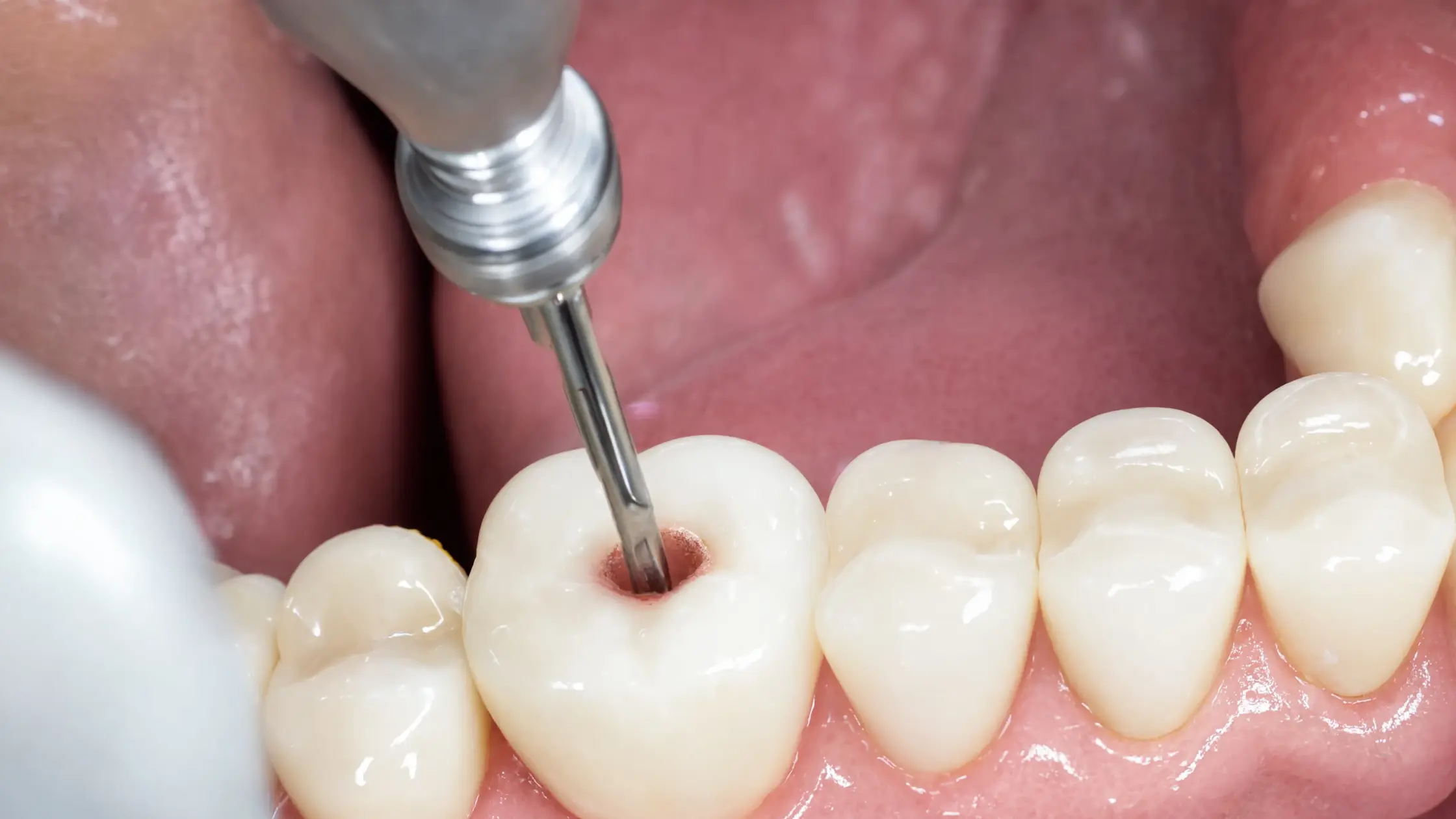
Step 4: Cleaning the Root Canals
The infected tissue is removed carefully.
The canals are then cleaned, shaped, and disinfected.
Step 5: Filling and Sealing
Once cleaned, the canals are sealed to protect the tooth from reinfection.
In many cases, a crown is later placed to strengthen and protect the tooth.
Is There Pain After Root Canal Treatment?
Some mild discomfort after treatment is normal.
This does not necessarily indicate a problem.
Common temporary symptoms may include:
- Mild soreness
- Tenderness while chewing
- Slight gum sensitivity
- Jaw discomfort from keeping the mouth open
These temporary symptoms tend to disappear within a few days.
Most patients can manage post-treatment discomfort with medications recommended by their dentist.
Severe pain after a properly performed root canal is uncommon and should be evaluated promptly.
Factors That Affect Root Canal Comfort
Every patient is different.
Several factors can influence how comfortable the experience feels.
Infection Severity
A severely infected tooth may be more sensitive before treatment begins.
Patient Anxiety
Dental anxiety can sometimes make procedures feel more stressful than they actually are.
Tooth Location
Molars may require more complex treatment due to multiple root canals.
Timing of Treatment
Early treatment often results in a simpler and more comfortable experience.
Delaying care frequently allows infection to worsen.
What Happens If You Avoid a Needed Root Canal?
Many people postpone treatment because they fear pain.
Ironically, delaying treatment often leads to greater discomfort.
Untreated infection may result in:
- Increasing pain
- Swelling
- Abscess formation
- Bone damage
- Tooth loss
- Spread of infection
The earlier the problem is treated, the better the chances of preserving the natural tooth.
You might also like to read: How to Avoid Root Canal: Protect Your Teeth Before Serious Damage Happens!
Expert Root Canal Treatment at Aline Dent
When a tooth becomes infected, preserving the natural tooth whenever possible is often the preferred approach.
At Aline Dent, root canal treatment is performed using modern diagnostic tools, advanced techniques, and patient-centered care designed to maximize comfort and treatment success.
The clinic provides:
- Comprehensive root canal evaluation
- Digital dental imaging
- Advanced endodontic treatment
- Crown restoration after RCT
- Infection management
- Personalized treatment planning
Patients seeking expert root canal treatment in Calicut and Kannur often prioritize both clinical expertise and a comfortable treatment experience. At Aline Dent, the focus is not only on eliminating infection but also on helping patients feel informed, relaxed, and confident throughout the process.
By combining modern technology with careful treatment planning, the clinic helps patients preserve their natural teeth while minimizing discomfort.
Common Myths About Root Canal Treatment
Myth 1: Root Canals Are Extremely Painful
Modern root canal procedures are typically performed under effective local anesthesia and are often no more uncomfortable than routine dental treatments.
Myth 2: Tooth Extraction Is Always Better
Saving the natural tooth is generally preferable whenever possible.
Natural teeth help maintain:
- Proper bite function
- Jawbone health
- Chewing efficiency
- Long-term oral stability
Myth 3: Root Canal Treatment Causes Illness
This outdated myth has been scientifically disproven.
Modern root canal therapy is a safe and well-established procedure.
Myth 4: Pain Means the Root Canal Failed
Mild soreness during the healing process is common and does not necessarily indicate treatment failure.
How to Reduce Anxiety Before an RCT?
If you’re nervous about treatment, you’re not alone.
Many patients find relief by:
- Asking questions beforehand
- Understanding the procedure
- Discussing concerns with the dentist
- Scheduling treatment promptly
- Following pre-treatment instructions
Knowledge often helps replace fear with confidence.
Final Thoughts
If you’ve been wondering, is RCT painful, the answer is often far less alarming than many people expect.
The pain most people associate with root canals is usually caused by the infection inside the tooth, not by the treatment itself.
Modern root canal therapy is designed to relieve pain, eliminate infection, and save natural teeth. With today’s advanced anesthesia techniques and dental technology, most patients find the procedure far more comfortable than they anticipated.
Rather than fearing root canal treatment, it’s helpful to view it for what it truly is: a highly effective procedure that can stop pain, preserve your natural tooth, and restore your oral health for years to come.
Frequently Asked Questions
Is RCT painful during treatment?
Modern root canal treatment is generally not painful because local anesthesia numbs the area before the procedure begins.
Does root canal hurt more than a filling?
For most patients, a root canal feels similar to getting a dental filling, although the appointment may take longer.
How long does pain last after RCT?
Mild soreness may last a few days, but severe pain is uncommon and should be evaluated by a dentist.
Can I go to work after a root canal?
Many patients return to normal activities the same day or the following day, depending on their comfort level.
Why does my tooth hurt before a root canal?
Pain is usually caused by infection or inflammation inside the tooth, which is precisely what the treatment aims to eliminate.
Is root canal treatment safe?
Yes. Root canal therapy is a safe and widely performed procedure used to preserve natural teeth.
What happens if I delay a needed root canal?
Delaying treatment may allow the infection to worsen, increasing the risk of pain, abscess formation, and tooth loss.