
How to Stop Mouth Breathing: Practical Steps to Reduce It!
Breathing through your mouth occasionally is completely normal. You may do it when exercising, when your nose is blocked during a cold, or when you need to take in more air quickly. The concern begins when mouth breathing becomes your usual way of breathing, particularly while sleeping.
If you regularly wake up with a dry mouth, bad breath, a sore throat, or saliva on your pillow, you may be wondering how to stop mouth breathing. The answer isn’t always as simple as reminding yourself to keep your lips closed. In many cases, mouth breathing happens because something is making nasal breathing difficult.
Allergies, chronic nasal congestion, a deviated septum, enlarged tissues inside the nose, nasal polyps, enlarged adenoids in children, and sleep-related breathing problems can all contribute to mouth breathing.
This is why the most effective approach isn’t simply to force yourself to breathe through your nose. First, you need to understand why you’re breathing through your mouth in the first place.
For some people, treating nasal congestion may be enough to restore comfortable nose breathing. Others may need an evaluation by an ENT specialist, dentist, sleep professional, or another healthcare provider depending on the underlying problem.
This guide explains the common causes of mouth breathing, signs to look out for, practical ways to encourage nasal breathing, the connection between mouth breathing and oral health, and when professional treatment becomes important.
What Is Mouth Breathing?
Mouth breathing means regularly taking air in and out through the mouth instead of primarily breathing through the nose.
Your nose is designed to filter, warm, and humidify incoming air. When nasal breathing becomes difficult, the body naturally looks for another route, and breathing through the mouth can become the easier option.
Occasional mouth breathing isn’t usually concerning. It becomes more important when it happens frequently during the day or continues while you sleep.
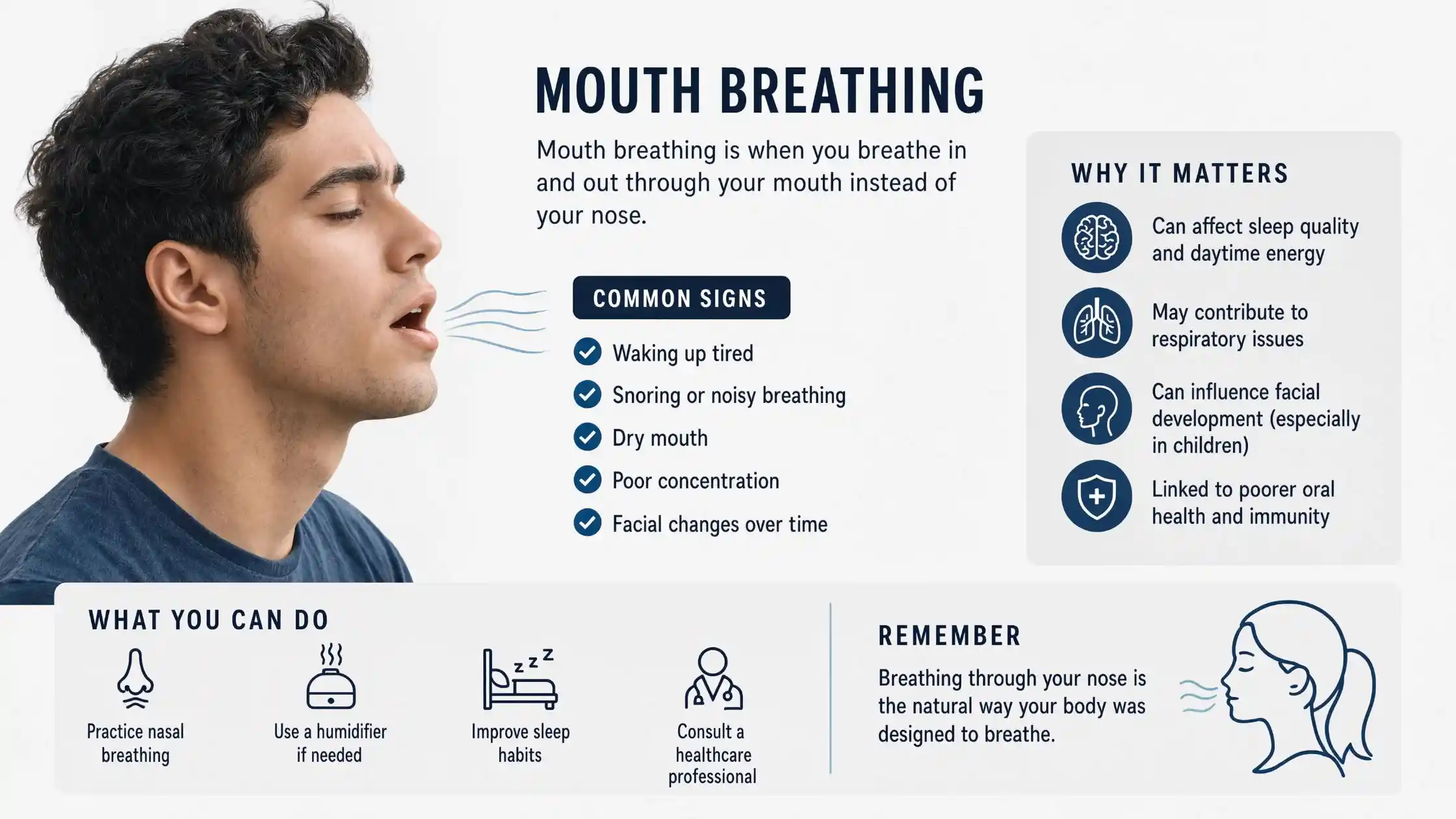
Common signs include:
- Waking up with a dry mouth
- Dry or cracked lips
- Morning bad breath
- Drooling during sleep
- Snoring
- Sore or dry throat in the morning
- Nasal congestion
- Daytime tiredness
- Frequently sleeping with the mouth open
These symptoms can have other causes as well, so they shouldn’t automatically be attributed to mouth breathing.
Why Do People Breathe Through Their Mouth?
Before looking at how to stop mouth breathing, it’s worth understanding what causes it.
In many cases, the underlying issue is that air isn’t moving freely through the nose.
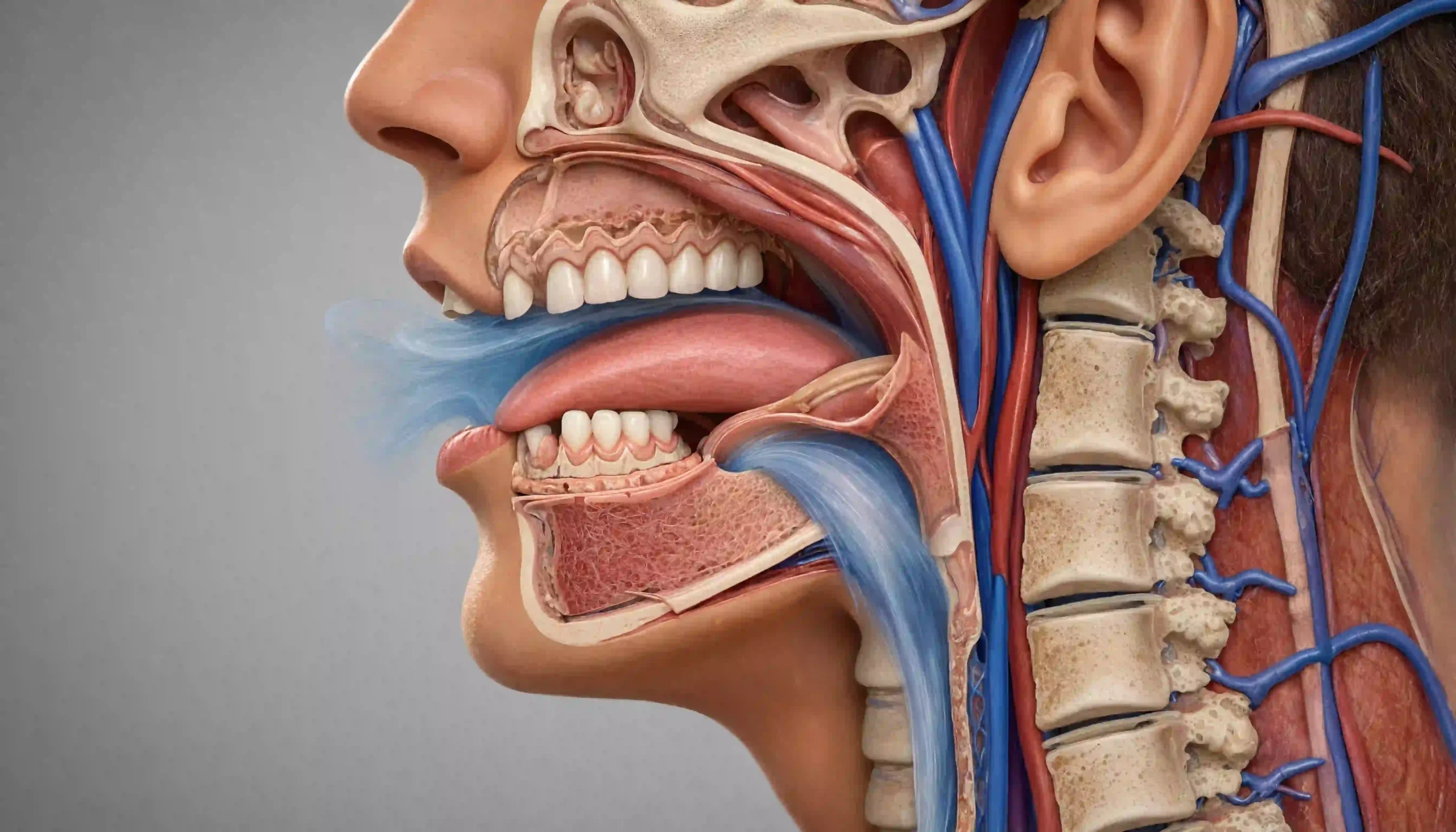
Common causes include:
- Nasal congestion: Colds, allergies, sinus problems, and inflammation can temporarily or persistently block nasal airflow.
- Allergic rhinitis: Allergies can cause swelling and congestion inside the nose, making nasal breathing more difficult.
- Deviated septum: If the wall separating the two sides of the nose is significantly crooked, airflow may be restricted.
- Enlarged turbinates: These structures inside the nose can become swollen, particularly with allergies or chronic irritation.
- Nasal polyps: These noncancerous growths can obstruct airflow through the nasal passages.
- Enlarged adenoids or tonsils: This is particularly relevant in children and can interfere with normal nasal breathing.
- Sleep-related breathing problems: Snoring and obstructive sleep apnea can sometimes be associated with mouth breathing during sleep.
Because the causes are so different, there isn’t one solution that works for everyone.
Signs That You May Be a Mouth Breather
Some people don’t realize they mouth breathe, especially while sleeping.
You may notice clues during the day or hear about them from someone who sleeps nearby.
You Wake Up With a Dry Mouth
A dry mouth in the morning is one of the most recognizable signs.
You may feel as though your mouth is unusually sticky or dry when you wake up. This happens because continuous airflow through the mouth can increase moisture loss.
You Have Frequent Morning Bad Breath
Saliva helps keep the mouth naturally cleansed. When saliva levels drop, bacteria and leftover debris can accumulate more easily.
This can contribute to morning breath and an unpleasant taste.
Your Lips Feel Dry
Repeated mouth breathing can leave the lips feeling dry or cracked, particularly during sleep.
You Snore Regularly
Mouth breathing and snoring can occur together, especially when nasal airflow is restricted.
However, persistent snoring should not simply be dismissed as a habit. It can sometimes be associated with sleep-disordered breathing and deserves medical assessment when accompanied by other symptoms.
You Feel Tired Despite Getting Enough Sleep
Mouth breathing itself doesn’t automatically mean that your sleep quality is poor. However, if it occurs alongside snoring, frequent waking, gasping, or other breathing difficulties, an underlying sleep disorder may need to be considered.
How to Stop Mouth Breathing: Start With the Cause
If you want to know how to stop mouth breathing naturally, the most important point is that you shouldn’t focus only on changing the habit.
If your nose is blocked, your body may be opening your mouth because it needs another way to get air.
So instead of simply trying to keep your mouth closed, start by asking:
Why can’t I breathe comfortably through my nose?
Once that question is answered, treatment becomes much more straightforward.
1. Treat Persistent Nasal Congestion
If your nose is frequently blocked, addressing the congestion may make nasal breathing much easier.
Depending on the cause, treatment may involve:
- Managing allergies
- Treating an underlying sinus problem
- Using medications recommended by a healthcare professional
- Avoiding known allergy triggers
- Using appropriate saline nasal care
Persistent nasal obstruction should be evaluated rather than repeatedly treated with temporary remedies. Conditions such as allergies, sinus inflammation, a deviated septum, and nasal polyps can all interfere with airflow.
2. Pay Attention to Allergy Symptoms
If you notice that mouth breathing becomes worse during certain seasons or around dust, pets, mould, or other triggers, allergies may be contributing.
Allergic inflammation can cause the tissues inside the nose to swell, making it harder to breathe comfortably through your nose.
Managing the allergy can therefore improve nasal airflow and reduce the need to breathe through the mouth.
A healthcare professional can help determine whether allergy treatment is appropriate for you.
3. Keep Your Nasal Passages Comfortable
Simple habits can sometimes make nasal breathing easier when congestion is mild.
Staying adequately hydrated, avoiding known irritants, and maintaining appropriate nasal hygiene may help.
However, these measures won’t correct a structural problem such as a significantly deviated septum or nasal obstruction caused by polyps.
If your nose feels blocked most of the time, don’t assume that you simply need to “train” yourself to breathe through it.
4. Practice Gentle Nasal Breathing During the Day
If your nose is clear and you can breathe comfortably through it, consciously using nasal breathing during relaxed activities may help you become more aware of your breathing pattern.
For example, when sitting at your desk, reading, or watching television, notice:
- Is your mouth relaxed or hanging open?
- Are you breathing comfortably through your nose?
- Is your tongue resting comfortably inside your mouth?
- Are your lips gently together without forcing them?
The goal isn’t to clamp your lips shut. Nasal breathing should feel comfortable and natural.
If you feel that you cannot get enough air through your nose, stop trying to force nasal breathing and have the underlying obstruction evaluated.
5. Look at Your Sleeping Environment
Mouth breathing can become more noticeable during sleep because you aren’t consciously controlling your breathing.
If your bedroom is particularly dry or you’re dealing with nasal congestion, you may wake up with significant mouth dryness.
Pay attention to whether mouth breathing happens:
- Every night
- Only during allergy seasons
- Mainly when you have a cold
- When sleeping on your back
- Alongside loud snoring
Keeping track of these patterns can provide useful information for your doctor or dentist.
6. Don’t Ignore Chronic Snoring
Snoring isn’t always harmless.
If mouth breathing is accompanied by loud or frequent snoring, pauses in breathing during sleep, gasping, morning headaches, or excessive daytime sleepiness, speak with a healthcare professional.
These symptoms can sometimes point toward obstructive sleep apnea or another sleep-related breathing problem.
Resolving the underlying airway or sleep issue is more beneficial than relying on the effort to keep your mouth closed.
What About Mouth Taping for Mouth Breathing?
The practice of mouth taping has become increasingly popular online as a way to encourage nasal breathing at night.
However, it isn’t a universal solution.
If your nose is blocked or you have an undiagnosed sleep-related breathing disorder, covering the mouth can be inappropriate or potentially unsafe.
It is particularly important not to treat mouth taping as a substitute for diagnosing the reason you’re breathing through your mouth.
If you’re considering it, discuss the issue with an appropriate healthcare professional first, especially if you snore heavily, have significant nasal obstruction, or suspect sleep apnea.
Can Mouth Breathing Affect Your Oral Health?
Yes, particularly when it is persistent.
One of the main oral effects is dry mouth.
Saliva serves an important function in safeguarding your teeth and gums. When the mouth remains dry for long periods, the environment becomes more favourable to plaque accumulation and bacterial growth.
Persistent mouth dryness may contribute to:
- Bad breath
- Increased plaque buildup
- Tooth decay risk
- Gum irritation
- Oral discomfort
- Difficulty wearing some dental appliances comfortably
This is one reason dentists may ask about breathing habits when a patient repeatedly presents with dry mouth, gum problems, or unexplained oral discomfort.
Mouth Breathing in Children: Why It Deserves Extra Attention
Mouth breathing is particularly important to address in children.
A child who regularly breathes through their mouth may have an underlying problem such as enlarged adenoids, enlarged tonsils, chronic nasal congestion, or another airway issue.
Long-standing mouth breathing in children has also been associated with changes in facial growth and dental alignment. Cleveland Clinic notes that persistent mouth breathing in children can affect facial development and the alignment of the upper and lower teeth.
Parents should pay attention if a child:
- Frequently sleeps with their mouth open
- Snores regularly
- Has chronic nasal congestion
- Drools excessively while sleeping
- Wakes with a dry mouth
- Seems restless during sleep
- Frequently complains of a blocked nose
Rather than treating the mouth opening as simply a bad habit, it is better to investigate why the child isn’t breathing comfortably through the nose.
Can Dental Problems Cause Mouth Breathing?
Mouth breathing is primarily related to nasal or airway factors, but dentists can still play an important role in evaluating its oral effects.
In children especially, breathing patterns, tongue posture, oral habits, and dental development can interact with each other.
A dentist or orthodontic professional may notice:
- Changes in bite
- Narrow dental arches
- Crowding
- Altered tongue posture
- Dry oral tissues
- Signs of chronic mouth breathing
This doesn’t mean a dentist can identify every cause of mouth breathing. Nasal obstruction and airway conditions may require evaluation by an ENT specialist or other medical professional.
The most useful approach is often collaborative, with dental and medical professionals addressing different parts of the problem.
When Natural Methods Aren’t Enough
It’s understandable to look for simple answers such as how to stop mouth breathing naturally. Lifestyle changes can help when the problem is mild and temporary, but they cannot correct every cause.
For example:
- A deviated septum may require ENT evaluation.
- Significant nasal polyps may need medical treatment.
- Allergic rhinitis may require appropriate allergy management.
- Enlarged adenoids may need assessment in children.
- Sleep apnea requires proper diagnosis and treatment.
Persistent mouth breathing should therefore be viewed as a symptom rather than simply a habit.
If you’ve tried improving nasal breathing but still cannot breathe comfortably through your nose, professional evaluation is the next sensible step.
How Is Chronic Mouth Breathing Diagnosed?
The first step in diagnosis is understanding your symptoms and reviewing your medical history.
A healthcare provider may ask:
- When did the mouth breathing begin?
- Is it worse during sleep?
- Do you have allergies?
- Is your nose frequently blocked?
- Do you snore?
- Do you wake with a dry mouth?
- Has anyone noticed pauses in your breathing during sleep?
Depending on the symptoms, the evaluation may involve examining the nose, throat, mouth, and airway.
Further testing may be recommended when there is concern about structural nasal obstruction or sleep-disordered breathing.
Treatment Depends on What Is Causing the Problem
There is no single “mouth breathing treatment” suitable for everyone.
A healthcare professional may recommend treatment based on the underlying cause.
For allergies
Appropriate allergy treatment may reduce nasal inflammation and improve airflow.
For nasal congestion
The cause of the congestion is treated rather than simply masking the symptom.
For a deviated septum
If the structural problem significantly interferes with breathing, an ENT specialist may discuss options such as septoplasty.
For enlarged adenoids
Children with significantly enlarged adenoids may require specialist assessment and, in some cases, treatment or surgery.
For nasal polyps
Medical treatment or surgery may be considered depending on their size and effect on breathing.
For sleep apnea
A proper sleep assessment is important, followed by treatment appropriate to the diagnosis.
How Aline Dent Can Help With the Oral Effects of Mouth Breathing
At Aline Dent, mouth breathing can be evaluated from an oral-health perspective, particularly when a patient is experiencing problems such as persistent dry mouth, bad breath, gum irritation, plaque buildup, or changes in dental alignment.
A dental examination can help identify whether prolonged mouth breathing may be contributing to oral health concerns and whether there are dental factors that need attention.
The dental team can assess:
- Gum health
- Tooth decay risk
- Plaque and tartar accumulation
- Dry mouth-related oral problems
- Bite and tooth alignment
- Oral habits and tongue posture
- General oral hygiene
For children, monitoring dental development can be particularly useful when chronic mouth breathing is present.
However, if nasal obstruction, allergies, enlarged adenoids, a deviated septum, or another airway condition may be contributing to the problem, it is advisable to undergo a medical or ENT assessment.
The goal is not simply to tell a patient to “keep their mouth closed.” It is to understand what is causing the breathing pattern and protect oral health while the underlying issue is addressed.
Simple Habits That Support Better Oral Health If You Mouth Breathe
Until the underlying cause is treated, protecting your mouth from excessive dryness is important.
Drink Water Regularly
Adequate hydration supports normal saliva production and can help relieve the uncomfortable feeling of a dry mouth.
Maintain Thorough Oral Hygiene
Maintain good oral hygiene by brushing twice daily with fluoride toothpaste and cleaning between your teeth each day.
Clean Your Tongue
Tongue cleaning can help reduce bacterial buildup and may improve unpleasant breath associated with dry mouth.
Don’t Ignore Dental Checkups
Regular examinations can identify cavities, gum inflammation, enamel problems, and other effects before they become more serious.
Avoid Excessive Sugary Snacking
A dry mouth combined with frequent sugar exposure can create an unfavourable environment for tooth decay.
These habits don’t cure mouth breathing, but they can help protect your teeth and gums while the underlying cause is being addressed.
When Should You See a Doctor, ENT Specialist, or Dentist?
Persistent mouth breathing deserves attention when it is affecting your daily life or oral health.
Consider seeking professional advice if:
- You primarily breathe through your mouth.
- Your nose is chronically blocked
- You snore regularly
- You frequently wake with a dry mouth
- You have persistent morning bad breath
- You feel unusually tired during the day
- Someone points out that you have brief pauses in breathing while asleep.
- You frequently wake gasping or choking
- Your child often sleeps with their mouth open.
- You notice something different about your child’s teeth or bite.
A dentist can assess oral effects, while an ENT or other healthcare professional may be better placed to investigate nasal obstruction and airway problems.
Final Thoughts
If your nose is blocked by allergies, chronic congestion, a deviated septum, nasal polyps, enlarged tissues, or another condition, your mouth may simply be compensating for restricted nasal airflow. Trying to force your mouth closed without addressing that problem is unlikely to provide a lasting solution.
For occasional mouth breathing, particularly during a cold or intense exercise, there may be nothing to worry about. But if you regularly sleep with your mouth open, wake with a dry mouth, snore, experience persistent bad breath, or notice that your nose is almost always blocked, it is worth finding out why.
Good oral hygiene can protect your teeth and gums from the effects of dryness, while appropriate medical or ENT care can address problems affecting nasal and airway function. For children especially, early evaluation is valuable because persistent mouth breathing can be associated with changes in dental and facial development.
The goal isn’t simply to breathe through your nose because someone told you that you should. The goal is to make nasal breathing comfortable and sustainable by identifying and treating whatever is preventing it.
Frequently Asked Questions About Mouth Breathing
How can I stop mouth breathing naturally?
If nasal breathing is comfortable, becoming more aware of your breathing pattern during the day and practising relaxed nasal breathing may help. However, persistent mouth breathing often has an underlying cause such as allergies, nasal congestion, a deviated septum, or another airway issue. Treating that cause is usually more effective than simply trying to change the habit.
Why do I breathe through my mouth while sleeping?
Mouth breathing during sleep can happen when nasal airflow is restricted. Allergies, congestion, structural nasal problems, enlarged adenoids in children, and sleep-related breathing disorders can all contribute.
Is mouth breathing bad for your teeth?
Persistent mouth breathing can contribute to dry mouth, which may increase the risk of oral problems such as bad breath, plaque buildup, and tooth decay. Maintaining good oral hygiene and addressing the underlying cause are both important.
Can mouth breathing cause bad breath?
It can contribute to bad breath because breathing through the mouth can dry the oral tissues and reduce the protective effects of saliva. Persistent bad breath can also have other causes, including gum disease and poor oral hygiene.
How do I stop mouth breathing at night?
The first step is to identify why it happens. If nasal congestion, allergies, structural nasal problems, snoring, or sleep-related breathing difficulties are present, treating the underlying issue is more important than simply trying to keep your mouth closed while sleeping.
Does mouth taping stop mouth breathing?
Mouth taping may encourage some people to keep their lips closed, but it is not appropriate for everyone and does not treat the cause of nasal obstruction. It should not be used as a substitute for professional evaluation, particularly if you have significant nasal blockage or possible sleep apnea.
Can children outgrow mouth breathing?
Some children may stop mouth breathing when a temporary cause such as a cold or congestion resolves. Persistent mouth breathing should not simply be assumed to be a habit, however, because enlarged adenoids, allergies, tonsils, or other airway problems may be involved.
Does mouth breathing change the face?
Long-standing mouth breathing in children has been associated with changes in facial growth and dental development. The relationship is complex, and the underlying airway problem should be evaluated rather than assuming mouth breathing alone is responsible.
Should I see a dentist for mouth breathing?
A dentist can evaluate the effects of mouth breathing on your teeth, gums, bite, and overall oral health. If nasal obstruction or another airway problem is suspected, an ENT or other healthcare professional may also need to evaluate the underlying cause.