Can Sparkling Water Damage Your Teeth? What You Should Know!
Sparkling water has become a popular alternative to sugary soft drinks, especially among people looking for something refreshing without the calories and sugar of soda. Its bubbles, crisp taste and variety of flavours make it an appealing choice for everyday hydration. But there is one question that often comes up when people make the switch: can sparkling water damage your teeth?
The answer depends largely on the type of sparkling water you drink and how frequently you consume it. Plain sparkling water is generally considered a tooth-friendly alternative to sugary carbonated drinks. However, flavoured varieties may contain additional acids that can gradually weaken tooth enamel when consumed frequently. Sugar-free does not always mean acid-free, and even drinks marketed as healthier alternatives deserve a closer look.
Understanding how carbonation, acidity and drinking habits affect your teeth can help you enjoy sparkling water while protecting your smile.
What Makes Sparkling Water Different from Regular Water?
Sparkling water is water infused with carbon dioxide, which creates its familiar fizz. The carbon dioxide in sparkling water reacts with water to create a weak acid called carbonic acid, resulting in slightly higher acidity compared to still water.
That difference has led to concerns about whether drinking carbonated water can weaken the protective enamel covering the teeth.
However, acidity alone does not tell the whole story. Plain sparkling water generally has a much lower erosive potential than many soft drinks, energy drinks and acidic fruit beverages. It also does not contain the sugar found in regular sugary soda unless sugar has been added.
The distinction matters because tooth damage can occur through different processes. Acids can gradually dissolve minerals from enamel, while bacteria use sugars to produce acids that contribute to tooth decay. A beverage may be sugar-free yet still be acidic enough to affect enamel under certain conditions.
Can Sparkling Water Damage Your Teeth?
For most people, drinking plain, unsweetened sparkling water in moderation is unlikely to cause significant damage to healthy teeth. Research suggests that plain sparkling water has a relatively low potential for enamel erosion compared with more acidic beverages.
Nevertheless, can sparkling water damage your teeth if you drink it frequently throughout the day? It may contribute to enamel erosion, particularly if the product contains added acids or if your teeth are already vulnerable to acid exposure.
Three factors are especially important:
- The ingredients: Plain carbonated water is different from sparkling water containing lemon juice, citric acid, fruit concentrates or added sugar.
- How often you consume it: Drinking acidic beverages frequently throughout the day leaves your teeth with less time to recover from repeated acid exposure.
- How you drink it: Holding sparkling water in your mouth, swishing it around or sipping it continuously for hours increases the duration of contact with your teeth.
The occasional glass of plain sparkling water is not the same as repeatedly exposing your teeth to an acidic, flavoured beverage all day. Your overall drinking habits matter more than the bubbles alone.
Is Plain Sparkling Water Safer Than Flavoured Sparkling Water?
Not all sparkling water products have the same effect on teeth. Checking the ingredient list can help you distinguish between lower-risk options and drinks that deserve more caution.
Plain, unsweetened sparkling water
Plain sparkling water consists of water infused with carbon dioxide, with no added sugar or flavourings.Although it is slightly acidic, it is generally considered a reasonable alternative to sugary fizzy drinks.
If you enjoy carbonated water, choosing an unflavoured variety is a practical way to reduce exposure to additional acids.
Lemon, lime and citrus-flavoured sparkling water
Flavoured sparkling water may contain citric acid, lemon juice or other acidic ingredients to create a tangy taste. These ingredients can lower the drink’s pH and increase its potential to erode enamel.
A product labelled “natural flavour” is not necessarily highly acidic, so the name or flavour alone cannot establish how erosive a particular drink is. The complete ingredient list and formulation matter.
Sweetened sparkling water
Some carbonated beverages contain added sugar, syrups or other sweetening ingredients. When oral bacteria break down sugars, they produce acids that can contribute to tooth decay.
This means these beverages may damage tooth enamel through acid exposure while also increasing the likelihood of cavities due to their sugar content.
Even when a drink contains no sugar, however, its acidity may still matter.
The American Dental Association advises paying attention to acidic ingredients and limiting frequent exposure to beverages that can contribute to dental erosion.
How Does Acid Erosion Affect Tooth Enamel?
Tooth enamel is the hard outer layer that protects the more sensitive structures inside each tooth. Although rich in minerals, it can undergo mineral loss when frequently exposed to acidic substances.
This process is called dental erosion. It differs from ordinary tooth decay because erosion is caused by direct chemical exposure to acids rather than acids produced by bacteria from sugars.
Saliva helps protect teeth by diluting and neutralising acids and supporting the natural repair of early mineral loss. However, frequent acid exposure can overwhelm these protective processes.
Once enamel has been physically worn away, the body cannot grow it back. Early mineral loss may be reversible to some extent through remineralisation, but lost tooth structure is permanent.
Signs that enamel may be wearing down
Enamel erosion may develop gradually, so the changes are not always obvious at first. Possible signs include:
- Increased sensitivity to cold water, hot drinks or sweet foods.
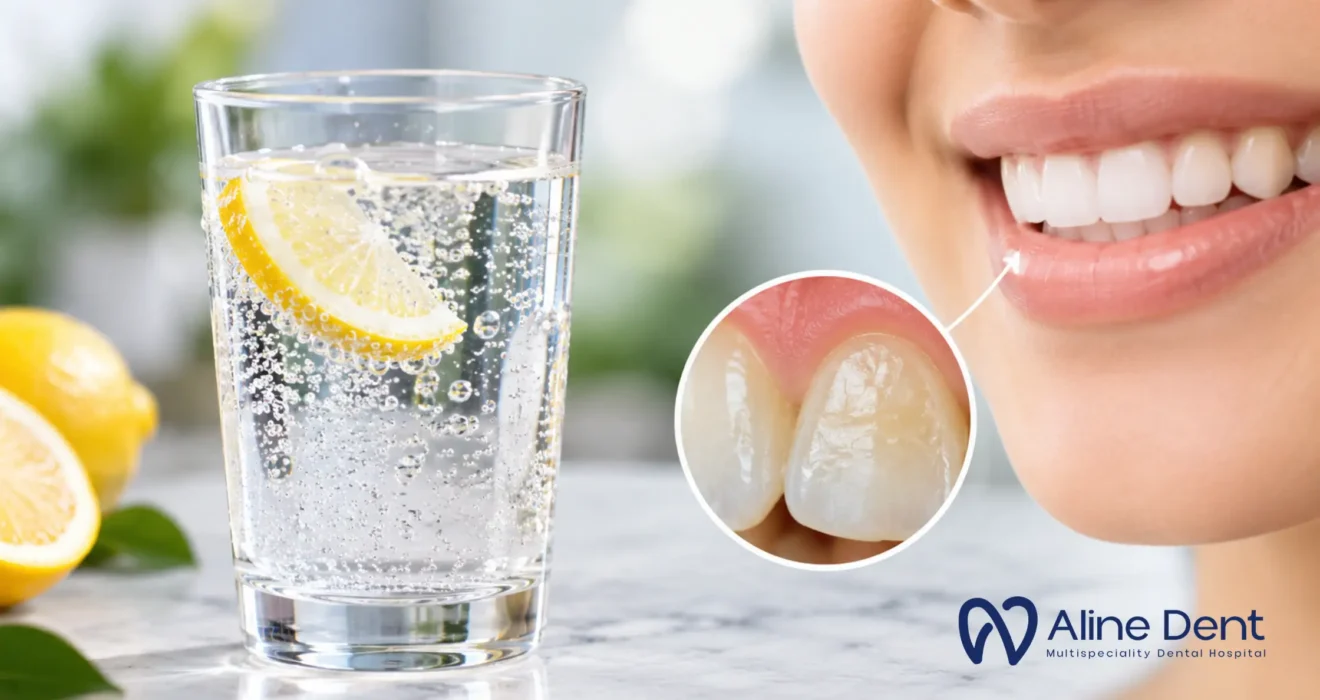
- Teeth appearing more yellow as the underlying dentin becomes more visible.
- Smooth, shiny or rounded areas on tooth surfaces.
- Teeth appearing shorter or developing flattened edges.
- Small areas of wear, thinning or chipping in more advanced cases.
These symptoms do not automatically mean sparkling water is responsible. Tooth sensitivity and visible changes can have several causes, including gum recession, tooth decay, teeth grinding and other dietary acids. A dental examination is needed to identify the underlying problem.
Can Sparkling Water Cause Cavities?
Plain sparkling water without sugar is not considered a major direct cause of cavities. The absence of sugar reduces the fuel available to cavity-causing bacteria.
Although it is highly mineralised, it can lose minerals when exposed to acids repeatedly. Tooth decay involves damage associated with acids produced by bacteria, whereas erosion occurs when acids directly dissolve tooth minerals.
Some flavoured or sweetened sparkling drinks may contain ingredients that increase one or both risks. A drink that is sugar-free can still be acidic, and a drink that is acidic may contribute to enamel wear even if it does not directly promote cavities in the same way as a sugary beverage.
For better oral health, plain water remains a dependable everyday choice. If sparkling water helps you replace sugary soft drinks, that can be a positive change, particularly when you choose an unsweetened variety.
Who Should Be More Careful About Drinking Sparkling Water?
Most people with healthy teeth can enjoy plain sparkling water without undue concern. Some people, however, may need to pay closer attention to their exposure to acidic beverages.
Extra caution may be appropriate if you:
- Already experience tooth sensitivity or have signs of enamel wear.
- Have receding gums that expose the roots of your teeth.
- Frequently consume citrus drinks, fruit juices, soft drinks or other acidic foods and beverages.
- Experience dry mouth, which may weaken saliva’s natural protective action.
- Have frequent acid reflux, which can expose teeth to stomach acid.
- Sip flavoured sparkling water continuously throughout the day.
These habits can contribute to greater acid exposure for your teeth. If you already experience enamel erosion or ongoing sensitivity, a dentist can identify possible contributing factors and recommend ways to protect your remaining enamel.
How to Drink Sparkling Water Without Harming Your Teeth?
You don’t have to eliminate sparkling water from your diet to maintain good oral health. A few simple habits can help minimise unnecessary acid exposure.
1. Choose plain, unsweetened sparkling water
Check the ingredients before buying a product.Plain sparkling water without added sugar, citrus juice, or additional acids is generally less harmful to your teeth than highly acidic, flavoured, or sweetened versions.
2. Avoid sipping it continuously
Drinking an acidic beverage over a prolonged period exposes your teeth repeatedly. If you choose sparkling water, consume it within a reasonable period rather than keeping it beside you and taking small sips all day.
3. Drink it with meals
Having an acidic drink alongside a meal can help limit separate episodes of acid exposure throughout the day. You can also drink plain water during or after meals to help wash away any remaining acids.
4. Do not swish it around your mouth
Avoid holding sparkling water in your mouth or deliberately moving it around your teeth before swallowing. This increases contact between the drink and your enamel without providing any oral-health benefit.
5. Rinse with plain water afterwards
Rinse your mouth with plain water after consuming flavoured or acidic sparkling drinks to help wash away and dilute any residual acid.
6. Wait before brushing
Avoid brushing your teeth immediately after drinking acidic beverages, as acid can temporarily soften the enamel and make it more vulnerable to wear during brushing. A practical approach is to wait around 30–60 minutes before brushing, while rinsing with plain water in the meantime.
7. Brush with fluoride toothpaste
Maintain a twice-daily brushing routine with fluoride toothpaste and a soft-bristled toothbrush, applying gentle pressure. While fluoride helps reinforce enamel and promotes remineralisation, it cannot replace missing tooth structure.
8. Keep regular dental appointments
A dentist can detect the early stages of enamel erosion, evaluate tooth sensitivity, and suggest appropriate preventive care. Professional advice is particularly useful if you drink acidic beverages frequently or have other risk factors for tooth wear.
Following these habits can reduce the damage acidic beverages may cause to teeth. The American Dental Association also recommends limiting acidic exposure and rinsing with water after consuming acidic foods and beverages.
Sparkling Water vs Soda: Which Is Better for Your Teeth?
Sparkling water and soda may both contain carbonation, but they are not equivalent from a dental-health perspective.
Plain sparkling water is generally less likely to erode tooth enamel than conventional soft drinks. Many sodas contain additional acids, and sugar-sweetened varieties also expose teeth to sugars that bacteria can use to produce cavity-causing acids.
| Beverage | Main dental consideration |
| Plain, unsweetened sparkling water | Generally low risk for enamel erosion when consumed in moderation |
| Flavoured sparkling water | Risk depends on added acids, ingredients and drinking frequency |
| Sugar-sweetened soda | Can contribute to both enamel erosion and tooth decay |
| Sugar-free acidic soda | Can still contribute to enamel erosion despite having no sugar |
| Plain water | Best everyday option for hydration and minimising acid exposure |
The important distinction is not simply whether a drink is fizzy. Its acidity, sugar content, ingredients and frequency of consumption all influence its effect on teeth.
How Aline Dent Can Help Protect Your Tooth Enamel
At Aline Dent Multispeciality Dental Hospital, patients concerned about tooth sensitivity, enamel erosion or changes in their teeth can seek a dental evaluation to understand the possible cause.
If someone is worried that sparkling water is damaging their teeth, a dentist can examine the enamel, check for signs of erosion and assess other contributing factors, such as gum recession, tooth decay, grinding or frequent exposure to acidic foods and beverages.
Depending on the findings, the dentist may recommend changes to daily oral-care habits, fluoride-based preventive care, desensitising products or restorative treatment if tooth structure has already been damaged. The appropriate approach depends on the condition of the teeth and the extent of any existing wear.
Aline Dent has clinics in Thalassery, Kuttiyadi & Vadakara, where patients can seek guidance on maintaining their oral health and addressing dental concerns. Rather than eliminating every food or drink that contains some acidity, the goal is to understand individual risk factors and adopt habits that help protect the teeth over time.
If you experience persistent sensitivity, visible enamel changes or discomfort when drinking cold beverages, arrange a dental assessment instead of assuming that sparkling water is the only cause.
Conclusion
Sparkling water can be part of a healthy hydration routine, and plain, unsweetened varieties are generally much less concerning for teeth than sugary soft drinks. The bigger concern is repeated exposure to acidic ingredients, especially in flavoured beverages consumed throughout the day.
So, can sparkling water damage your teeth? It can contribute to enamel erosion under certain conditions, but plain sparkling water consumed in moderation is unlikely to pose a significant risk for most people. Choosing unflavoured varieties, limiting prolonged sipping, rinsing with plain water and maintaining good oral hygiene can help protect your enamel.
If you notice sensitivity, yellowing or visible changes to your teeth, consult a dentist to identify the cause and discuss appropriate care.
Frequently Asked Questions
1. Can sparkling water damage your teeth if you drink it every day?
Plain, unsweetened sparkling water is generally considered safe for most people when consumed in moderation. However, drinking acidic flavoured varieties frequently or sipping them throughout the day may increase the risk of enamel erosion. Your existing oral health and total exposure to acids also matter.
2. Is sparkling water worse for your teeth than normal water?
Yes, plain sparkling water is slightly more acidic than still water because it contains dissolved carbon dioxide. Nevertheless, its erosive potential is generally low compared with many soft drinks and acidic juices. Still water remains the better everyday choice for minimising acid exposure.
3. Does sugar-free sparkling water damage enamel?
Sugar-free sparkling water can still affect enamel if it contains enough acid and is consumed frequently. Sugar content and acidity are separate considerations: removing sugar reduces the risk associated with bacterial acid production, but it does not automatically make a drink non-acidic.
4. Is lemon sparkling water bad for your teeth?
Lemon-flavoured sparkling water may be more acidic than plain sparkling water, particularly when it contains citric acid or lemon juice. Frequent exposure can increase the risk of enamel erosion. Check the ingredients, limit prolonged sipping and rinse with plain water afterwards.
5. Can sparkling water make teeth sensitive?
Frequent exposure to acidic drinks may contribute to enamel erosion, which can expose the sensitive dentin beneath it. However, sensitivity can also result from cavities, gum recession, cracks or teeth grinding. If the discomfort persists, a dentist should assess the cause.
6. Should I brush my teeth after drinking sparkling water?
You should not brush immediately after drinking an acidic beverage. Rinse your mouth with plain water and wait around 30–60 minutes before brushing. Use fluoride toothpaste and a soft-bristled toothbrush to help protect enamel.
7. Is sparkling water better than soda for dental health?
Plain, unsweetened sparkling water is generally a better option than sugary soda because it contains no added sugar and has a lower potential for enamel erosion. However, flavoured sparkling water and sugar-free fizzy drinks can still be acidic, so their ingredients and frequency of consumption matter.
8. Can a dentist repair enamel damaged by sparkling water?
Lost enamel cannot grow back. However, a dentist can help manage early mineral loss, reduce sensitivity and protect vulnerable teeth. Depending on the extent of damage, treatment may include fluoride products, preventive care or restorative procedures to rebuild or protect affected surfaces.