White Spots on Teeth: What Causes Them and How to Get Rid of Them?
Have you ever smiled in the mirror and noticed small white marks on one or more of your teeth? At first glance, they may seem harmless, but they often leave people wondering whether they’re simply cosmetic imperfections or signs of an underlying dental problem.
If you’ve recently discovered white spots on teeth, you’re certainly not alone. This is one of the most common concerns dentists encounter, affecting both children and adults. Some people notice them after orthodontic treatment, while others develop them gradually over time without any obvious cause.
The good news is that white spots don’t always indicate serious dental disease. In many cases, they are treatable, and with the right diagnosis, it’s often possible to improve both the health and appearance of your teeth.
However, because several different conditions can cause these white patches, it’s important to understand what’s actually happening beneath the surface rather than trying home remedies that may do more harm than good.
In this guide, we’ll explore the most common causes of white spots on teeth, available treatment options, prevention strategies, and when it’s time to visit a dentist.
What Are White Spots on Teeth?
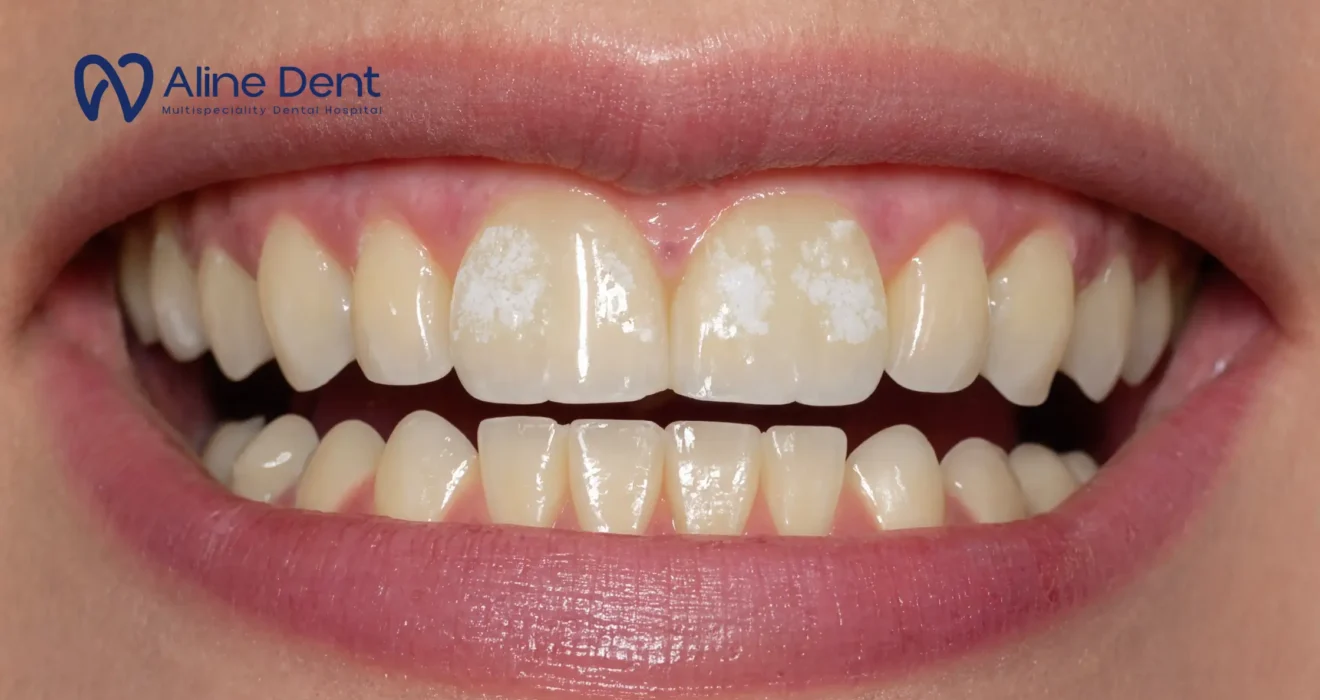
White spots are areas where the enamel appears lighter or more opaque than the surrounding tooth structure.
Unlike natural tooth colour, these spots often look:
- Chalky
- Milky white
- Dull
- Opaque
- Uneven in colour
They may appear on:
- Front teeth
- Back teeth
- One tooth
- Multiple teeth
Some white spots are purely cosmetic, while others indicate changes occurring within the enamel itself.
Understanding the underlying cause is the first step toward choosing the right treatment.
Why Do White Spots Develop?
Although many people assume white spots are simply stains, they are actually quite different.
Most white spots develop because the enamel has undergone changes during its formation or has lost important minerals after the tooth has erupted.
Common causes include:
- Mineral loss
- Excess fluoride exposure
- Poor oral hygiene
- Developmental enamel defects
- Acid exposure
- Orthodontic treatment
Each cause requires a slightly different management approach.
Common Causes of White Spots on Teeth
1. Enamel Demineralization
One of the most frequent causes of white spots is enamel demineralization.
Our teeth constantly lose and regain minerals through a natural process.
However, when plaque remains on teeth for extended periods, acids produced by bacteria begin removing minerals from the enamel faster than they can be replaced.
The earliest visible sign is often a chalky white area.
Without treatment, these weakened areas may eventually develop into cavities.
2. White Spots After Braces
Many individuals find white marks appearing on their teeth shortly after their orthodontic treatment is completed.
These spots usually occur because plaque accumulated around brackets during treatment.
If oral hygiene wasn’t maintained consistently, the enamel may have lost minerals beneath the brackets.
Fortunately, many cases improve with professional care and remineralization treatments.
3. Dental Fluorosis
Fluoride helps strengthen teeth, but excessive fluoride intake while permanent teeth are still developing can affect enamel formation.
This condition is known as dental fluorosis.
Depending on its severity, fluorosis may appear as:
- Small white streaks
- Cloudy patches
- Diffuse white areas
Most cases are cosmetic rather than harmful.
4. Enamel Hypoplasia
When tooth enamel does not develop fully during childhood, it leads to a condition known as enamel hypoplasia.
Possible contributing factors include:
- Nutritional deficiencies
- Premature birth
- Childhood illnesses
- Certain medications
- Genetic conditions
Teeth affected by enamel hypoplasia may appear thinner, weaker, or show white patches alongside grooves or pits.
5. Poor Oral Hygiene
Inadequate brushing and flossing allow plaque to remain on tooth surfaces.
Over time, bacterial acids begin weakening enamel, creating areas of mineral loss.
This is particularly common around the gumline.
6. Acidic Foods and Drinks
Frequent consumption of acidic beverages such as soft drinks, sports drinks, and citrus juices may gradually weaken enamel.
As minerals are lost, white areas may begin to appear before more obvious erosion develops.
Are White Spots on Teeth Permanent?
Not always.
Some white spots can improve significantly, while others require cosmetic treatment. The underlying condition is a key factor in determining the outcome.
Early mineral loss often responds well to remineralization.
Developmental enamel defects, however, may require restorative or cosmetic procedures.
Professional diagnosis helps determine the most appropriate treatment option.
How to Remove White Spots on Teeth?
Many patients search online for how to remove white spots on teeth, hoping for a quick home remedy.
Unfortunately, treatment depends entirely on why the spots developed in the first place.

Here are some of the most effective options.
Fluoride and Remineralization Therapy
If mineral loss is detected early, fluoride treatments can help strengthen enamel and encourage remineralization.
Specialized remineralizing products may also be recommended.
Professional Teeth Cleaning
When plaque buildup contributes to enamel changes, professional cleaning removes bacterial deposits and supports healthier enamel.
Resin Infiltration
This minimally invasive cosmetic procedure helps blend certain white spots with surrounding enamel by filling microscopic pores inside the lesion.
It is especially effective for many post-braces white spots.
Microabrasion
Microabrasion gently removes a very thin outer layer of enamel to improve the appearance of superficial white marks.
Dental Bonding
If white spots are caused by developmental defects or are particularly noticeable, tooth-coloured composite resin may be used to improve appearance.
Porcelain Veneers
For more severe cosmetic concerns, veneers can provide a long-lasting aesthetic solution by covering the front surface of the teeth.
Can White Spots Be Prevented?
Many cases of enamel demineralization are preventable through consistent oral hygiene and regular dental care.
Simple habits make a significant difference.
Use fluoride toothpaste and brush thoroughly for two minutes.
Removing plaque between teeth reduces bacterial activity and protects enamel.
- Limit Sugary Snacks
Consistent exposure to sugary substances results in increased acid production in the mouth.
- Reduce Acidic Beverages
Limiting soft drinks and acidic juices helps preserve enamel minerals.
- Attend Regular Dental Checkups
Professional examinations often identify early enamel changes before they become more noticeable.
When Should You See a Dentist?
You should schedule a dental evaluation if:
- White spots appear suddenly
- The spots become larger
- You notice tooth sensitivity
- White areas develop after braces
- You’re unsure about the cause
- The appearance affects your confidence
Early diagnosis usually offers more treatment options.
Comprehensive Care for White Spots on Teeth
Although many people assume white spots on teeth are simply cosmetic, identifying their underlying cause is essential before choosing a treatment.
At Aline Dent, every patient undergoes a detailed dental examination to determine whether white spots are related to demineralization, fluorosis, enamel defects, orthodontic treatment, or another condition.
The clinic provides personalized treatment plans based on each patient’s oral health and cosmetic goals.
Services include:
- Comprehensive dental examinations
- Professional teeth cleaning
- Fluoride and remineralization therapies
- Cosmetic dentistry solutions
- Tooth-coloured restorations
- Smile enhancement treatments
- Preventive dental care
The team believes that successful treatment isn’t just about improving appearance; it also involves protecting enamel, preserving tooth structure, and preventing future dental problems.
Whether your white spots developed recently or have been present for years, a professional evaluation can help determine the most suitable treatment approach.
Myths VS Facts Related To White Spots on Teeth
| Myths | Facts |
|---|---|
| White spots mean my teeth are cleaner. | Not necessarily. White spots are often a sign of enamel changes, such as demineralization or developmental defects, rather than better oral hygiene. |
| Whitening toothpaste will remove white spots. | Whitening products may actually make white spots appear more noticeable by lightening the surrounding enamel while the white areas remain unchanged. |
| All white spots are cavities. | While some white spots can be an early sign of tooth decay, others may be caused by dental fluorosis, enamel hypoplasia, or previous orthodontic treatment. A dental examination is needed to determine the exact cause. |
| White spots will disappear on their own. | Some early enamel demineralization may improve with remineralization therapy and good oral hygiene, but many white spots require professional treatment to improve their appearance. |
| White spots are only a cosmetic issue. | Not always. While some are harmless, others may indicate early enamel damage or mineral loss that should be addressed before it progresses to tooth decay. |
Final Thoughts
Noticing white spots on teeth can be concerning, but they don’t always indicate a serious dental problem. In many cases, these spots are an early sign of enamel changes that can be managed successfully with timely treatment and proper preventive care.
The key is understanding why the spots have developed. Whether they’re caused by demineralization, fluorosis, enamel hypoplasia, or previous orthodontic treatment, an accurate diagnosis allows your dentist to recommend the most effective solution.
Rather than relying on internet remedies or cosmetic products that may not address the underlying issue, seeking professional guidance can help restore both the health and appearance of your smile.
With consistent oral hygiene, regular dental visits, and early intervention when needed, you can protect your enamel and maintain a healthy, confident smile for years to come.
Frequently Asked Questions
What causes white spots on teeth?
White spots can result from enamel demineralization, fluorosis, enamel hypoplasia, orthodontic treatment, poor oral hygiene, or excessive acid exposure.
Can white spots on teeth be removed?
Yes. Depending on the cause, treatment options include remineralization therapy, resin infiltration, microabrasion, bonding, or veneers.
Are white spots a sign of cavities?
Sometimes. Early enamel demineralization may be the first stage of tooth decay, but not all white spots indicate cavities.
Can braces cause white spots?
Yes. Poor plaque control around orthodontic brackets can lead to enamel demineralization and white spot lesions.
Is dental fluorosis harmful?
Most cases are cosmetic and do not affect tooth function, although severe fluorosis may require treatment for aesthetic reasons.
Does teeth whitening remove white spots?
Not necessarily. In some cases, whitening can make white spots more noticeable because the surrounding enamel becomes brighter.
Can fluoride help white spots?
If the spots are caused by early mineral loss, fluoride treatments may strengthen enamel and reduce their appearance over time.