
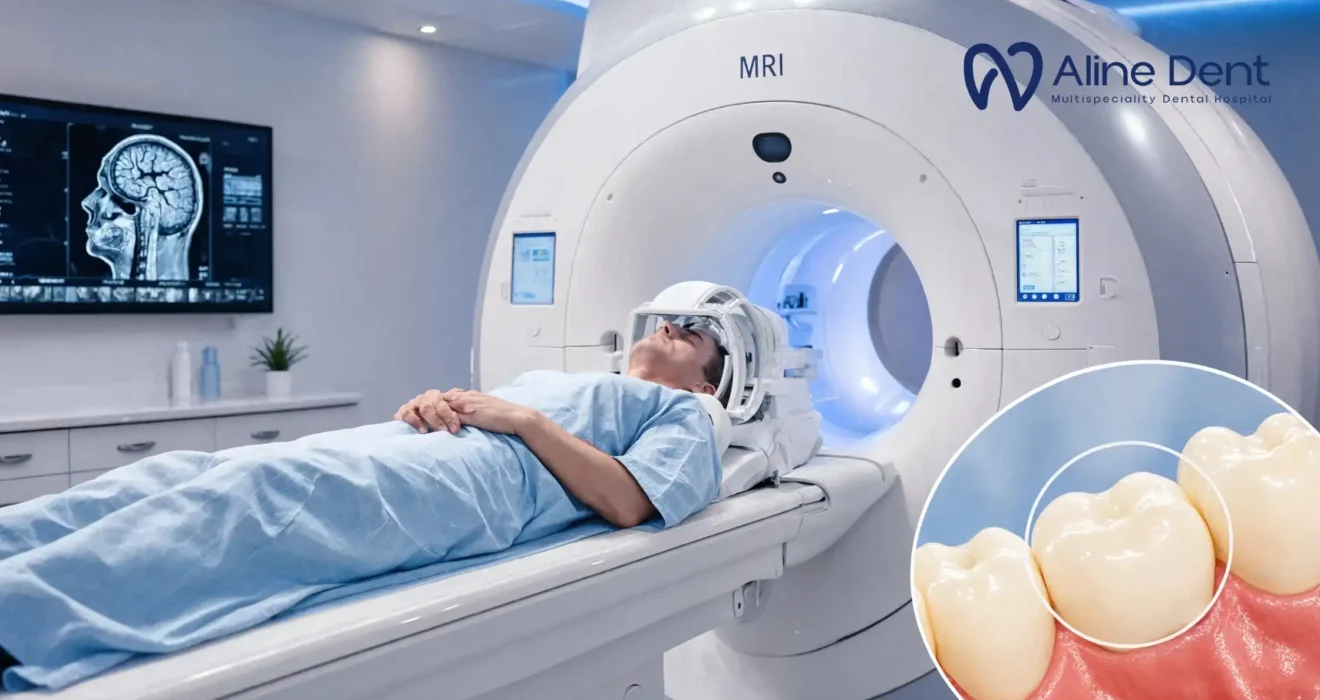
Can MRI Be Done With Dental Crowns? What You Need to Know!
Being told that you need an MRI can raise a surprisingly common question if you have dental work: Can MRI be done with dental crowns?
Dental crowns are made from different materials, including ceramic, porcelain, zirconia and various metal alloys. Because MRI uses a powerful magnetic field, it is reasonable to wonder whether a crown could move, heat up, interfere with the scanner or affect the quality of the images.
The good news is that having a dental crown does not usually prevent you from having an MRI. However, the type of crown, the materials used in it and the area being scanned can matter. Some dental restorations may produce artifacts that affect images around the mouth, jaw or head.
So, if you have a crown and have been prescribed an MRI, there is generally no need to panic. But you should always inform the MRI technologist about your dental work before the scan.
Can MRI Be Done With Dental Crowns?
Yes, MRI can generally be done with dental crowns.
A dental crown is a fixed restoration placed over a damaged or heavily restored tooth. Depending on the type of crown, it may be made entirely from ceramic or zirconia, or it may contain a metal component or metal alloy.
MRI safety is primarily concerned with materials and devices that can interact significantly with the magnetic field or radiofrequency energy. Dental restorations such as fillings and braces are generally not affected in a way that prevents MRI, although they can sometimes distort images, particularly when the area being examined is close to the mouth or face.
The important distinction is that not every dental crown contains the same material.
That is why it is better to tell the MRI team about your crown rather than assuming that all crowns are identical.
Why Does an MRI Care About Metal?
An MRI scanner does not work like a conventional X-ray machine. It uses a strong magnetic field, radiofrequency energy and changing magnetic fields to produce detailed images of tissues inside the body.
Certain metals, particularly ferromagnetic materials, can interact strongly with the MRI’s magnetic field. Depending on the object and its location, this interaction can create safety concerns or interfere with image quality.
MRI facilities therefore use detailed screening procedures before a scan. Patients are asked about implanted devices, metal fragments, medical implants and other materials that may be relevant to MRI safety.
Dental crowns are different from loose metal objects such as jewellery because a crown is permanently attached to a tooth. Nevertheless, telling the MRI team about any dental restoration is still important.
Are Dental Crowns Magnetic?
Not all dental crowns are made from magnetic materials.
Dental crowns can be manufactured from several different materials, including:
- Porcelain
- Ceramic
- Zirconia
- Metal alloys
- Porcelain-fused-to-metal materials
- Other combinations of restorative materials
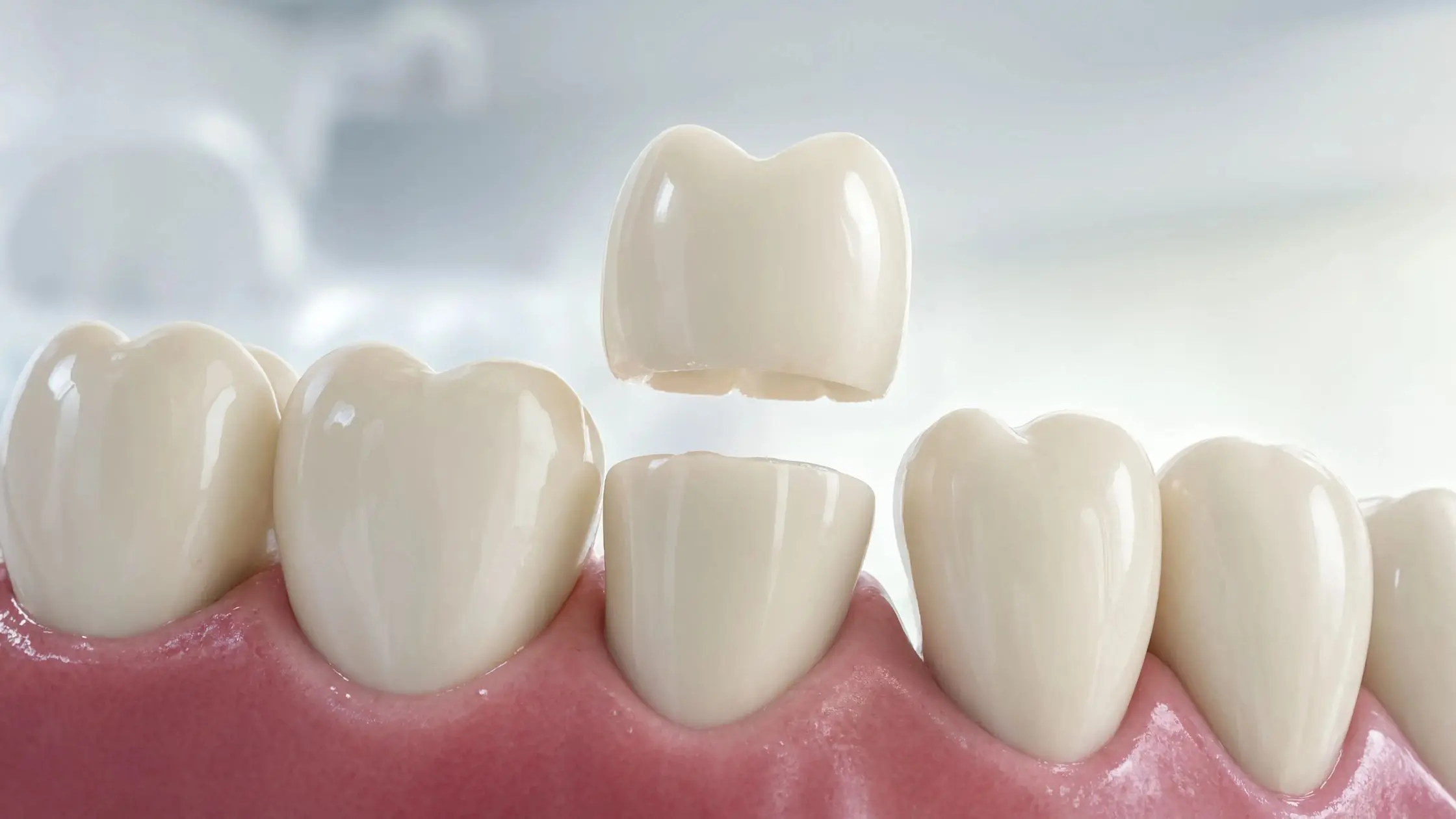
For example, zirconia is a ceramic material used in all-ceramic dental restorations, including crowns.
The term “dental crown” therefore does not tell the MRI team exactly what material is inside the restoration.
If you know the type and material of your crown, tell the MRI technologist. If you do not know, simply mention that you have a dental crown. The imaging team can determine whether any additional information is necessary.
Can You Have an MRI With a Porcelain Crown?
In general, porcelain or ceramic dental crowns are compatible with MRI because they are not ferromagnetic metal objects.
However, some crowns described as porcelain crowns may have an underlying metal component, such as porcelain-fused-to-metal restorations. The word “porcelain” alone therefore does not always tell you whether the restoration contains metal.
If you are unsure about the construction of your crown, there is no need to guess. Tell the MRI facility that you have a dental crown and, if possible, provide the dental records or information supplied by your dentist.
Can You Have an MRI With a Zirconia Crown?
Zirconia crowns are made from a ceramic material based on zirconium oxide. They are widely used for dental restorations, including full-coverage crowns.
A zirconia crown itself is not the type of ferromagnetic metal object that MRI screening is primarily designed to detect.
However, a dental restoration can sometimes contain additional components or materials, depending on how it was fabricated and placed. If you have a zirconia crown, simply mention it during MRI screening.
The MRI team can then determine whether any additional precautions are necessary for the particular scan.
What About Metal Dental Crowns?
Metal crowns and crowns containing metal alloys deserve a little more consideration.
Dental alloys can contain different metals, and not all metals behave identically in an MRI environment. Some dental restorations may be largely unaffected from a safety perspective but can still cause image artifacts.
An artifact is an unwanted distortion or signal alteration that appears on an MRI image because of a material or object interacting with the imaging process.
Radiology guidance notes that dental fillings, braces and retainers can distort images of the facial area or brain even though they are usually not affected by the magnetic field in a way that creates a safety problem.
So the question is not always simply:
“Will my crown make MRI unsafe?”
Sometimes the more relevant question is:
“Could my dental crown affect the quality of the images being taken?”
Can Dental Crowns Affect MRI Images?
Yes, some dental restorations can affect MRI image quality.
This is particularly relevant when the MRI is being performed near the:
- Brain
- Jaw
- Face
- Mouth
- Sinuses
- Neck
Metallic dental materials can produce areas of signal loss or distortion. These effects are commonly referred to as MRI artifacts.
If you are having an MRI of your knee, for example, a dental crown is unlikely to be relevant to the images being acquired.
If you are having an MRI of the head or face, however, dental materials may be much closer to the area being examined and can potentially interfere with certain portions of the image.
This does not necessarily mean the scan cannot be performed. It simply means that the radiology team should know about the restoration so they can interpret the images appropriately and use suitable imaging techniques when possible.
What If You Have Several Dental Crowns?
Having multiple crowns does not automatically mean that you cannot undergo an MRI.
The same principle applies: the MRI team needs to know what dental work you have and, where relevant, what materials were used.
Multiple metal-containing restorations could potentially create more extensive artifacts than a single restoration, particularly when imaging the head and neck.
However, the significance depends on the materials, the MRI system, the body part being scanned and the diagnostic question.
The imaging team,not the patient, should make the final determination about MRI compatibility.
What About Dental Bridges and MRI?
Dental bridges can also be made using different materials.
Some bridges are made from ceramic or zirconia, while others may contain metal frameworks or metal components.
Therefore, dental bridges and MRI should be approached in much the same way as crowns: tell the MRI technologist about the restoration before the examination.
The bridge being fixed in the mouth does not mean that you should conceal it during MRI screening.
What About Dental Implants and MRI?
Dental implants are another type of dental restoration that patients often worry about before an MRI.
A dental implant generally consists of a fixture placed in the jawbone, with additional components supporting a crown or other restoration. Many dental implants use titanium or titanium alloys.
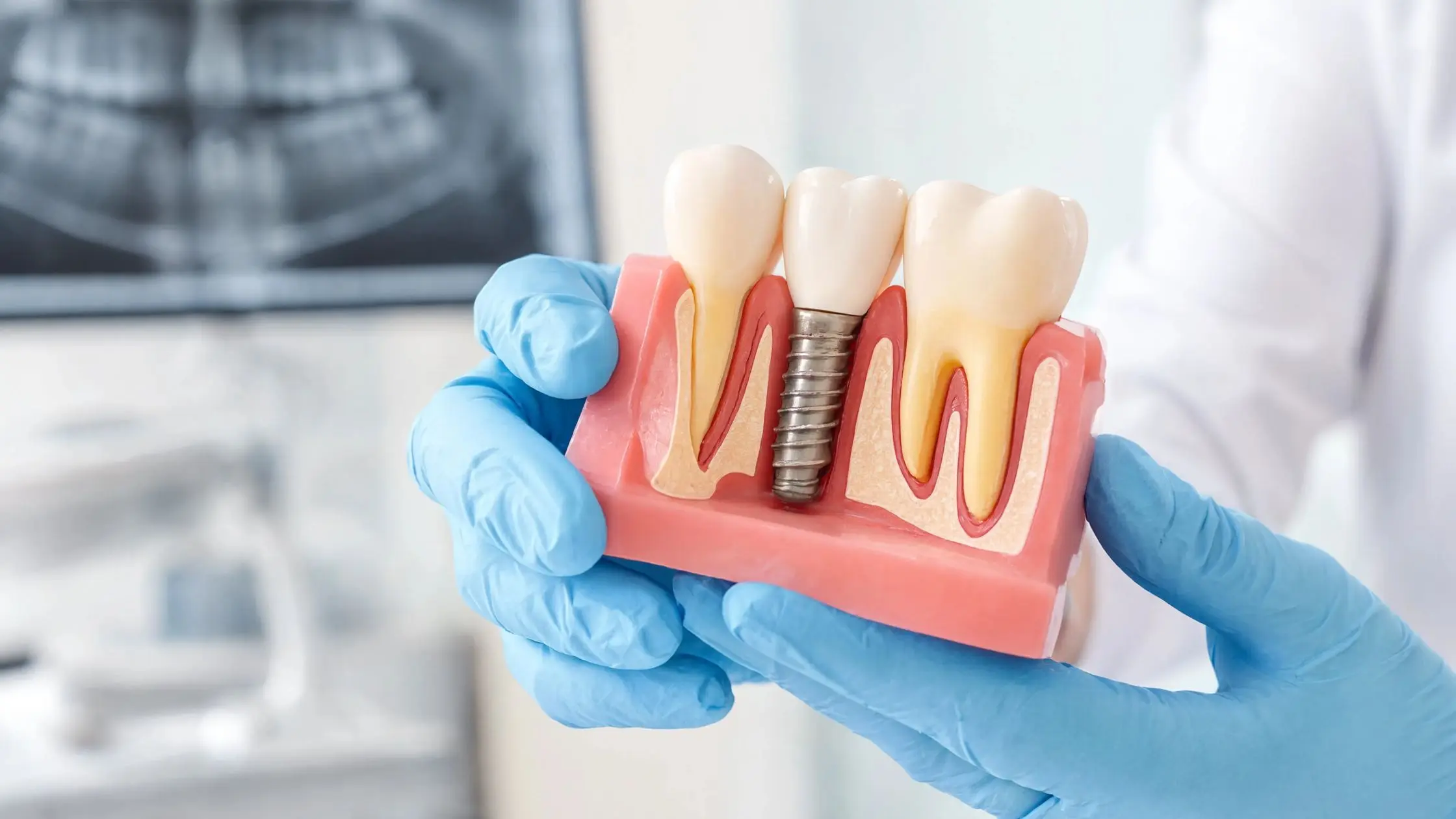
Having a dental implant does not automatically mean that MRI is impossible. However, the MRI facility should know about the implant and its specific type whenever possible.
This is particularly important because MRI safety depends on the exact implant and its MR safety classification, rather than simply whether something is described as a “metal implant.”
The FDA notes that implanted medical devices should be positively identified as MR Safe or MR Conditional when applicable; devices with unknown MRI safety status require appropriate evaluation before scanning.
Do You Need to Remove a Dental Crown Before an MRI?
Usually, no.
A permanent dental crown is bonded or cemented to the tooth and is not something that can simply be removed before an MRI.
If a crown is part of your permanent dental restoration, do not ask a dentist to remove it solely because you have an MRI appointment unless the medical and dental professionals specifically determine that removal is necessary.
In most situations, the appropriate step is simply to tell the MRI team about the crown.
Removable dental work is different. Radiology guidance specifically advises patients to remove removable dental work when instructed as part of MRI preparation.
What Should You Tell the MRI Technician?
Before your scan, mention any relevant dental work, especially if you have:
- Dental crowns
- Dental bridges
- Dental implants
- Metal fillings
- Orthodontic braces
- Fixed retainers
- Removable dental appliances
If you know the material, provide that information.
You do not need to diagnose whether your dental work is MRI-safe yourself. The MRI team can assess the information and determine whether it affects the examination.
You May Also Like To Read: Dental Implants vs. Dentures vs. Bridges: What’s Best for Missing Teeth?
What If You Recently Got a Dental Crown?
Getting a new dental crown does not generally mean that you need to postpone an MRI simply because the crown is new.
The more relevant questions are:
- What material was used?
- Is there any metal component?
- What part of the body is being scanned?
- Does the restoration have any known MRI compatibility information?
- Could it cause an artifact in the area being examined?
If your crown was placed very recently and you are uncertain about the material, contact the dental clinic that placed it. They may have the restoration details in your dental records.
Can MRI Damage a Dental Crown?
A properly evaluated permanent dental crown is not generally expected to be damaged simply because a patient undergoes an MRI.
However, MRI safety cannot be determined from the word “crown” alone because dental restorations vary in composition.
This is why MRI screening is important.
The FDA explains that the MRI environment can present risks involving movement, heating and image-quality problems for certain implanted or accessory devices, depending on their characteristics.
For dental restorations, the main practical concern is often image distortion, particularly when the restoration is near the body part being examined.
Can Dental Fillings Affect an MRI?
Dental fillings generally do not prevent a patient from having an MRI.
However, some fillings can produce artifacts that affect images, particularly when the scan involves the head, face or jaw.
Radiology guidance specifically notes that dental fillings, braces and retainers can distort images of the facial area or brain.
Again, this is primarily an image-quality consideration rather than an indication that every person with dental fillings is unable to undergo MRI.
Do Braces Affect MRI?
Orthodontic braces can sometimes cause image artifacts, particularly during MRI scans of the head and neck.
Whether braces need to be removed depends on their type, the materials involved and the body area being examined. Patients should tell the MRI team about braces and any other orthodontic appliances before the scan.
Do not remove fixed orthodontic appliances yourself.
The radiology team can determine whether the appliance is compatible with the specific examination.
Is MRI Safe After Dental Treatment?
In most cases, routine dental restorations do not prevent patients from undergoing MRI.
However, “dental treatment” covers many different things, from fillings and crowns to implants and orthodontic appliances. Their materials and construction can vary considerably.
That is why the safest approach is to provide the MRI facility with complete information rather than assuming that every dental material behaves the same way.
MRI facilities use screening procedures specifically to identify materials and implants that could present safety concerns or affect image quality.
What If You Don’t Know What Your Crown Is Made Of?
This is extremely common.
You do not need to remember the exact material used years ago.
Tell the MRI technologist that you have a dental crown and explain that you do not know its composition.
If necessary, the imaging team may ask for additional information. You can also contact your dentist or the dental clinic where the crown was placed. Your dental records may contain information about the restoration.
Do not guess that a crown is metal-free simply because it looks tooth-coloured. Some tooth-coloured restorations can have different underlying structures.
When Should You Talk to Your Dentist Before an MRI?
Contacting your dentist before the scan may be useful if:
- You do not know what material your crown contains.
- You recently received a crown or bridge.
- You have multiple dental restorations.
- You have dental implants and do not know the implant system.
- You have an unusual dental appliance.
- The MRI is specifically of your head, jaw or face.
- The radiology centre has requested details about your dental work.
Your dentist can provide information about the restoration, while the MRI team determines how that information affects the scan.
A Simple Checklist Before Your MRI
If you have dental crowns and an MRI appointment coming up, there is no need to immediately assume that the scan must be cancelled.
Instead:
1. Tell the MRI facility about your crown.
Even if you believe it is ceramic or zirconia, mention it during screening.
2. Tell them about other dental work too.
Mention implants, bridges, braces, retainers and other appliances.
3. Give them the material if you know it.
Your dentist or dental records may provide this information.
4. Follow the MRI centre’s instructions.
The imaging team may have specific protocols based on the scanner and the examination.
5. Do not remove fixed dental work yourself.
Permanent crowns and other fixed restorations should only be removed when clinically necessary and by a dental professional.
Final Takeaway
So, can MRI be done with dental crowns? In most cases, yes.
Having a dental crown does not automatically disqualify you from having an MRI. The important factors are the material used in the crown, the presence of any additional dental components, and the part of the body being scanned.
Ceramic and zirconia crowns generally do not present the same concerns as certain metal-containing restorations, but no patient should be expected to determine MRI compatibility on their own. Dental work can also create image artifacts, particularly during scans involving the head and neck.
The simplest rule is this: always tell the MRI technologist about your dental crowns and other dental work before the scan. If you know the crown material, provide that information; if you do not, simply say that you have a crown. The MRI team can then make the appropriate safety and imaging decisions for your particular examination.
Frequently Asked Questions
Can MRI be done with dental crowns?
Yes. In most cases, people with dental crowns can undergo MRI. The type of crown and its materials should be disclosed to the MRI team because some restorations may create image artifacts.
Can you have an MRI with a metal dental crown?
Often, yes, but the exact material matters. Some metal-containing dental restorations can interfere with MRI images, particularly when the head, face or jaw is being scanned. Always inform the MRI technologist about the crown.
Are porcelain crowns safe for MRI?
Porcelain and ceramic materials themselves are generally not ferromagnetic. However, some restorations described as porcelain may contain an underlying metal component. Tell the MRI team about the crown and its material if known.
Can you have an MRI with a zirconia crown?
Generally, yes. Zirconia is a ceramic material used for dental crowns. Nevertheless, inform the MRI team about the crown and any other dental restorations you have.
Do I need to remove my crown before an MRI?
Usually, no. Permanent crowns are fixed restorations and are generally not removed simply because an MRI is planned. The MRI team should be informed about the crown instead.
Can dental crowns affect MRI results?
They can sometimes affect image quality by producing artifacts, especially when the MRI is examining the head, face, jaw or nearby structures. The effect depends on the material and the location of the restoration.
Can dental implants affect MRI?
Dental implants do not automatically prevent MRI, but the MRI team should be informed about them. The specific implant system and its MRI safety classification may be relevant.
Can I have an MRI after getting a new crown?
A newly placed crown does not automatically mean that an MRI must be postponed. Inform the MRI facility about the crown and, if possible, provide details about the material used.
What happens if I forget to tell the MRI technician about my crown?
Tell the technologist as soon as you remember, preferably before entering the scanner. They can determine whether the restoration is relevant to the examination and whether any additional information is needed.