
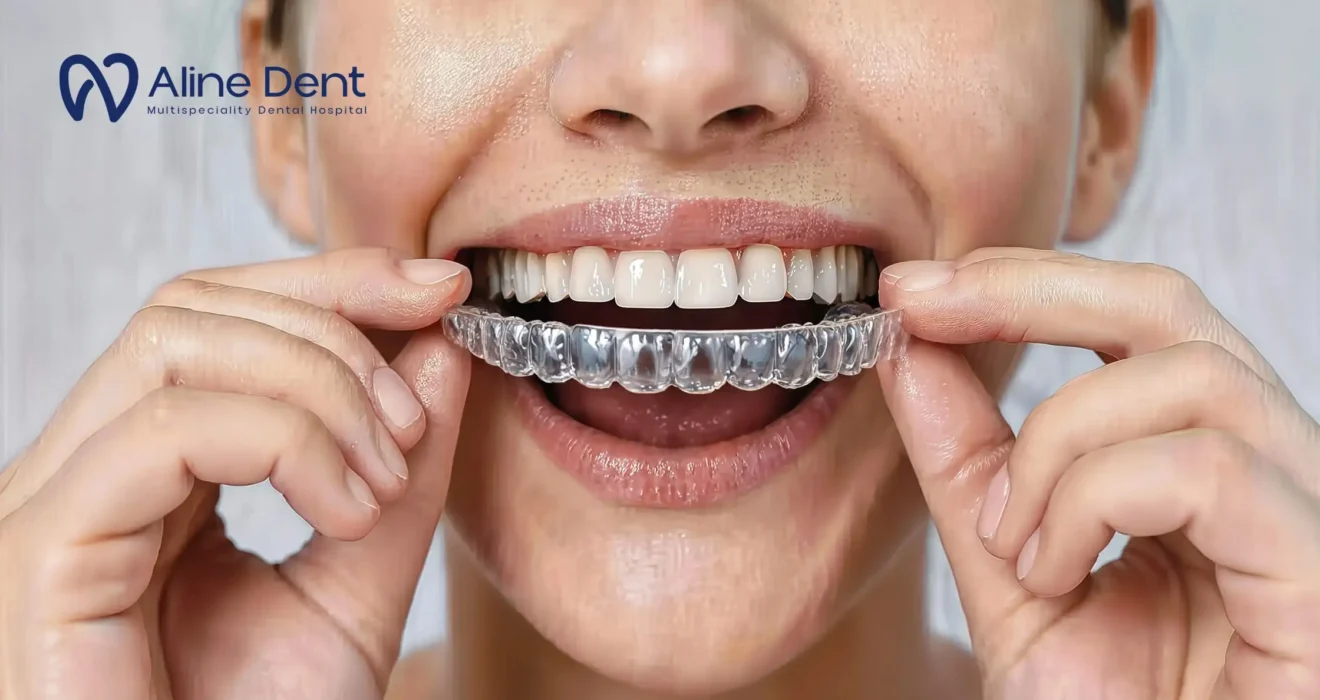
Do Clear Aligners Work for Overbites? What You Need to Know Before Treatment
If your upper front teeth sit noticeably farther forward than your lower teeth, you may have an overbite. For some people, it is a minor feature that has little effect on everyday life. For others, a deep or pronounced overbite can affect the way the teeth meet, make cleaning certain areas more difficult, contribute to tooth wear, or cause discomfort.
With clear aligners becoming increasingly popular as an alternative to traditional braces, one question comes up often: do clear aligners work for overbites?
The short answer is yes, clear aligners can correct certain types and degrees of overbite, but they are not the right solution for every overbite.
The important distinction is between a problem caused primarily by the position of the teeth and one involving the underlying jaw relationship. Clear aligners are designed to move teeth in a controlled sequence. They can therefore be effective when the overbite can be improved through appropriate tooth movement. More complicated cases, particularly significant skeletal discrepancies, may require braces, additional orthodontic techniques, or other forms of treatment.
Current research supports the use of clear aligners for many mild-to-moderate orthodontic problems, but evidence also shows that vertical tooth movements and overbite correction can be less predictable than some other tooth movements. A 2023 review specifically found that the predictability of overbite correction with clear aligners remained limited, while a newer 2025 systematic review found that clear aligners performed well for simple malocclusions but noted the need for more high-quality evidence for complex cases.
So, rather than asking whether clear aligners work for all overbites, the better question is:
What type of overbite do you have, and can your particular bite be corrected predictably with aligners?
First, What Exactly Is an Overbite?
An overbite refers to the amount that the upper front teeth vertically overlap the lower front teeth when you bite down.
It is normal to have a certain level of vertical overlap. Your upper front teeth are naturally positioned slightly in front of and over the lower front teeth.
The problem occurs when the overlap becomes excessive.
A deep bite, sometimes called a deep overbite, occurs when the upper front teeth cover an unusually large portion of the lower front teeth.
Depending on its severity, an excessive overbite may be associated with:
- Excessive wear of the teeth
- Difficulty maintaining oral hygiene
- Trauma to the gums or palate
- Changes in the way the teeth come together
- Jaw discomfort in some patients
- A smile that appears overly “closed”
- Problems associated with other forms of malocclusion
Not every deep bite causes symptoms, however. An orthodontic assessment is needed to determine whether treatment is recommended and what type of correction would be appropriate.
So, Do Clear Aligners Work for Overbites?
They can.
Clear aligner treatment can be used to move teeth and modify the way the upper and lower teeth meet. Depending on the individual’s bite, an orthodontist may plan movements such as controlled intrusion or extrusion of certain teeth, changes in tooth inclination, and other movements designed to reduce excessive vertical overlap.
However, overbite correction is more complicated than simply straightening crooked teeth.
A person may have perfectly straight-looking front teeth and still have a significant bite problem. In these situations, the orthodontist has to consider the relationship between the upper and lower arches, the position of the teeth, the available space, facial proportions, and the underlying jaw relationship.
Research on clear aligners shows that some movements are more predictable than others. Reviews have found that intrusion, extrusion, rotation, and certain complex movements can present greater challenges than simpler tooth movements.
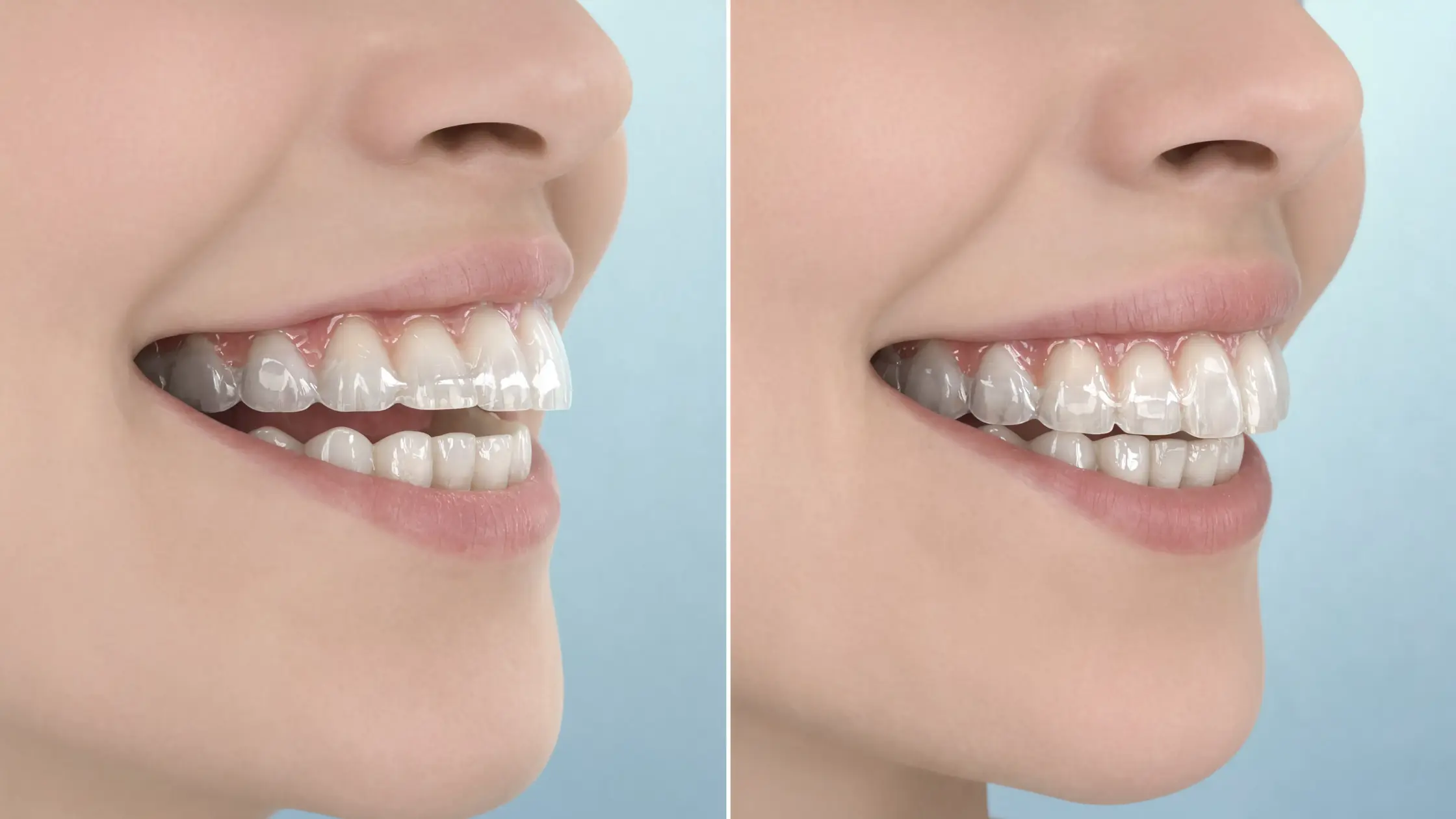
This is why a digital simulation showing a theoretically corrected bite should not be treated as a guarantee of the final clinical result.
When Are Clear Aligners a Good Option for an Overbite?
Clear aligners may be considered when the overbite is primarily related to tooth position and can be corrected through planned orthodontic tooth movement.
They may be suitable for people who also have:
- Mild to moderate crowding
- Spacing between teeth
- Crooked front teeth
- Certain bite discrepancies
- Mild tooth inclination problems
- A desire for a discreet orthodontic treatment
A recent systematic review found that clear aligners and fixed appliances both performed well for simple, non-extraction malocclusions, although the overall quality of evidence was limited and more research is needed for complex cases.
This makes the initial orthodontic assessment particularly important.
When Might Clear Aligners Not Be Enough?
Not every overbite is simply a tooth-position problem.
Sometimes the underlying issue involves the relationship between the upper and lower jaws. In a significant skeletal deep bite, moving the teeth alone may not completely address the underlying discrepancy.
Clear aligners may also be less appropriate when a patient has:
- A severe overbite
- Significant jaw discrepancy
- Complex skeletal malocclusion
- Major vertical problems
- Extensive tooth movement requirements
- Severe crowding
- A case requiring surgical correction
This does not automatically mean that clear aligners cannot be used at all. An orthodontist may sometimes combine different approaches or use aligners for one phase of treatment.
The key is to distinguish between a case that can be managed predictably with aligners and one where another orthodontic approach would provide better control.
Why Is Deep Bite Correction More Challenging Than Straightening Teeth?
Straightening a mildly crowded smile may involve moving teeth sideways into better alignment.
Correcting an overbite can require controlling the vertical position of teeth and changing how the upper and lower teeth contact one another.
That is a different mechanical challenge.
Some movements, especially intrusion and extrusion, can be less predictable with clear aligners. A 2023 scoping review found that intrusion and extrusion were among the less predictable movements and specifically noted that the success of overbite correction with clear aligners remained limited.
This doesn’t mean aligners cannot correct a deep bite.
It means that case selection and treatment planning matter enormously.
How Do Clear Aligners Correct an Overbite?
Your orthodontist doesn’t simply give you a series of transparent trays and wait for your teeth to straighten.
A clear aligner treatment journey plan is built around a sequence of planned tooth movements.
Depending on your specific bite, treatment may involve:
Controlled Intrusion
Certain teeth may need to be moved slightly into the supporting bone to help reduce excessive vertical overlap.
Controlled Extrusion
In selected cases, certain teeth may need to move in the opposite vertical direction to improve how the upper and lower teeth meet.
Changing Tooth Inclination
The angle of individual teeth can affect how much the upper teeth overlap the lower teeth.
Creating or Managing Space
If crowding is contributing to the bite problem, space may need to be created or distributed before teeth can be positioned correctly.
Improving Overall Arch Coordination
The upper and lower dental arches need to work together. Straightening individual teeth without considering the overall bite isn’t enough.
The exact combination depends on the patient’s anatomy and orthodontic diagnosis.
What Happens During a Clear Aligner Consultation for an Overbite?
A proper consultation should involve considerably more than looking at your smile.
The orthodontist needs to evaluate your bite as well as your teeth.
Your assessment may include:
- Examination of your teeth and gums
- Evaluation of your bite
- Photographs
- Digital scans or impressions
- Dental X-rays when indicated
- Assessment of facial proportions
- Evaluation of jaw relationships
- Analysis of available space
- Review of your treatment goals
Digital scanning can be particularly useful because it allows the orthodontist to create a detailed representation of your teeth and plan the sequence of movements.
At Aline Dent, the clear aligner process includes dental examination, X-rays where required, digital scanning, and customised treatment planning.
How Long Does Clear Aligner Treatment Take for an Overbite?
There isn’t a single treatment duration for everyone.
A mild overbite combined with minor alignment issues may require considerably less treatment than a complex deep bite involving significant tooth movement.
Treatment time can depend on:
- Severity of the overbite
- Amount of crowding
- Number of teeth that need movement
- Type of tooth movements required
- Patient age
- Bone and gum health
- Treatment compliance
- Whether additional orthodontic procedures are required
- How accurately the teeth respond to the planned movements
The clear aligner treatment duration can range from approximately 6 to 18 months, depending on the severity of the case and patient compliance. Individual overbite cases may vary considerably.
It is better to receive an estimated timeline after an orthodontic examination rather than relying on a generic number.
Does Wearing Clear Aligners Hurt?
Clear aligners don’t usually cause the same type of irritation associated with metal brackets and wires, but they do apply pressure to move teeth.
You may notice:
- Mild pressure when starting a new aligner
- Temporary tenderness
- Tightness around certain teeth
- Minor discomfort for a few days after changing trays
This is generally associated with the orthodontic force being applied.
The experience varies from person to person and from one stage of treatment to another.
Read More: Do Clear Aligners Hurt? What You Really Need to Know Before Starting Treatment!
How Many Hours a Day Should You Wear Aligners?
Clear aligners only work when they are worn as prescribed.
We recommends wearing the aligners for approximately 20–22 hours per day, removing them mainly for eating and brushing.
This is important because clear aligner treatment depends on a sequence of movements. If aligners are frequently removed or worn for substantially less time than recommended, the teeth may not track according to the treatment plan.
In practical terms, compliance is part of the treatment itself.
Clear Aligners vs Braces for Overbite Correction
Both clear aligners and braces can be used for orthodontic treatment, but they don’t work in exactly the same way.
| Feature | Clear Aligners | Traditional Braces |
| Appearance | Nearly invisible | Visible brackets and wires |
| Removable | Yes | No |
| Eating | Aligners are removed during meals | Food restrictions may be necessary |
| Oral hygiene | Can brush and floss without trays | Cleaning around brackets requires extra care |
| Bite correction | Suitable for selected cases | Often useful for complex tooth movements |
| Treatment planning | Digital planning is commonly used | Bracket and wire-based mechanics |
| Compliance | Requires consistent patient wear | Fixed to the teeth |
| Suitability | Depends strongly on case complexity | Can manage a broad range of cases |
The choice shouldn’t be based only on appearance.
If a particular movement requires a level of control that is difficult to achieve predictably with aligners, fixed orthodontic appliances may be recommended.
Evidence comparing aligners and fixed appliances continues to evolve. A 2025 systematic review found that both approaches worked well for simple malocclusions, while noting that more high-quality evidence is needed for complex cases.
What Happens If the Overbite Is Caused by the Jaw?
This is one of the most important questions to ask during an orthodontic consultation.
If the problem is primarily skeletal, moving the teeth may improve the appearance and bite but may not completely correct the underlying jaw relationship.
In growing patients, orthodontic treatment may sometimes influence development depending on the diagnosis and timing. In adults with significant skeletal discrepancies, treatment may involve a combination of orthodontics and, in selected cases, orthognathic surgery.
This is why a proper diagnosis comes before deciding between clear aligners and braces.
The question isn’t:
“Which appliance is better?”
It is:
“What treatment can safely and predictably correct this particular bite?”
Can Clear Aligners Fix a Deep Bite in Adults?
They can correct some adult deep bites, particularly when the problem can be addressed primarily through tooth movement.
However, adult treatment needs to be carefully planned because growth is no longer available to modify the skeletal relationship in the same way it may be during childhood or adolescence.
The severity of the bite, periodontal health, bone support, tooth position, and overall orthodontic diagnosis all matter.
Clear aligners can be an attractive option for adults because they are discreet and removable, but appearance should never be the only factor used to select treatment.
What Happens If Clear Aligners Don’t Track Properly?
Sometimes a tooth doesn’t move exactly as predicted.
This can happen because of:
- Insufficient aligner wear
- Complex tooth movements
- Poor aligner fit
- Differences between predicted and actual tooth movement
- Changes in the treatment plan
In such cases, the orthodontist may recommend additional aligners, adjustments to the treatment plan, or another orthodontic approach.
This is one reason regular monitoring matters.
Clear aligner treatment should not be viewed as a completely “hands-off” treatment.
Why Retainers Still Matter After Overbite Correction
Getting the teeth into their new positions is only one part of orthodontic treatment.
Teeth naturally have a tendency to move after orthodontic treatment. Retainers help maintain the new alignment and bite.
Without appropriate retention, teeth can gradually shift, potentially affecting the result you worked to achieve.
The custom retainers after completion of aligners to help maintain the corrected smile.
Your orthodontist will determine the appropriate retention schedule based on your individual case.
Aline Dent for Expert Clear Aligner and Bite Correction
At Aline Dent, clear aligner treatment begins with an assessment of whether aligners are actually appropriate for the patient’s orthodontic problem rather than assuming that every case should be treated with invisible aligners.
We offers customised clear aligner treatment using digital scanning and treatment planning. The orthodontic services include assessment and management of alignment and bite-related concerns, with treatment options selected according to individual needs.
Aline Dent offers in-house Zenclear aligner system and uses digital workflows to plan tooth movement.The more severe misalignment or jaw-related problems may require traditional braces or surgical approaches instead of clear aligners alone.
For someone asking do clear aligners work for overbites, this individual assessment is particularly important. An orthodontist can determine whether your overbite is primarily dental or skeletal, assess its severity, and decide whether clear aligners can provide sufficient control.
At Aline Dent, the orthodontic team includes Dr. Ashik Suresh, the Chief Orthodontist and specialises in clear aligners, bite correction, and digital orthodontic treatment planning.
The clinic has locations in Thalassery and Kuttiyadi and provides orthodontic and invisible aligner treatment for patients seeking discreet alternatives to traditional braces.
What Should You Ask Before Choosing Clear Aligners for an Overbite?
Before beginning treatment, don’t hesitate to ask your orthodontist specific questions.
Ask whether your overbite is dental or skeletal
This can make a major difference to the treatment approach.
Ask what movements are required
Understanding whether the treatment involves intrusion, extrusion, tooth inclination changes, space creation, or other movements can help you understand why a particular appliance is being recommended.
Ask whether aligners are predictably capable of making those movements
A digital simulation can show the planned result, but the actual biological response may differ.
Ask about alternatives
If braces would provide better control for your case, you should know that before starting.
Ask about retention
Your treatment doesn’t end when the final aligner comes out. Find out what type of retainer you’ll need and how long you’ll need to wear it.
The Bottom Line: Can Clear Aligners Correct an Overbite?
So, do clear aligners work for overbites?
Yes, but the answer depends on the type and severity of the overbite.
Clear aligners can be an effective option for selected patients, particularly when the bite problem can be addressed through controlled tooth movement. They can offer the added benefits of being discreet, removable, and easier to integrate into everyday oral hygiene.
But a deep or complicated overbite should not be treated as simply another case of crooked teeth. Vertical movements can be more challenging with aligners, and skeletal jaw discrepancies may require a different treatment strategy. Current evidence supports clear aligners for many straightforward orthodontic cases but remains more limited for complex malocclusions and certain types of bite correction.
The best way to find out whether clear aligners for overbite correction are right for you is to have your bite properly assessed by an orthodontist.
A personalised diagnosis can tell you not only whether aligners can straighten your teeth, but whether they can achieve the healthy, functional bite you’re looking for.
Frequently Asked Questions
Do clear aligners work for overbites?
Yes, clear aligners can correct certain overbites, particularly when the problem is primarily related to tooth position and falls within the range of movements that can be predictably achieved with aligners. More severe or skeletal overbites may require braces, additional orthodontic techniques, or other treatment.
Can clear aligners fix a deep bite?
They can correct some deep bites, but success depends on the severity and cause of the bite. Deep-bite correction can involve complex vertical tooth movements, which are not always as predictable as simpler orthodontic movements.
Are clear aligners better than braces for an overbite?
Neither is universally better. Clear aligners offer advantages such as removability and discreet appearance, while braces may provide greater control for certain complex movements. The appropriate option depends on your specific bite and orthodontic diagnosis.
Can Invisalign fix an overbite?
Invisalign is one brand of clear aligner treatment. It may be suitable for selected overbite cases, but whether it can correct your particular bite depends on the severity, tooth positions, jaw relationship, and movements required.
Can clear aligners fix an overbite without braces?
Some overbites can be treated entirely with clear aligners. Others may be better managed with braces or a combination of orthodontic approaches. An orthodontic assessment is needed to determine which option is appropriate.
How long does it take to correct an overbite with clear aligners?
Treatment time varies significantly. Mild cases may take less time, while complex bite correction can take longer. Aline Dent states that its aligner treatments generally range from around 6–18 months depending on case severity and compliance, although this should not be interpreted as a guaranteed timeline for overbite correction.
Are clear aligners painful for overbite correction?
You may experience pressure or mild tenderness when beginning a new aligner because the trays are applying orthodontic forces. The amount of discomfort varies depending on the individual and the movements being performed.
Can adults get clear aligners for overbite correction?
Yes. Adults can undergo clear aligner treatment when their teeth and supporting tissues are suitable and the bite can be corrected using appropriate orthodontic movements. The underlying cause and severity of the overbite must first be assessed.
What happens if clear aligners cannot fully correct my overbite?
Your orthodontist may modify the treatment plan, provide additional aligners, introduce other orthodontic mechanics, or recommend braces or another treatment approach depending on why the correction is incomplete.
Do I need retainers after clear aligner treatment?
Yes. Retention is an important part of maintaining orthodontic results. Without appropriate retention, teeth can gradually shift after treatment.