How Much Do Dental Implants Cost? Factors That Influence the Cost!
Losing a tooth can affect much more than your smile. It can change the way you eat, speak, and even how confident you feel in social situations. While there are several options available to replace missing teeth, dental implants have become the preferred choice for many patients because of their durability, natural appearance, and long-term benefits.
However, one concern of everyone is: how much do dental implants cost? The answer isn’t always straightforward.
Dental implant costs can vary significantly depending on several factors, including the number of missing teeth, the condition of the jawbone, the type of implant system used, and whether additional procedures are required before implant placement.
While it may be tempting to focus solely on price, it’s important to understand what you’re actually paying for. Dental implants are not just artificial teeth, they are a comprehensive tooth replacement solution designed to restore both function and aesthetics for many years.
In this guide, we’ll break down the factors that influence implant costs, explain why pricing varies from patient to patient, and help you understand what to expect when considering dental implant treatment.
What Are Dental Implants?
Dental implants are artificial tooth roots made from biocompatible materials, typically titanium. They are surgically placed into the jawbone to support replacement teeth.
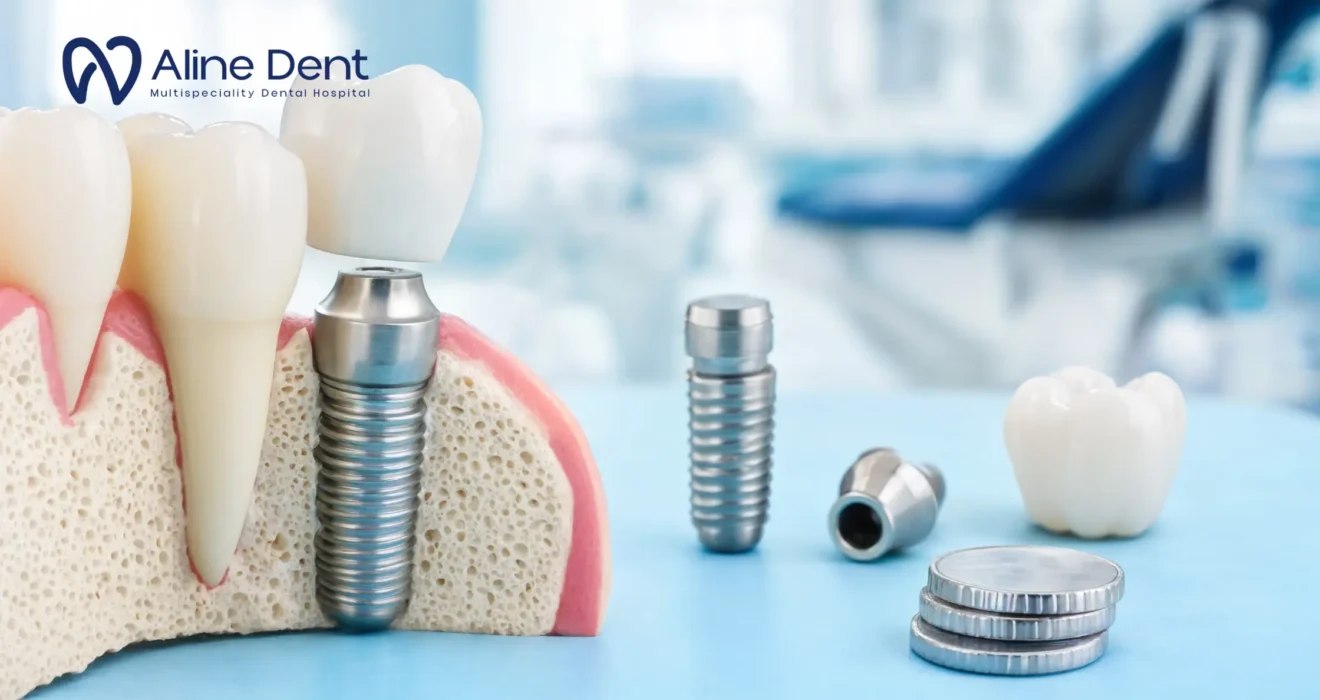
A complete dental implant restoration generally consists of three parts:
The Implant Fixture
This is the titanium post that is placed into the jawbone and acts as the replacement root.
The Abutment
A connector that links the implant to the final crown.
The Dental Crown
The visible portion that looks and functions like a natural tooth.
Together, these components create a stable and long-lasting replacement for a missing tooth.
Why Are Dental Implants Different from Other Tooth Replacement Options?
Unlike removable dentures or traditional bridges, dental implants replace both the root and crown of the missing tooth.
This offers several advantages:
- Improved chewing ability
- Better speech
- Enhanced comfort
- Natural appearance
- Jawbone preservation
- Long-term durability
Because implants integrate with the jawbone, they provide a level of stability that other tooth replacement options often cannot match.
How Much Do Dental Implants Cost?
One of the reasons implant pricing varies is that no two patients have exactly the same treatment requirements.
The final cost may depend on:
- Number of implants required
- Implant brand and system
- Bone quality and quantity
- Diagnostic imaging
- Complexity of the case
- Type of final restoration
- Additional surgical procedures
This is why dentists typically provide a personalized treatment plan after a detailed evaluation rather than quoting a universal price.
What Factors Affect Dental Implant Cost?
Understanding the components of treatment helps explain why pricing can differ between patients.
Number of Missing Teeth
Replacing a single tooth is different from restoring multiple missing teeth or an entire arch.
A patient missing one tooth may require:
- One implant
- One abutment
- One crown
A patient missing several teeth may require a more comprehensive treatment plan.
Bone Condition
Dental implants require adequate jawbone support.
If bone loss has occurred after tooth loss, additional procedures such as bone grafting may be recommended before implant placement.
Bone augmentation can influence overall treatment costs but often plays a critical role in long-term implant success.
Implant System Used
Not all implant systems are identical.
Different manufacturers offer varying levels of research, engineering, and clinical documentation.
The quality of materials and technology used can impact treatment outcomes and longevity.
Type of Restoration
The final restoration may vary depending on the patient’s needs.
Examples include:
- Single implant crowns
- Implant-supported bridges
- Full-arch restorations
- Multiple implant-supported prostheses
The complexity of the restoration affects overall treatment planning.
Diagnostic and Planning Technology
Modern implant dentistry relies heavily on advanced diagnostics.
These may include:
- Digital X-rays
- 3D CBCT imaging
- Digital treatment planning
- Surgical guides
These technologies help improve precision and treatment predictability.
Are Dental Implants Worth the Investment?
When comparing treatment options, many patients initially focus on the higher upfront cost of implants.
However, implants often provide long-term value because they:
Preserve Jawbone Health
When a tooth is lost, the surrounding bone may gradually shrink.
Dental implants help stimulate the jawbone and reduce bone loss.
Protect Adjacent Teeth
Traditional bridges may require altering neighboring healthy teeth.
Implants typically do not rely on adjacent teeth for support.
Offer Long-Term Durability
With proper care and maintenance, dental implants can remain functional for many years.
Many patients view them as a long-term investment in oral health and quality of life.
Single Tooth Implant vs Multiple Tooth Implants
Single Tooth Replacement
A single missing tooth can often be restored using one implant and one crown.
This solution closely mimics a natural tooth in both appearance and function.
Multiple Missing Teeth
Patients missing several teeth may not necessarily require an implant for every missing tooth.
Depending on the case, strategically placed implants may support bridges or other restorations.
Full Mouth Rehabilitation
For patients with extensive tooth loss, full-mouth implant solutions can provide a fixed alternative to traditional dentures.
Treatment planning is highly individualized in these situations.
You may also like to read: Dental Implants vs. Dentures vs. Bridges: What’s Best for Missing Teeth?
What Happens During Dental Implant Treatment?
Understanding the treatment process can help patients feel more confident about their decision.
Initial Consultation
The dentist evaluates:
- Oral health
- Bone condition
- Medical history
- Treatment goals
Diagnostic imaging helps determine suitability.
Implant Placement
The implant fixture is placed into the jawbone.
A healing period follows during which the implant integrates with the surrounding bone.
Restoration Phase
After healing, the final crown, bridge, or prosthesis is attached.
The result is a stable and natural-looking replacement tooth.
Expert Dental Implant Treatment at Aline Dent
For patients exploring dental implants in Calicut, choosing an experienced implant provider is one of the most important decisions they can make.
At Aline Dent, implant treatment is planned with a strong focus on precision, long-term success, and patient comfort. Every case begins with a detailed evaluation to determine the most appropriate treatment approach based on the patient’s oral health, bone condition, and restorative needs.
The clinic offers:
- Comprehensive implant consultations
- Digital implant planning
- Single tooth implants
- Multiple tooth replacement solutions
- Full-mouth rehabilitation options
- Advanced diagnostic imaging
- Personalized treatment planning
The team understands that patients often have concerns about both the procedure and the cost of dental implants. That’s why treatment recommendations are designed to balance functionality, aesthetics, and long-term oral health outcomes.
Whether you’re replacing a single missing tooth or considering a more comprehensive restoration, expert guidance can help ensure a predictable and successful result.
How to Maintain Dental Implants
Proper maintenance helps support long-term implant success.
Daily Oral Hygiene
Brush and floss regularly to keep surrounding tissues healthy.
Regular Dental Checkups
Routine monitoring helps identify potential issues early.
Avoid Tobacco Use
Smoking may affect healing and long-term implant outcomes.
Follow Professional Recommendations
Ongoing maintenance is an important part of implant care.
Final Thoughts
If you’ve been researching how much do dental implants cost, it’s important to remember that dental implant treatment is not simply a product; it’s a personalized healthcare solution.
The final cost depends on several factors, including the number of missing teeth, bone health, treatment complexity, and the type of restoration required. Rather than focusing solely on price, patients should consider the overall value of a treatment that can restore function, preserve jawbone health, and improve confidence for years to come.
For many individuals, dental implants represent one of the most reliable and natural-looking solutions available for replacing missing teeth. With proper planning and expert care, they can provide lasting benefits that extend far beyond aesthetics.
Frequently Asked Questions
How much do dental implants cost?
Dental implant costs vary depending on the number of implants required, bone condition, treatment complexity, and restoration type. A personalized consultation is needed to determine the exact cost.
Why are dental implants more expensive than other tooth replacement options?
Dental implants involve advanced planning, surgical placement, high-quality materials, and custom restorations designed for long-term function.
How long do dental implants last?
With proper care and maintenance, dental implants can remain functional for many years.
Can a single missing tooth be replaced with an implant?
Yes. A single dental implant is often one of the most effective solutions for replacing an individual missing tooth.
Are dental implants safe?
Dental implants are a well-established and widely used treatment option with a strong track record of success.
Is implant placement painful?
Most patients report that implant placement is more comfortable than they expected, particularly when performed with modern techniques and appropriate anesthesia.
Are dental implants better than dentures?
Each option has advantages, but many patients prefer implants because they provide greater stability, comfort, and a more natural feel.