How to Whiten Teeth Naturally: Safe, Effective Ways for a Brighter Smile!
A bright, white smile is something most people want, but not everyone is comfortable jumping straight into chemical treatments or expensive procedures. That’s where natural teeth whitening methods come in.
But let’s be honest for a second, the internet is full of “quick fixes” that either don’t work or can actually harm your teeth. So the real question is not just how to whiten teeth naturally, but how to do it safely without damaging your enamel.
Natural whitening isn’t about overnight transformations. It’s about gradually improving your tooth shade while protecting your oral health. When done correctly, it can be a reliable and sustainable way to enhance your smile.
Let’s break it down properly.
Understanding Why Teeth Become Yellow
Before exploring how to whiten teeth naturally, it’s important to understand what causes discoloration in the first place. Without addressing the root cause, no method will give lasting results.
1. Surface Stains (Extrinsic Stains)
These are the most common and easiest to treat. They occur due to:
- Coffee, tea, and red wine
- Smoking or tobacco use
- Dark-colored foods
- Poor oral hygiene
2. Deep Stains (Intrinsic Stains)
These occur inside the tooth and are harder to remove:
- Aging (enamel thinning)
- Certain medications
- Excess fluoride exposure
- Trauma to the tooth
Natural methods are most effective for surface stains, while deeper discoloration may require professional treatment.
How to Whiten Teeth Naturally: What Actually Works
Let’s focus on methods that are safe, dentist-approved (in moderation), and actually useful, not viral hacks that damage enamel.
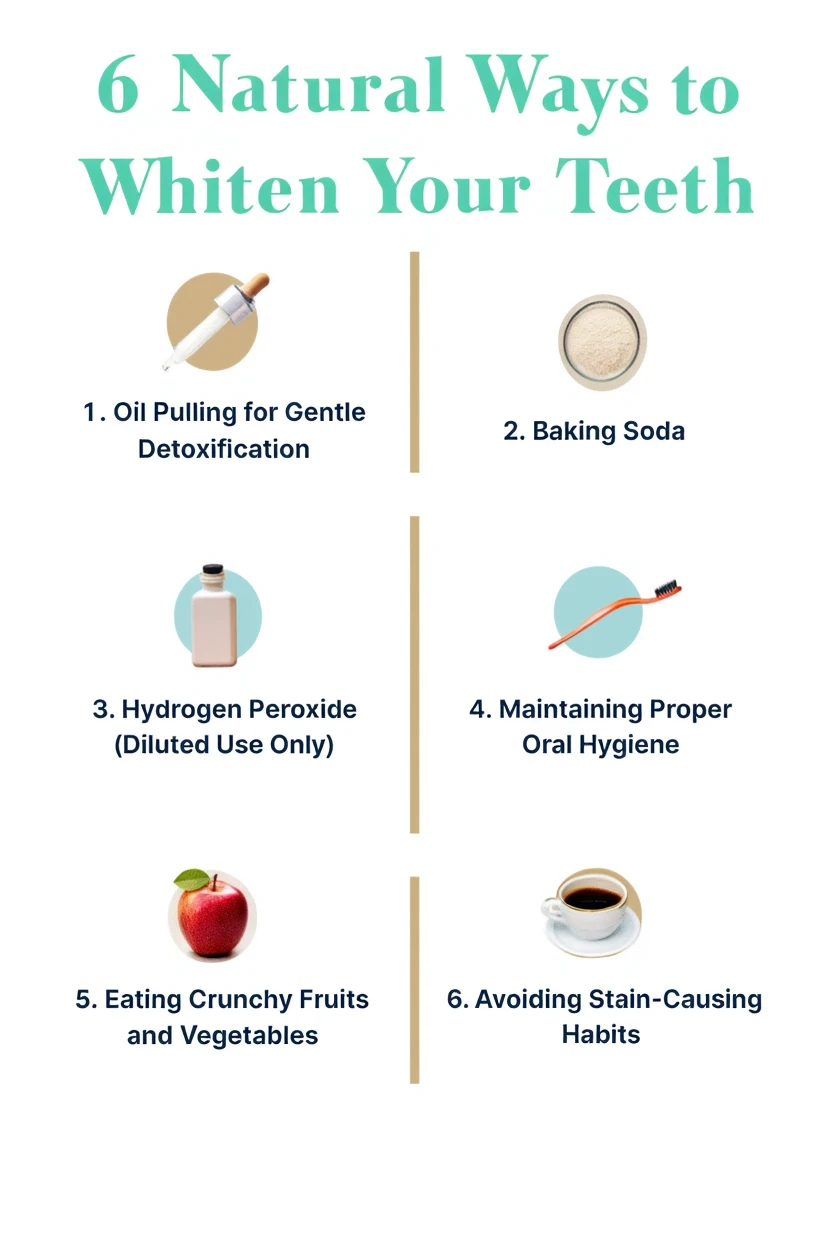
1. Oil Pulling for Gentle Detoxification
Oil pulling is an ancient practice that involves swishing oil (usually coconut oil) in your mouth.
How it helps:
- Reduces bacteria that cause plaque and discoloration
- Improves overall oral hygiene
- May gradually enhance brightness
How to do it:
- Take 1 tablespoon of coconut oil
- Swish for 10–15 minutes
- Spit it out and rinse thoroughly
This method won’t give instant whitening but supports long-term oral health.
2. Baking Soda: Mild Natural Abrasive
Baking soda is commonly used in toothpaste because of its ability to remove surface stains.
Benefits:
- Gently scrubs away stains
- Helps neutralize acids in the mouth
- Supports plaque removal
Safe usage:
- Use once or twice a week only
- Mix with water to form a paste
- Brush gently
Overuse can damage enamel, so moderation is key.
3. Hydrogen Peroxide (Diluted Use Only)
Hydrogen peroxide is a natural bleaching agent and is used in many professional whitening treatments.
How it works:
- Breaks down stain compounds
- Has antibacterial properties
Important precautions:
- Always use diluted solutions
- Do not use frequently
- Avoid swallowing
This is one of the more effective natural whitening options, but it must be used carefully.
4. Maintaining Proper Oral Hygiene
This might sound obvious, but it’s the most underrated method when discussing how to whiten teeth naturally.
Key habits:
- Brush twice daily with fluoride toothpaste
- Floss regularly
- Clean your tongue
- Stay hydrated
Consistent hygiene prevents stain buildup and keeps teeth naturally brighter.
5. Eating Crunchy Fruits and Vegetables
Foods like apples, carrots, and celery act as natural cleansers.
How they help:
- Increase saliva production
- Gently scrub tooth surfaces
- Reduce plaque buildup
They won’t whiten dramatically but contribute to overall brightness.
6. Avoiding Stain-Causing Habits
Sometimes, whitening isn’t about what you add, it’s about what you reduce.
Limit:
- Coffee and tea (or rinse after drinking)
- Smoking or tobacco use
- Sugary and acidic foods
Using a straw for beverages can also reduce direct contact with teeth.
What to Avoid: Popular “Natural” Methods That Can Harm Teeth
A lot of trending DIY whitening tips are actually dangerous.
Lemon + Baking Soda
Highly acidic and can erode enamel and cause sensitivity.
Charcoal Toothpaste (Frequent Use)
Too abrasive and may damage enamel over time.
Salt Scrubbing
Direct salt rubbing can wear down enamel and irritate gums.
Not everything labeled “natural” is safe; always think long-term.
Realistic Expectations from Natural Whitening
Let’s set this straight: natural methods will not give you instant, Hollywood-level white teeth.
What you can expect:
- Gradual improvement in tooth brightness
- Reduction in surface stains
- Healthier-looking smile
What you should not expect:
- Dramatic color change in a few days
- Removal of deep intrinsic stains
For noticeable transformation, professional care is often necessary.
Aline Dent: Safe and Professional Teeth Whitening Solutions
While exploring how to whiten teeth naturally is a great start, combining it with expert care ensures the best results. That’s where Aline Dent makes a real difference.
At Aline Dent, teeth whitening is not treated as a one-size-fits-all procedure. The dental team carefully evaluates your tooth condition, the type of stains, and sensitivity levels before recommending the right solution.
Why Choose Aline Dent for Teeth Whitening?
- Professional-grade whitening treatments with safe results
- Customized treatment plans based on your dental condition
- Advanced technology for effective and long-lasting outcomes
- Guidance on maintaining whitening results naturally
They also educate patients on safe home practices, helping you avoid harmful DIY trends while maintaining your smile.
Natural vs Professional Teeth Whitening: What’s the Difference?
Natural Methods
- Safer for regular use (when done correctly)
- Affordable and accessible
- Gradual results
Professional Whitening
- Faster and more noticeable results
- Targets deeper stains
- Performed under expert supervision
The best approach is often a combination, maintaining your smile naturally after professional treatment.
Final Thoughts
So, how to whiten teeth naturally?
It’s not about shortcuts or viral hacks. It’s about consistent, safe habits that protect your enamel while gradually improving your smile.
Natural whitening works best when you:
- Maintain good oral hygiene
- Use safe methods in moderation
- Avoid stain-causing habits
- Seek professional guidance when needed
A healthy smile is always more important than just a white one, and the smartest approach is one that protects both.
FAQs
How can I whiten my teeth naturally at home?
You can use methods like oil pulling, baking soda (occasionally), and maintaining good oral hygiene. Avoid stain-causing foods and rinse your mouth regularly.
Is it safe to whiten teeth naturally?
Yes, when done correctly. However, overusing abrasive or acidic methods can damage enamel, so moderation is essential.
How long does natural teeth whitening take?
Natural methods take time. You may notice gradual improvement over a few weeks rather than instant results.
Can yellow teeth become white naturally?
Surface stains can be reduced naturally, but deep stains may require professional whitening treatments.
What is the safest natural way to whiten teeth?
Maintaining proper oral hygiene, using baking soda occasionally, and oil pulling are among the safest natural methods.