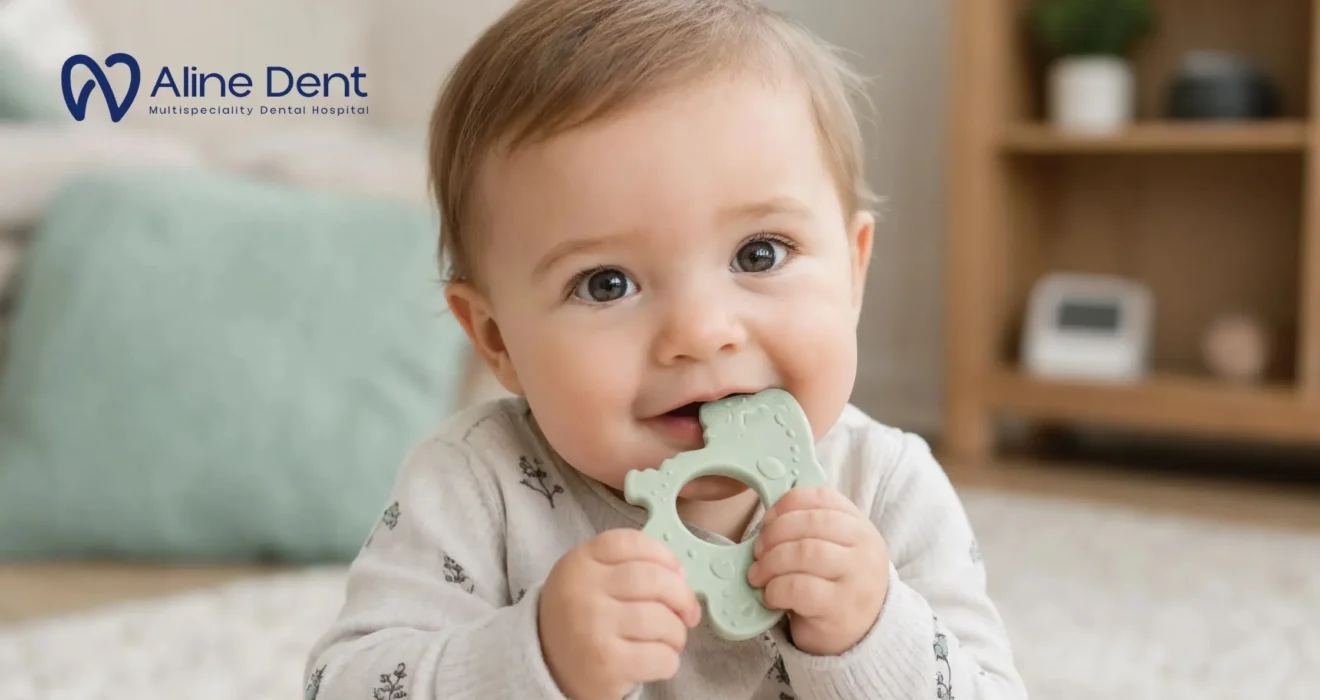
When to Use Teether for Baby: Age, Teething Signs, Safety Tips, and What Parents Should Know!
Few things make new parents wonder what is happening quite like a baby who suddenly wants to chew on everything. Fingers, toys, clothes, spoons, even the corner of a blanket can become an irresistible target. Along with the chewing, you may notice extra drooling, swollen gums, fussiness, or disrupted sleep. These are common signs that your baby’s first teeth may be on their way.
This is usually when parents start looking for answers about when to use teether for baby and whether a teething toy can actually make the process more comfortable.
The good news is that a properly designed teether can be useful during the teething period. It gives your baby something safe to chew on and may provide gentle pressure against sore gums. But a teether isn’t necessary for every baby, and choosing the right one matters. Some products can create choking, injury, or other safety risks if they are poorly designed, damaged, or used incorrectly.
It is also worth remembering that teething does not explain every symptom a baby experiences. A mild increase in drooling and gum discomfort can be part of normal teething, but high fever, significant diarrhoea, vomiting, breathing difficulties, or a baby who appears genuinely unwell should not simply be blamed on teething.
So, when should you introduce a teether, how should you use one, and what should you avoid? Let’s look at the signs, timing, safety considerations, and ways parents can make teething a little easier.
When Can You Start Using a Teether for Your Baby?
There isn’t one exact age when every baby needs a teether.
Many babies begin showing signs of teething around 4 to 7 months, although the timing varies considerably. Some babies begin earlier, while others may not show obvious signs until later. The first teeth commonly appear around 6 months, but there is a wide range of normal development.
A teether can generally be introduced when your baby:
- Shows an interest in chewing or biting objects
- Can hold objects and bring them toward their mouth
- Has signs of gum discomfort
- Is drooling more than usual
- Is beginning the teething stage
- Can use the teether safely under supervision
The important point is that age alone shouldn’t determine when to use teether for baby. Your baby’s developmental abilities and the safety of the specific product matter just as much.
Always check the manufacturer’s recommended age range before giving a teething toy to an infant.
What Are the Signs That a Baby Is Teething?
Babies cannot tell you that their gums hurt, so parents often have to rely on behavioural clues.
Some common teething symptoms include:
Increased Drooling
You may notice that your baby’s clothes are becoming wet more frequently because of increased saliva production.
Drooling is extremely common during infancy and doesn’t always mean a tooth is about to appear, but it often becomes noticeable around the teething period.
Chewing on Everything
A baby who suddenly wants to chew on their fingers, toys, spoons, or other safe objects may be trying to relieve pressure or irritation in the gums.
This is one of the clearest reasons parents consider introducing a baby teether.
Sore or Swollen Gums
The gum tissue around an erupting tooth may look slightly swollen or feel tender.
Your baby may become more interested in biting or chewing because the pressure feels soothing.
Fussiness
Some babies become more irritable while their teeth are erupting. They may want to be held more often or become unsettled during feeding and sleeping.
Changes in Sleep
Teething discomfort can sometimes make it harder for a baby to settle or stay asleep.
However, significant or persistent sleep problems should not automatically be attributed to teething.
What Does a Teether Actually Do?
A teether isn’t designed to make a tooth erupt faster.
Its main purpose is to provide something safe for your baby to bite or chew. The pressure from chewing may provide temporary relief from gum discomfort. A teething toy can also satisfy a baby’s natural urge to put objects in the mouth during this developmental stage.
Depending on the design, teethers may be made from materials such as:
- Food-grade silicone
- Rubber
- Firm plastic
- Wood
The material alone doesn’t determine whether a teether is safe. The product should be age-appropriate, intact, easy to clean, and designed specifically for babies.
How to Choose the Right Teether for Your Baby
With so many teething toys for babies available, choosing one can be surprisingly difficult.
Instead of focusing only on colours, shapes, or whether a product looks cute, pay attention to its construction and safety.
Look for an Age-Appropriate Product
Choose a teether intended for your baby’s age and developmental stage.
If your baby is still very young and cannot reliably hold objects, a large, lightweight teether may be more appropriate than a complicated toy with multiple detachable parts.
Choose a Teether That Is Easy to Hold
Babies have developing motor skills, so a teething ring or toy that is easy to grip can be more practical.
Handles or loops can make it easier for a baby to hold the toy independently.
Avoid Small Detachable Parts
A teether should not contain components that can break off and become a choking hazard.
Before each use, check for:
- Cracks
- Tears
- Loose components
- Broken pieces
- Sharp edges
- Material deterioration
If the product is damaged, replace it.
Consider Easy Cleaning
Teething toys spend a lot of time in your baby’s mouth and can quickly become covered with saliva, food particles, and other debris.
Choose a product that can be cleaned according to the manufacturer’s instructions.
Should You Use a Frozen Teether?
Cold can offer temporary comfort when your gums are irritated, though there’s a key difference between using something cool and something completely frozen.
A very hard, frozen object may be uncomfortable against sensitive gums and can potentially damage the gum tissue if it becomes excessively hard.
If you want to cool a teether, follow the manufacturer’s instructions. A product designed to be refrigerated may be suitable for cooling, but it should not automatically be placed in the freezer.
A cool, appropriately designed teether can provide gentle pressure and a soothing sensation without becoming excessively hard.
What About Teething Rings Filled With Liquid?
Parents should be cautious with liquid-filled or gel-filled teething products.
If a teether becomes damaged, punctured, or develops a leak, it should no longer be given to the baby.
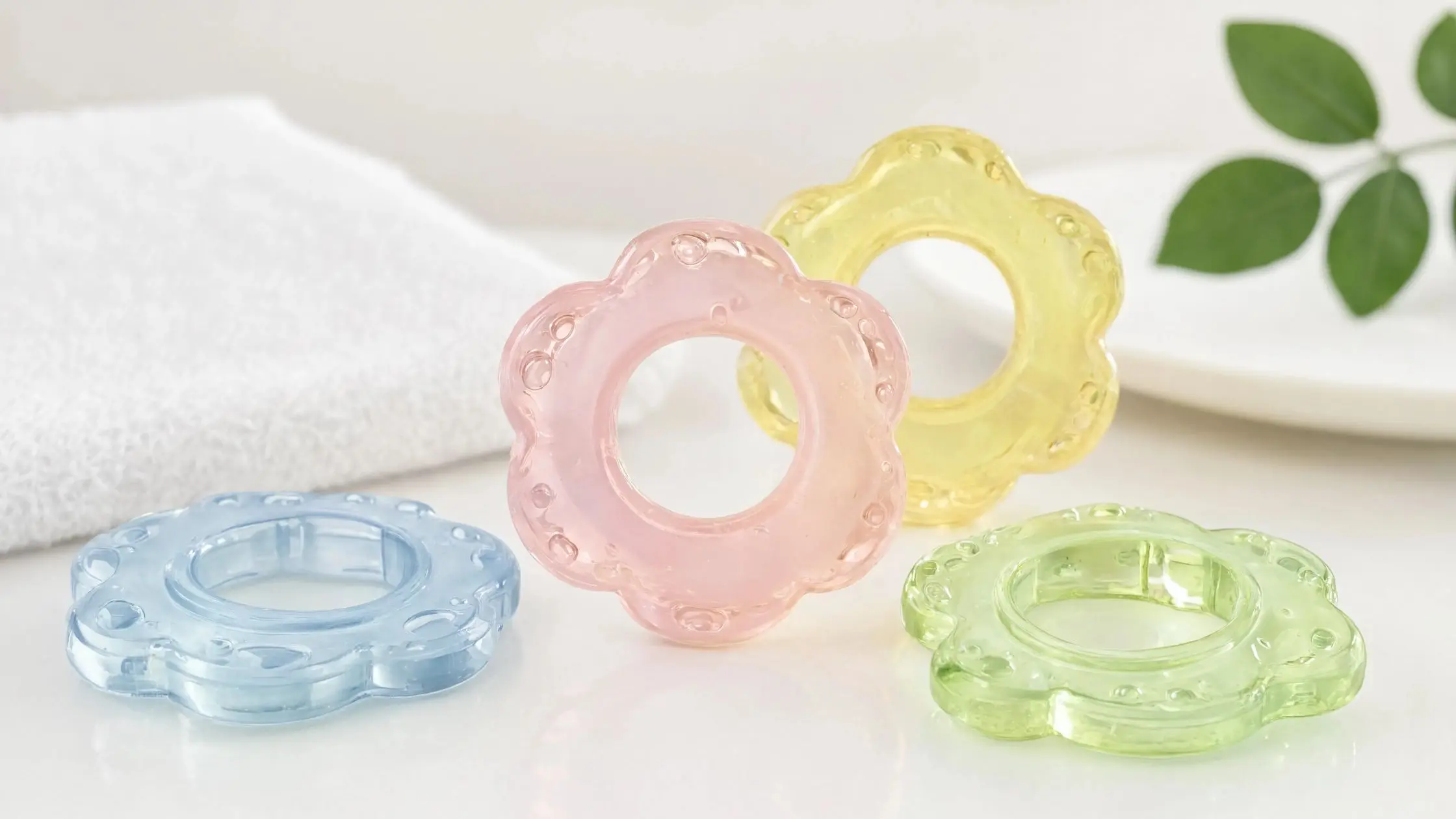
A solid teether made from an appropriate baby-safe material may be a simpler option because there is no liquid or gel inside that could escape if the product breaks.
Always follow the manufacturer’s safety instructions and inspect the product regularly.
Teether Safety: What Parents Need to Know
Knowing when to use teether for baby is only part of the equation. Knowing how to use it safely is just as important.
Never Leave Your Baby Unsupervised With a Teether
Even an appropriately designed teething toy should be used with supervision.
Watch your baby while they are chewing and remove the teether if it becomes damaged.
Don’t Attach a Teether Around the Baby’s Neck
Avoid teething necklaces, cords, or similar products that can create strangulation or choking hazards.
A teething product should not be used as a necklace or attached around the baby’s neck.
Don’t Give Small Objects as Improvised Teethers
Coins, bottle caps, small household objects, and other items that seem convenient can create serious choking hazards.
A product specifically designed for infant use is a safer choice.
Inspect the Teether Regularly
Babies can chew surprisingly hard.
Check the product before every use and discard it if you notice any deterioration.
Follow Cleaning Instructions
Some teethers can be washed with soap and water, while others may have specific cleaning requirements.
Don’t assume that a teether is dishwasher-safe or suitable for sterilisation unless the manufacturer says so.
Can a Teether Help With Teething Pain?
A teether may provide temporary comfort by allowing the baby to apply gentle pressure to the gums.
At the same time, it is important to have realistic expectations.
A teething toy:
- Doesn’t stop tooth eruption
- Doesn’t treat an infection
- Doesn’t cure a fever
- Doesn’t replace professional care when a baby is unwell
For mild gum discomfort, chewing on a clean, safe teether can be one of several comfort measures parents may try.
If your baby seems to be in significant pain or is unusually distressed, speak with your paediatrician rather than assuming the symptoms are simply caused by teething.
What Can You Do Besides Using a Teether?
A teether isn’t the only way to soothe a baby’s gums.
Depending on your baby’s age and circumstances, parents may also find the following helpful:
Gently Massage the Gums
With clean hands, gently rubbing the baby’s gums with a clean finger may provide some temporary relief.
The pressure should be gentle. There is no need to press hard.
Offer Cool, Safe Items
For babies who are developmentally ready, a clean, cool teething toy may help soothe the gums.
Avoid very cold or frozen objects that become excessively hard.
Keep the Face Dry
Because teething can involve increased drooling, gently wiping the baby’s face can help prevent irritation around the mouth.
A soft cloth can be used to pat the skin dry rather than repeatedly rubbing it.
Comfort Your Baby
Sometimes what a teething baby needs most is simply reassurance, cuddling, and distraction.
Teething can be an uncomfortable developmental stage, and extra comfort can go a long way.
When Should You Avoid Blaming Symptoms on Teething?
This is an important point for parents.
Teething is often blamed for almost any change in a baby’s behaviour, but not every symptom is caused by erupting teeth.
A baby with a high fever, persistent diarrhoea, repeated vomiting, difficulty breathing, severe lethargy, dehydration, or other significant symptoms should be assessed by a healthcare professional.
Don’t assume that serious symptoms will disappear once the tooth comes through.
Similarly, if your baby seems to be experiencing severe or persistent pain, seek professional advice.
When Should Your Baby First See a Dentist?
Your baby’s first dental visit should not be delayed until all of their baby teeth have erupted.
The American Academy of Pediatric Dentistry recommends that a child establish a dental home by 12 months of age or within six months of the eruption of the first tooth, whichever comes first.
An early dental appointment gives parents the chance to learn about and discuss:
- Teething
- Baby bottle and breastfeeding habits
- Pacifier use
- Oral hygiene
- Fluoride
- Early childhood tooth decay
- Diet and feeding
- Thumb-sucking
- Dental development
Early dental care is about prevention rather than waiting until something hurts.
Caring for Baby Teeth Once They Appear
Teething and oral hygiene go hand in hand.
As soon as the first tooth appears, begin cleaning it regularly.
Parents can use a small, soft-bristled toothbrush designed for infants and an appropriate amount of fluoride toothpaste based on current dental guidance.
Baby teeth are important. They help children:
- Chew food
- Develop speech
- Maintain space for permanent teeth
- Develop healthy oral habits
Even though baby teeth eventually fall out, decay in primary teeth can still cause pain and infection and may affect a child’s quality of life.
Aline Dent: Caring for Your Baby’s Early Dental Health
At Aline Dent, parents can seek professional guidance on their child’s oral health from the early stages of tooth development.
A baby’s first dental visits are not simply about checking whether the teeth have cavities. The paediatric dentistry team provide an opportunity to monitor dental development and help parents understand how to care for their child’s teeth and gums from an early age.
The dental team can guide parents on areas such as:
- Baby teeth care
- Teething and gum discomfort
- Infant oral hygiene
- Toothbrushing techniques
- Fluoride toothpaste
- Feeding and oral health
- Pacifier and thumb-sucking habits
- Early signs of tooth decay
- Preventive dental care
If you’re unsure when to use teether for baby, a dental consultation can also be a useful opportunity to discuss your baby’s specific teething stage and oral development.
Rather than waiting until your child develops a dental problem, early preventive care can help establish healthier habits from the beginning.
Teething vs Other Problems: What Should Parents Watch For?
| What You Notice | May Be Related to Teething | Needs Further Attention |
| Increased drooling | Yes | Usually not concerning by itself |
| Chewing on fingers or toys | Common | — |
| Mildly swollen gums | Common | Severe swelling should be evaluated |
| Mild fussiness | Can occur | Extreme or persistent distress needs attention |
| Slightly disrupted sleep | Can occur | Persistent sleep problems may have another cause |
| High fever | Not typically explained by teething | Contact a healthcare professional |
| Difficulty breathing | No | Requires prompt medical attention |
| Persistent vomiting or diarrhoea | Not a typical teething symptom | Seek medical advice |
| Significant lethargy | No | Needs medical evaluation |
Final Thoughts
Knowing when to use teether for baby is less about following a strict age and more about recognizing when your baby is beginning to show signs of teething and can safely use an appropriate product.
For many babies, a clean, age-appropriate teether provides something safe to chew and may temporarily soothe tender gums. But the teether itself isn’t essential, and it should never be used without considering safety.
Choose products designed specifically for babies, avoid small detachable parts and teething necklaces, inspect teethers regularly, and supervise your baby while they use one. Most importantly, don’t assume every symptom is caused by teething.
Once the first tooth appears, shift some of your attention toward baby dental care as well. Establishing good brushing habits and arranging an early dental visit can help protect those first teeth and create a foundation for lifelong oral health.
If you’re uncertain about your baby’s teething symptoms, oral hygiene, or dental development, professional guidance from a paediatric dentist or dental team can give you answers specific to your child’s needs.
Frequently Asked Questions About Baby Teethers
When to use teether for baby?
A teether can generally be introduced when your baby begins showing signs of teething and has the developmental ability to safely hold and chew on an age-appropriate teething toy. Many babies begin teething around 4 to 7 months, but the timing varies.
At what age can babies use a teether?
Many babies can use teethers during the first year, often from around the beginning of the teething period. Always check the manufacturer’s recommended age range and choose a product appropriate for your baby’s development.
Can I give my 3-month-old a teether?
Some babies begin showing chewing behaviour before their first tooth appears. Whether a particular teether is appropriate depends on the baby’s development and the product’s recommended age. Always supervise use and follow the manufacturer’s instructions.
Can a teether help with teething pain?
Chewing on a safe teether can provide temporary comfort by applying gentle pressure to sore gums. It doesn’t treat the underlying process of tooth eruption or any dental infection.
Should a teether be frozen?
Generally, a teether should not be frozen unless the manufacturer specifically states that it is designed for freezing. Very hard frozen objects may be uncomfortable or potentially harmful to sensitive gums. A cool teether may be a more appropriate option.
Are teething necklaces safe for babies?
Teething necklaces and similar products can create choking or strangulation risks. They should not be treated as a safer alternative to a properly designed teething toy.
How often should I clean a baby teether?
Clean the teether according to the manufacturer’s instructions and inspect it before each use. Because babies frequently drop or chew their teethers, keeping them clean is particularly important.
Do all babies need a teether?
No. Some babies are comfortable without one. A teether is simply one option that may provide comfort during the teething stage.
When should a baby first visit a dentist?
The first dental visit is recommended by around 12 months of age or within six months after the first tooth appears, whichever comes first. Early visits help parents learn preventive oral care and allow the dentist to monitor development.
Does teething cause fever?
A slight rise in temperature can sometimes occur around teething, but a genuine high fever should not automatically be attributed to teething. If your baby has a high fever or appears unwell, seek medical advice.