Porcelain Veneers vs Composite Veneers: Which Is Better for Your Smile?
Even minor changes in your teeth’s shape, colour, or alignment can affect how confident you feel about your smile. Stains that do not respond to whitening, chipped edges, uneven teeth, or small gaps are some of the concerns people bring up during cosmetic dental consultations.
Dental veneers offer one way to address these concerns. Veneers help enhance the appearance of teeth by correcting visible imperfections while keeping the smile looking natural. However, they are available in different materials, each with its own features.
Porcelain veneers and composite veneers are two popular choices for improving a smile. While both can address cosmetic concerns, they vary in terms of durability, appearance, application process, lifespan, and maintenance requirements.
If you are considering veneers, understanding the differences between these treatments can help you have a more informed discussion with your dentist.
What Are Dental Veneers and Why Are They Used?
Dental veneers are thin coverings attached to the front surfaces of teeth. They are customised to improve the appearance of teeth that may be stained, chipped, slightly uneven, or differently shaped.
For example, someone with small gaps between their front teeth may consider veneers to create a more uniform appearance. Similarly, veneers can help improve the look of teeth with discolouration that cannot be corrected through regular whitening treatments.
There are different types of dental veneers, but porcelain and composite veneers are two widely used options. The main difference lies in the material used and the way the veneers are prepared and placed.
Porcelain Veneers: A Customised Solution for a Natural-Looking Smile
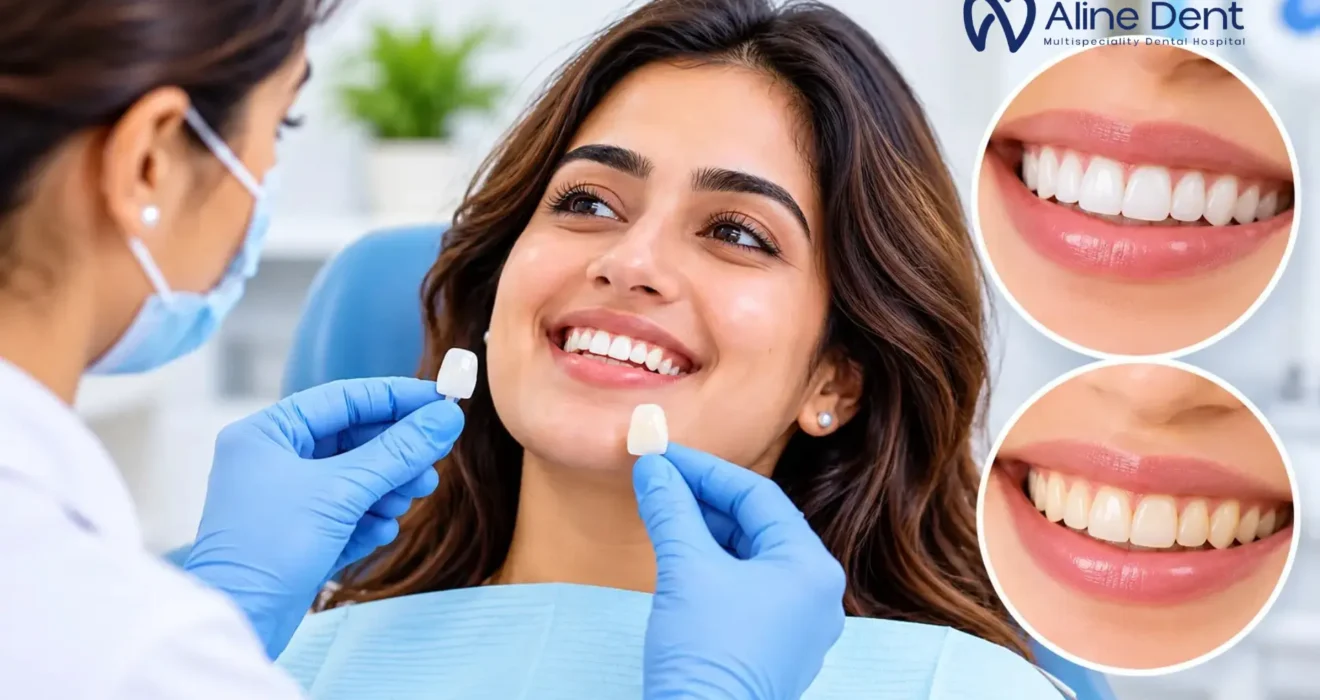
Porcelain veneers are thin, specially crafted shells made from high-quality dental porcelain and designed to fit over the front surface of teeth. They are prepared individually to match the shape, size, and shade of the patient’s teeth.
The procedure typically starts with a thorough dental check-up, followed by a personalised treatment plan. The dentist may prepare the tooth surface by removing a small amount of enamel before taking impressions or digital scans. These records are then used to create customised veneers in a dental laboratory.
After preparation, the veneers are securely attached to the teeth using a specialised dental bonding material.
One of the reasons people choose porcelain veneers is their ability to reproduce the appearance of natural enamel.
What makes porcelain veneers appealing?
- Natural-looking finish: Porcelain has a light-reflecting quality that helps it resemble natural teeth.
- Resistance to stains: The material is less likely to absorb stains from everyday foods and drinks.
- Longer lifespan: With proper placement and maintenance, porcelain veneers can last for many years.
- Individual customisation: Each veneer can be designed to complement the patient’s facial features and existing teeth.
- Smooth surface: Porcelain provides a smooth finish that is easy to maintain with regular oral hygiene.
There are a few things to consider before choosing this option. Porcelain veneers generally cost more than composite veneers, and the preparation process may involve removing some natural enamel. The treatment also usually requires more than one appointment.
Composite Veneers: An Alternative for Minor Smile Corrections
Composite veneers are created using a tooth-coloured resin material. Instead of being manufactured separately in a dental laboratory, the dentist can often apply and shape the material directly on the teeth.
During the procedure, the dentist places the composite resin in small layers, adjusts its shape, and uses a special curing light to harden it. The surface is then polished to give the tooth a more natural appearance.
This approach can be useful for correcting minor cosmetic concerns without going through a lengthy laboratory process.
Why do some patients prefer composite veneers?
- Usually quicker: Many treatments can be completed in a single dental appointment.
- Lower initial cost: Composite veneers are generally more affordable than porcelain options.
- Conservative preparation: Depending on the tooth’s condition, little or sometimes no enamel removal may be necessary.
- Convenient repairs: Minor chips or damaged areas can often be repaired without replacing the entire veneer.
- Flexible shaping: The dentist can make adjustments to the shape and appearance while applying the material.
Composite veneers do require some attention over time. Compared with porcelain, the resin material is more likely to develop stains and surface wear. Occasional polishing or repair may also be needed.
Porcelain Veneers vs Composite Veneers: How Are They Different?
At first glance, both treatments may seem similar because they aim to improve the appearance of teeth. However, the experience and long-term results can vary depending on the material used.
Here is a comparison of the differences between porcelain and composite veneers.
| Comparison | Porcelain veneers | Composite veneers |
| Material | Dental-grade porcelain | Tooth-coloured composite resin |
| Appearance | Highly natural-looking | Natural-looking with proper shaping |
| Stain resistance | High | More prone to staining |
| Durability | Generally lasts longer | May require earlier repair or replacement |
| Treatment process | Usually involves multiple visits | Often completed in one visit |
| Cost | Generally more expensive | Usually more affordable |
| Repair | Damaged veneers may need replacement | Minor damage can often be repaired |
| Tooth preparation | Usually requires some enamel removal | May require minimal or no preparation |
Neither option is automatically the right choice for everyone. Your natural tooth condition and desired smile improvements play a key role in determining the most suitable treatment option.
Which Veneers Are Better for Your Teeth?
Many patients have this question when considering different cosmetic dental treatments. The answer depends on what you want to correct and how you expect the results to look over time.
Porcelain veneers may be worth considering if you want a longer-lasting result, better stain resistance, and a highly natural finish. They are commonly chosen by patients looking to enhance the appearance of multiple teeth that are visible when smiling.
Composite veneers may be more suitable if you have minor cosmetic concerns and prefer a treatment with a lower initial cost. They can also be a practical option when you want small changes without a more extensive veneer procedure.
However, the decision should not be based on appearance or price alone. Your dentist needs to check your enamel, gum health, bite, and existing dental restorations before recommending either option.
A treatment that works well for one person may not be appropriate for another.
How Long Do Dental Veneers Usually Last?
Dental veneers are designed to provide long-lasting cosmetic improvements, but their durability can vary depending on several factors. The material used, the way the veneers are fitted, and your daily oral care habits all influence how long they remain in good condition.
Porcelain veneers can generally last 10–15 years or even longer when properly maintained. Composite veneers usually have a shorter lifespan of approximately 5–7 years. However, these timeframes are estimates, and actual results may differ from person to person.
Certain habits can put additional pressure on veneers and increase the possibility of damage. Chewing ice, biting your nails, opening objects with your teeth, and grinding your teeth are some examples.
Routine dental appointments are equally important. During these visits, your dentist can assess the condition of your veneers, look for signs of wear or damage, and check whether the surrounding gum tissue remains healthy.
Who Is a Suitable Candidate for Dental Veneers?
Dental veneers may be an option for individuals who want to address specific cosmetic imperfections and achieve a more balanced-looking smile. However, the suitability of this treatment depends on the overall condition of your teeth and gums.
You may benefit from considering veneers if you have:
- Persistent tooth stains: Discolouration that does not respond well to conventional teeth whitening.
- Minor spaces between teeth: Small gaps that affect the overall appearance of your smile.
- Chipped teeth: Small fractures or damaged edges on visible teeth.
- Uneven tooth shapes: Teeth that appear irregular in size or shape.
- Worn front teeth: Front teeth that have lost some of their natural shape or appearance.
Before proceeding, existing dental concerns may need attention. For example, untreated cavities, gum infections, weakened enamel, and excessive teeth grinding can make veneer treatment less suitable.
Patients with considerable bite irregularities or alignment concerns may need alternative treatments, including braces or clear aligners.
A detailed dental assessment helps determine whether porcelain veneers, composite veneers, or another cosmetic procedure would be appropriate.
Tips to Keep Your Dental Veneers in Good Condition
Getting veneers is only one part of maintaining an attractive smile. Looking after your natural teeth and the veneers themselves is essential for preserving the results over time.
Here are some useful practices to include in your daily routine:
Choose the right brushing technique: Clean your teeth twice daily with a soft toothbrush and fluoride-based toothpaste. Gentle brushing helps protect your gums and the areas surrounding the veneers.
Make flossing a daily habit: Food debris and plaque can build up between teeth even after veneer treatment. Cleaning these spaces regularly helps support healthy gums.
Avoid unnecessary pressure on your teeth: Biting hard objects, chewing ice, or using your front teeth to break hard foods can cause cracks or damage.
Stay away from harmful habits: Avoid biting your nails, chewing pens, and other activities that place repeated pressure on your teeth. If you grind your teeth, ask your dentist about suitable protection.
Keep up with dental appointments: Regular examinations allow your dentist to monitor the veneers, identify possible problems early, and recommend professional maintenance when required.
Consistent oral care not only helps preserve your veneers but also protects the natural teeth supporting them.
Enhance Your Smile with Cosmetic Dentistry at Aline Dent Multispeciality Dental Hospital
A smile makeover involves more than choosing a particular type of veneer. The right treatment should take into account your dental health, facial features, personal preferences, and the changes you hope to achieve.
At Aline Dent Multispeciality Dental Hospital, we understand that every patient has different cosmetic dental needs. While some individuals may be concerned about stained or discoloured teeth, others may want to improve chipped edges, uneven tooth shapes, or small spaces between their teeth.
Our approach begins with evaluating your existing dental condition and understanding your expectations. Based on this assessment, our dental team can explain suitable cosmetic treatment options, including porcelain veneers and composite veneers.
We aim to help patients make informed decisions by discussing the expected results, procedure, durability, and maintenance involved in each option. Our focus is on improving smile aesthetics while keeping overall oral health a priority.
With our clinics in Thalassery, Kuttiadi, and Vadakara, we strive to provide accessible dental care for individuals looking to improve and maintain their smiles.
If you are considering dental veneers, visit Aline Dent Multispeciality Dental Hospital and speak with our dental team about the treatment options suitable for your teeth.
Frequently Asked Questions
Can composite veneers give a natural-looking finish?
Yes. Composite resin can be carefully shaped and polished to match the appearance of surrounding teeth. Although it can produce attractive results, porcelain tends to offer greater translucency and a finish that closely resembles natural enamel.
Do porcelain veneers change colour over time?
Porcelain is a non-porous material, making it less likely to absorb stains from everyday food and beverages. However, natural teeth and the bonding material around veneers may still experience colour changes over time.
Is the dental veneer procedure uncomfortable?
Veneer placement is generally well tolerated by most patients. Depending on the amount of tooth preparation required, you may experience mild discomfort or temporary sensitivity. Your dentist will explain the procedure and ways to manage any discomfort.
Is it possible to get veneers without removing enamel?
Some patients may qualify for minimal-preparation or no-preparation veneers, where little or no enamel removal is needed. However, this approach is not suitable for every tooth. Factors such as tooth position, size, and existing alignment determine whether it is possible.
How do I choose the right veneers for my teeth?
Consider your cosmetic goals, dental condition, budget, and how long you expect the treatment to last. Porcelain may be a suitable choice if durability and stain resistance are priorities, whereas composite veneers may be worth considering for minor cosmetic changes. A professional consultation will help you compare both options.