
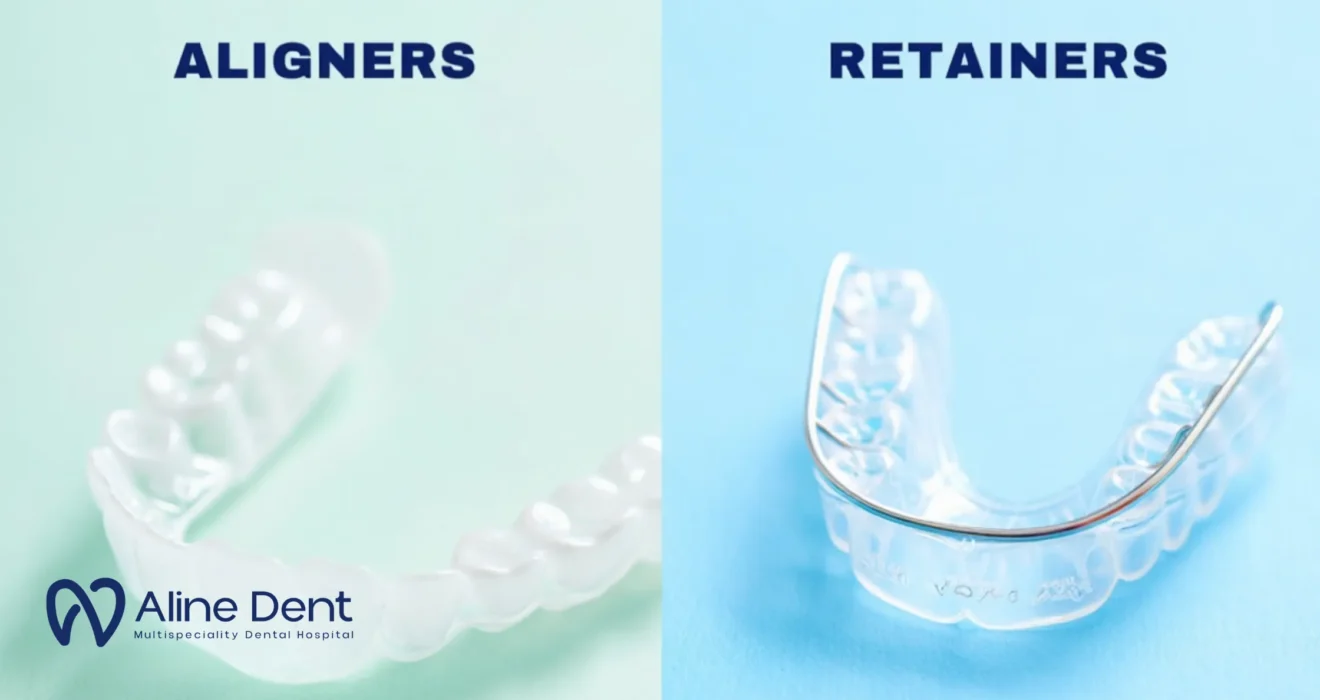
Aligners vs Retainers: Learn the Main Differences Before Getting Started!
Many people assume aligners and retainers are basically the same thing.
After all, both are transparent dental appliances that fit over your teeth. Both are commonly associated with orthodontic treatment. And from a distance, they can even look almost identical.
But in reality, aligners and retainers serve completely different purposes.
This confusion is surprisingly common, especially among adults exploring smile correction for the first time. Some patients believe retainers can straighten teeth. Others think aligners are only cosmetic. And many people don’t realize that even after successful orthodontic treatment, retainers are still necessary.
This makes the topic of aligners vs retainers highly important for anyone considering orthodontic treatment.
Understanding the difference helps you make better decisions about your dental health, smile goals, treatment expectations, and long-term results.
In this detailed guide, we’ll break down what aligners and retainers actually do, how they work, when they’re used, who they’re best for, and why confusing the two can affect the outcome of your orthodontic treatment.
Aligners vs Retainers: The Core Difference
The most straightforward way to explain the difference is this:
- Aligners move teeth
- Retainers hold teeth in place
That’s it at the most basic level, but there’s much more to understand beneath that simple explanation.
Aligners are active orthodontic devices designed to gradually shift teeth into better alignment over time.
Retainers, on the other hand, are passive appliances used after orthodontic treatment to maintain the corrected tooth position.
In other words:
- Aligners are used during treatment
- Retainers are used after treatment
Both are essential in modern orthodontics, but they perform completely different roles.
What Are Dental Aligners?
Dental aligners are custom-made transparent trays designed to gradually move teeth into their desired positions.
They are commonly used as an alternative to traditional braces for correcting:
- Crowded teeth
- Gaps between teeth
- Mild bite issues
- Crooked teeth
- Minor orthodontic irregularities
Clear aligners work by applying controlled pressure to specific teeth over time. Patients wear a series of trays, each slightly different from the previous one, allowing gradual tooth movement.
How Aligners Actually Move Teeth?
Many people underestimate how advanced aligner treatment really is.
Aligners are carefully planned using digital scans and orthodontic mapping. Every tray is designed to create precise tooth movement in small stages.
Patients usually switch to a new set of aligners every one to two weeks, depending on the treatment plan.
For aligners to work effectively, they must typically be worn for:
- 20–22 hours per day
Removing them too frequently slows progress and affects treatment accuracy.
Unlike braces, aligners are removable, which makes eating and oral hygiene easier for many patients.
Advantages of Aligners
Clear aligners have become increasingly popular among adults and teenagers because they offer several aesthetic and lifestyle benefits.
Nearly Invisible Appearance
One of the biggest reasons people choose aligners is cosmetic discretion. Many adults prefer not to wear visible metal braces during professional or social interactions.
Easier Oral Hygiene
Because aligners are removable, brushing and flossing are much easier compared to traditional braces.
This reduces the risk of plaque buildup around brackets and wires.
Greater Comfort
Modern aligners are designed with smooth edges and customized fit, often making them more comfortable than traditional orthodontic appliances.
Fewer Dietary Restrictions
Patients can remove aligners while eating, meaning there are fewer food restrictions compared to braces.
What Are Retainers?
Retainers are orthodontic appliances designed to maintain tooth position after teeth have already been aligned.
This is an extremely important stage that many people underestimate.
Teeth naturally have a tendency to shift back toward their original positions after orthodontic treatment. This process is known as orthodontic relapse.
Retainers help prevent that movement.
Without proper retention, even beautifully aligned teeth can gradually become crooked again over time.
Why Teeth Move Back After Orthodontic Treatment
This surprises many patients.
Even when braces or aligner treatment is completed successfully, the surrounding gums and bone still need time to adapt to the new tooth alignment.
Your teeth are constantly exposed to pressure from:
- Chewing
- Tongue movement
- Grinding
- Biting forces
- Natural aging changes
Without retainers, teeth often begin shifting slowly, sometimes within months.
This is why orthodontists emphasize retention so strongly after active treatment ends.
Types of Retainers
Retainers come in several forms depending on patient needs.
Clear Retainers
These resemble aligners visually but are designed only to maintain tooth position, not move teeth.
They are commonly used after aligner therapy.
Hawley Retainers
Retainers cannot make significant tooth movements.
They are durable and adjustable, but more visible.
Fixed Retainers
Thin wires are bonded behind the teeth permanently or semi-permanently.
These are often used for patients at higher risk of relapse.
Aligners vs Retainers: Which One Do You Need?
This depends entirely on your dental situation.
You may need aligners if:
- Your teeth are crowded or crooked
- You have spacing issues
- You want smile correction
- Your bite requires adjustment
You may need retainers if:
- You already completed braces or aligner treatment
- Your teeth are currently well-aligned
- You want to prevent teeth from shifting back
A retainer cannot significantly straighten crooked teeth the way aligners can.
And aligners alone are not enough to maintain results permanently without retention afterward.
Can Retainers Straighten Teeth?
One of the biggest misconceptions is that retainers can move teeth extensively, which they are not designed to do.
In very minor relapse cases, retainers may help maintain or slightly correct minimal shifting. Still, they are not an alternative to orthodontic treatment.
Trying to use old retainers on significantly shifted teeth can even damage the appliance or create unnecessary pressure.
If teeth have moved substantially, new orthodontic evaluation is usually required.
Are Aligners Better Than Braces?
Aligners offer several cosmetic and comfort advantages, but they are not always suitable for every case.
Complex orthodontic problems may still require braces depending on:
- Severity of crowding
- Bite correction needs
- Jaw alignment
- Tooth rotation complexity
An experienced orthodontic assessment is essential before deciding on treatment.
The Importance of Compliance in Both Treatments
Whether using aligners or retainers, consistency matters enormously.
Aligners only work when worn properly.
Retainers only protect results when used consistently.
One of the biggest reasons orthodontic treatment fails long-term is poor retainer compliance after treatment ends.
Patients often assume the work is “finished” once teeth are straight, but retention is part of the treatment itself.
Advanced Orthodontic Care at Aline Dent
For patients exploring smile correction options, understanding the difference between aligners and retainers is an important first step toward making informed treatment decisions.
At Aline Dent, orthodontic and smile correction treatments are planned based on each patient’s individual dental structure, alignment concerns, bite condition, and long-term goals.
The clinic offers modern orthodontic solutions including:
- Clear aligners
- Smile correction treatments
- Retainers after orthodontic care
- Digital dental diagnostics
- Personalized treatment planning
Rather than recommending one universal approach for every patient, the dental team focuses on selecting the most appropriate treatment based on function, aesthetics, comfort, and long-term stability.
Patients are also guided through the retention phase after treatment, helping maintain orthodontic results and reducing the risk of teeth shifting back over time.
Common Mistakes People Make with Retainers
Many orthodontic relapse cases happen because patients stop wearing retainers too early.
Common mistakes include:
- Wearing retainers inconsistently
- Losing retainers and not replacing them
- Assuming teeth will stay aligned permanently
- Using damaged or warped retainers
- Skipping follow-up orthodontic visits
Retention is not optional; it’s a critical part of protecting your smile investment.
Final Thoughts
When it comes to aligners vs retainers, the most important thing to understand is that they are not competing treatments; they are complementary parts of orthodontic care.
Aligners help create a straighter smile.
Retainers help keep it that way.
Both play essential roles in achieving long-term orthodontic success.
If you’re considering smile correction, the best approach is not choosing whichever option sounds more convenient; it’s understanding what your teeth actually need.
Because in orthodontics, achieving straight teeth is only part of the journey. Maintaining them is what truly protects your results for the long term.
Frequently Asked Questions (FAQs)
What is the main difference between aligners and retainers?
Aligners actively move teeth into alignment, while retainers maintain teeth in their corrected positions after treatment.
Can retainers fix crooked teeth?
Retainers cannot correct major tooth alignment issues. Significant alignment issues usually require aligners or braces.
Do I need retainers after aligners?
Yes. After aligner treatment, retainers are essential to prevent teeth from shifting back.
How long should retainers be worn?
This varies by patient, but many orthodontists recommend long-term nighttime wear to maintain results.
Are clear retainers and aligners the same?
They may look similar, but they serve different purposes. Aligners gradually straighten teeth, whereas retainers keep them stable after treatment.
Which is more comfortable: braces or aligners?
Many patients find aligners more comfortable due to the absence of metal brackets and wires.
Can teeth shift years after braces?
Yes. Teeth can continue shifting gradually over time without proper retention.