How Salt Keep Dental Problems Away: A Quick Way to Boost Oral Health!
Most people don’t think twice about salt beyond the kitchen. But long before modern dental products existed, salt was one of the most trusted remedies for maintaining oral health. Even today, dentists still recommend salt water rinses for healing and hygiene.
So, how salt keep dental problems away in a practical, everyday sense?
It’s not magic, it’s science combined with simplicity. Salt works quietly in the background: reducing bacteria, calming inflammation, and helping your mouth maintain a healthier balance. While it won’t replace brushing, flossing, or professional care, it can significantly strengthen your oral hygiene routine when used correctly.
Let’s explore how something so basic can have such a meaningful impact on your dental health.
The Science Behind Salt and Oral Health
To really understand how salt keeps dental problems away, it helps to look at what’s happening inside your mouth on a daily basis.
Your mouth naturally contains hundreds of types of bacteria – some beneficial, others harmful. When you eat, especially sugary or acidic foods, harmful bacteria produce acids that attack your enamel and irritate your gums.
Salt helps control this environment in a few key ways:
Natural Antibacterial Action
Salt helps create an unfavorable environment for harmful bacteria. It works through osmosis, drawing out moisture from bacterial cells, which slows down their growth and reduces infection risk.
Maintains a Balanced Oral pH
A healthy mouth should not be too acidic. Salt water helps neutralize acids, making it harder for bacteria to thrive and cause decay.
Reduces Swelling and Inflammation
If you’ve ever had swollen gums or a toothache, you know how uncomfortable it can be. Salt water reduces inflammation by pulling excess fluid from tissues, easing discomfort.
Supports Tissue Healing
Minor cuts, ulcers, or post-treatment wounds heal faster in a clean environment. Salt water keeps the area clean while promoting natural healing.
This combination is what makes salt a reliable, dentist-approved home remedy.
How Salt Keep Dental Problems Away in Daily Life?
Now, let’s connect the science to real-life dental issues most people face.
Gum Problems and Bleeding Gums
One of the earliest signs of poor oral health is gum inflammation. Regular saltwater rinsing helps reduce bacterial buildup along the gum line, which is a major cause of gingivitis. Over time, this can lead to healthier, firmer gums with less bleeding.
Tooth Decay and Cavities
Cavities develop when acid-producing bacteria weaken the enamel. Salt helps by reducing bacterial activity and balancing the pH level in your mouth, making it less favorable for decay to develop.
Persistent Bad Breath
Bad breath is often caused by bacteria that release foul-smelling compounds. Salt water helps cleanse the mouth and reduce these bacteria, offering a natural and chemical-free way to manage halitosis.
Mouth Ulcers and Minor Infections
Painful ulcers or small wounds inside the mouth can heal faster with regular salt rinses. It prevents infection while soothing irritation.
Post-Dental Treatment Care
After procedures like tooth extraction, scaling, or gum treatments, dentists commonly recommend salt water rinses. It’s gentle, effective, and supports recovery without introducing harsh chemicals.
How to Use Salt Safely and Effectively
While salt is beneficial, using it the right way is important to avoid unwanted side effects.
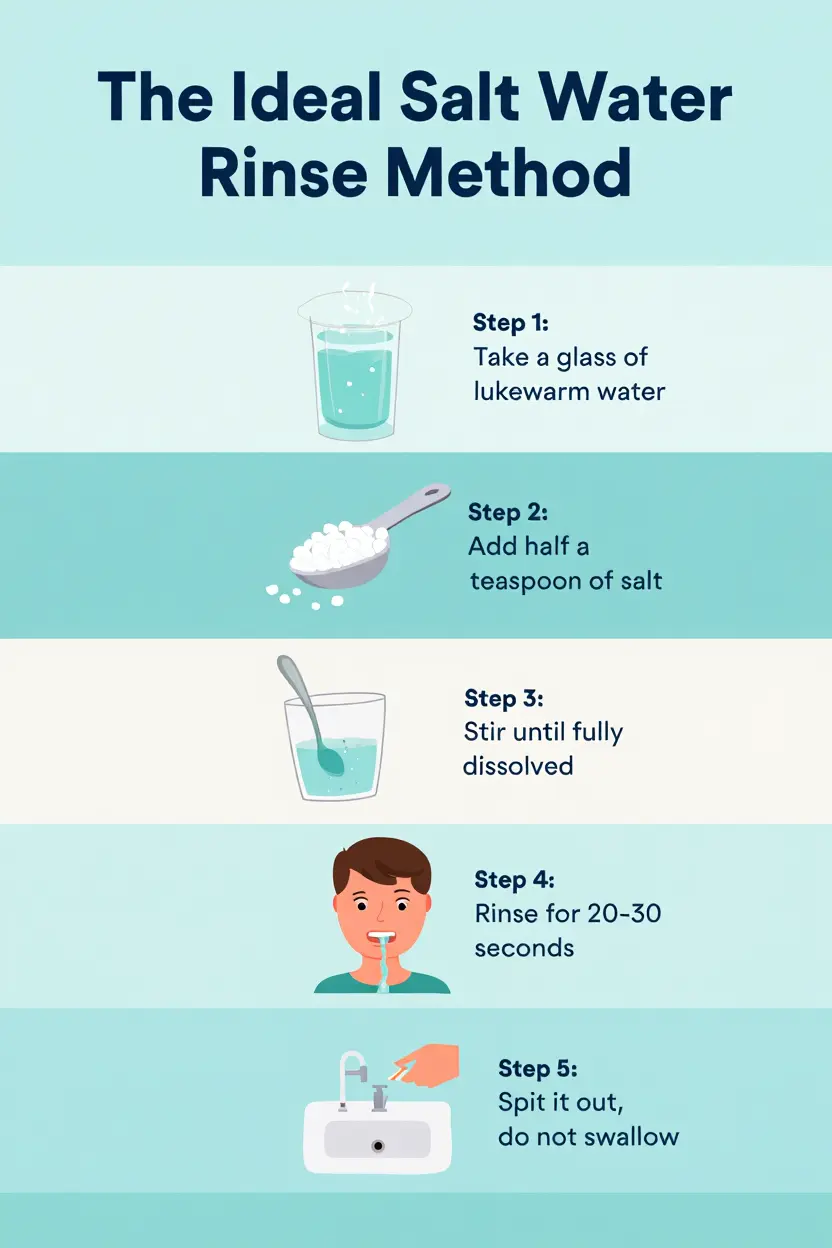
The Ideal Salt Water Rinse Method
- Start by taking a glass of lukewarm water. Make sure the water is not too hot, as excessive heat can irritate sensitive areas inside your mouth.
- Add about half a teaspoon of salt to the water. This amount is usually sufficient to create an effective and gentle saline solution.
- Stir the mixture well until the salt is completely dissolved. Ensuring there are no undissolved particles helps provide an even rinse.
- Take a mouthful of the solution and gently swish it around your mouth for about 20–30 seconds, allowing it to reach all areas, especially around the gums and any sensitive spots.
- Spit the solution out after rinsing. Avoid swallowing it, as it may contain bacteria and debris from your mouth.
This can be done once or twice daily, especially after meals or before bedtime.
When to Use It More Frequently
- After dental treatments
- During gum infections or swelling
- When dealing with mouth ulcers
What to Avoid
- Using very hot water (can irritate tissues)
- Adding too much salt (can dry out the mouth)
- Rinsing excessively (can disrupt natural balance)
Consistency matters more than intensity here.
Common Mistakes People Make with Salt for Oral Care
Even though it’s simple, many people misuse salt in ways that can do more harm than good.
Brushing Directly with Salt
Some people use salt as a toothpaste alternative. While it may feel like it cleans better, salt crystals are abrasive and can gradually wear down enamel.
Overusing Salt Rinses
Too much of anything isn’t good. Excessive rinsing can lead to dryness or irritation in the mouth.
Expecting Salt to Replace Dental Care
Salt is supportive, not a cure-all. It cannot remove plaque buildup like professional cleaning or treat advanced dental issues.
Understanding these limitations helps you use salt effectively without damaging your teeth.
Aline Dent: Combining Natural Care with Expert Dentistry
While home remedies like salt can help maintain oral hygiene, long-term dental health requires professional guidance. That’s where Aline Dent Multispeciality Dental Hospital plays an important role.
Being the most trusted dental clinic in Kannur, our focus is not just on treating problems but preventing them before they become serious. The clinic emphasizes patient education, helping you understand how small daily habits, like using salt water rinses, can support your overall dental health.
What Makes Aline Dent Stand Out?
- Experienced dental professionals who place patient comfort at the forefront
- Advanced technology for precise diagnosis and treatment
- Personalized care plans tailored to individual needs
- Strong focus on preventive dentistry and oral hygiene education
Whether you’re dealing with gum disease, cavities, or simply want to maintain a healthy smile, Aline Dent ensures you get the right balance of modern treatment and practical guidance.
Salt Water vs Mouthwash: What Should You Choose?
This is a common question, and the answer isn’t as simple as picking one over the other.
Salt Water Rinse
- Natural and chemical-free
- Cost-effective and easily available
- Ideal for healing and daily maintenance
Mouthwash (e.g., Listerine)
- Strong antibacterial properties
- Targets bad breath effectively
- Convenient for quick use
In many cases, dentists suggest using both – salt water for soothing and healing, and mouthwash for targeted antibacterial action.
Final Thoughts
So, how salt keep dental problems away?
It works by creating a healthier environment inside your mouth – reducing bacteria, balancing pH levels, soothing inflammation, and supporting healing. It’s simple, affordable, and effective when used correctly.
But the real key to long-term oral health lies in combining these small habits with professional dental care. That’s what keeps your smile not just clean, but truly healthy.
FAQs
How does salt help in dental problems?
Salt helps control bacteria, reduce inflammation, and promote healing in the mouth. It also neutralizes acids that contribute to tooth decay and gum disease.
Which is better, Listerine or salt water?
Both have their advantages. Salt water is natural and ideal for healing, while Listerine provides stronger antibacterial action. The best choice depends on your specific dental needs.
Can I brush my teeth with salt every day?
No, daily brushing with salt is not recommended as it can be abrasive and damage enamel over time. It’s safer to use salt as a rinse.
Can salt damage enamel?
Yes, if used excessively or applied directly to teeth, salt can wear down enamel. Always use it in diluted form.
Does rubbing salt on gums help?
Mild salt solutions can help reduce gum inflammation, but direct rubbing with coarse salt may irritate the gums. A gentle rinse is the safer option.