

Can Dental Issues Cause Snoring? The Hidden Link Between Teeth and Snoring!
Snoring is something most people don’t take seriously until it starts affecting sleep quality, relationships, or overall health. While it’s commonly blamed on tiredness, sleep position, or lifestyle habits, there’s an often-overlooked factor that could be the root cause: your oral structure.
The connection between teeth and snoring is more significant than many people realize. Your teeth, jaw alignment, and even the shape of your dental arches can directly influence how freely you breathe during sleep. When these structures are not properly aligned, they can restrict airflow, leading to vibrations in the airway, which we hear as snoring.
What makes this even more important is that dental-related snoring doesn’t just affect your nights; it can gradually impact your oral health, sleep quality, and overall well-being.
Let’s explore how this connection works in detail.
Understanding Snoring: What’s Really Happening Inside Your Airway
Snoring is not just a sound; it’s a physical response to restricted airflow.
When you fall asleep, the muscles in your body relax, including those in your throat, tongue, and soft palate. If your airway is already slightly narrow due to structural reasons, this relaxation can further reduce the space available for air to pass through.
As air pushes through this restricted space, it causes soft tissues to vibrate. The intensity of the snoring depends on how narrow the airway is and how forcefully air is moving through it.
Occasional snoring might not be a concern, but chronic snoring often indicates an underlying structural or functional issue. And this is where dental factors come into play, because your jaw and teeth play a key role in maintaining airway space.
Teeth and Snoring: What’s the Real Connection?
The link between teeth and snoring lies in how your dental structure supports your airway.
Your teeth determine how your upper and lower jaws align. This alignment, in turn, affects the position of your tongue and the openness of your airway. If your bite is not properly aligned or your jaw sits too far back, it can reduce the space in your throat, especially when you’re lying down.
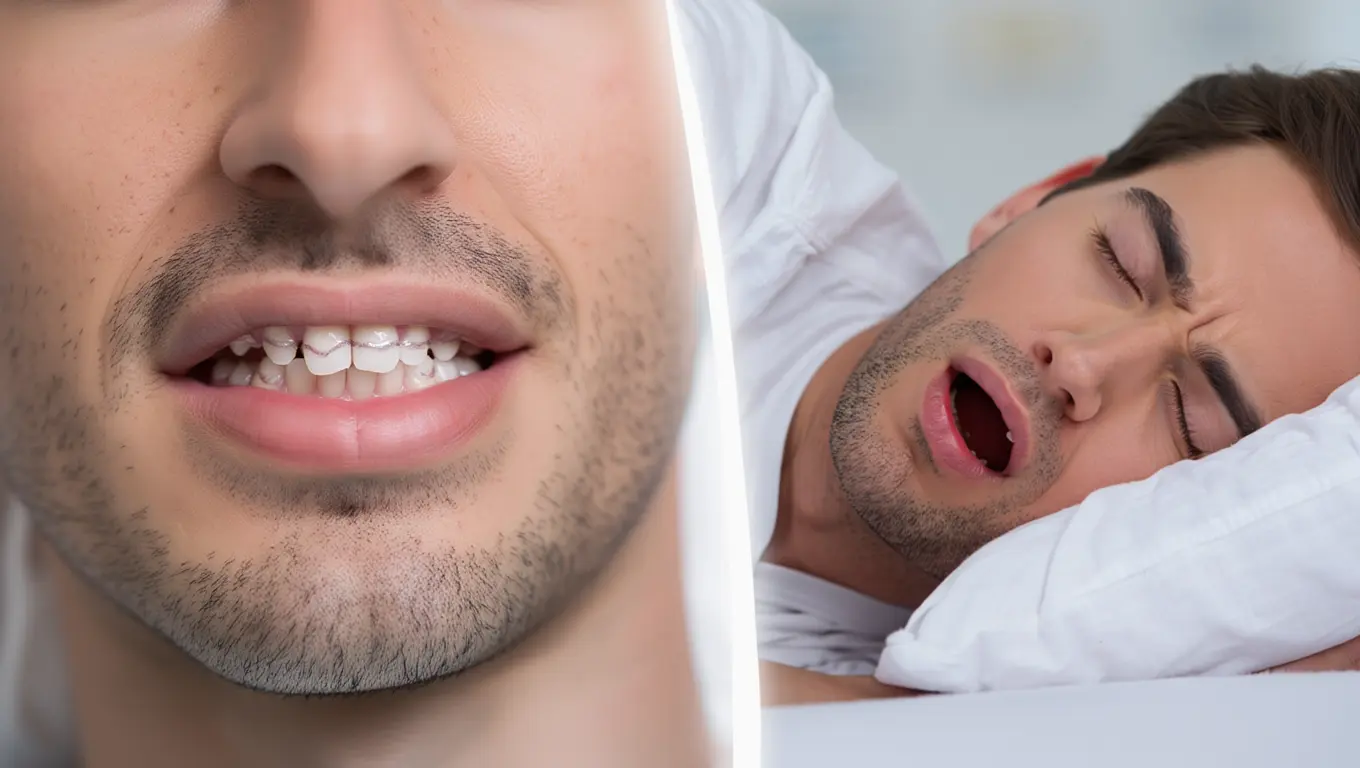
When you sleep, your tongue naturally relaxes. If there isn’t enough space in the mouth due to dental or jaw issues, the tongue tends to fall backward, partially blocking the airway. This obstruction leads to turbulent airflow, which causes snoring.
In simple terms, your teeth don’t just affect your smile; they influence how well you breathe at night.
Dental Problems That Can Cause Snoring
1. Misaligned Teeth (Malocclusion)
Misaligned teeth are not just a cosmetic concern; they can significantly impact how your jaw functions.
When teeth are crowded, rotated, or improperly positioned, they can alter the natural alignment of the jaw. This misalignment often pushes the lower jaw slightly backward, reducing the airway space behind the tongue.
Over time, this restricted space becomes more noticeable during sleep when muscle control is reduced.
Why It Leads to Snoring:
- Reduced airway space due to jaw displacement
- Increased likelihood of tongue obstruction
- Uneven pressure on the jaw joints affects breathing patterns
Correcting misalignment through orthodontic treatment can improve both dental health and airflow.
2. Jaw Position and Bite Issues
Your bite plays a more critical role than most people think.
Conditions like overbite, underbite, and crossbite don’t just affect chewing. They influence how your jaw sits at rest and during sleep. For example, a severe overbite can cause the lower jaw to sit too far back, narrowing the airway behind it.
When you lie down, gravity and muscle relaxation worsen this effect, making it harder for air to pass freely.
Long-Term Impact:
- Chronic snoring due to airway restriction
- Increased risk of sleep disturbances
- Potential progression to sleep apnea if untreated
Addressing bite issues can significantly improve airway positioning and breathing.
3. Teeth Grinding (Bruxism)
Teeth grinding is often seen as a stress-related habit, but it can also be closely linked to breathing problems during sleep.
People who experience restricted airflow may subconsciously grind their teeth as the body attempts to reopen the airway. This constant grinding strains the jaw muscles and can gradually alter jaw positioning.
How It Contributes to Snoring:
- Creates tension in jaw muscles
- Affects jaw alignment over time
- Disrupts normal sleep cycles
Bruxism and snoring often occur together, indicating an underlying issue with airway function.
4. Missing Teeth and Structural Changes
Missing teeth can result in more than just cosmetic concerns.
Teeth help maintain the structure and stability of your jaw. When one or more teeth are missing, surrounding teeth may shift, and the jawbone can begin to lose density. These changes can alter how the jaw sits and reduce airway space.
Why This Matters:
- Changes in jaw alignment affect breathing
- Reduced support for soft tissues
- Increased likelihood of airway collapse during sleep
Replacing missing teeth helps restore both function and structural balance.
5. Narrow Dental Arches and Limited Tongue Space
A narrow upper jaw or dental arch can significantly impact breathing.
When the arch is too narrow, there isn’t enough room for the tongue to rest comfortably. As a result, the tongue is more likely to fall backward during sleep, blocking the airway.
This is a common but often overlooked cause of snoring, especially in younger individuals.
Effects:
- Increased airway resistance
- Higher chances of mouth breathing
- Greater risk of snoring and mild sleep apnea
Expanding the dental arch or correcting alignment can help create more space for proper airflow.
The Role of the Tongue in Teeth and Snoring
The tongue plays a central role in the connection between teeth and snoring, yet it’s rarely discussed.
Your tongue needs adequate space to rest comfortably inside your mouth. When teeth are crowded or the jaw is misaligned, this space becomes limited. During sleep, the tongue relaxes and naturally moves backward, especially if there’s no room to stay forward.
This backward movement is one of the most common causes of airway obstruction. It is important because:
- The tongue can partially or fully block airflow
- Even a slight obstruction can cause noticeable snoring
- Proper dental alignment helps maintain tongue position
This is why many dental treatments for snoring focus on repositioning the jaw and tongue.
Can Dental Treatments Help Reduce Snoring?
Yes, and in many cases, significantly.
When snoring is linked to structural issues, dental treatments can directly address the root cause rather than just managing symptoms.
Effective Dental Solutions:
- Orthodontic Treatments (Braces/Clear Aligners): These correct misalignment and improve jaw positioning, allowing better airflow.
- Oral Appliances: Custom-made devices reposition the lower jaw slightly forward during sleep, preventing airway blockage.
- Bite Correction Procedure: Fixing bite issues improves both function and airway stability.
- Restorative Treatments: Replacing missing teeth restores structural balance and supports proper jaw alignment.
The key is identifying the exact cause and choosing the right treatment accordingly.
When Snoring May Indicate a Bigger Problem?
While many cases of snoring are mild, some may point to a more serious condition like obstructive sleep apnea.
Warning Signs to Watch For:
- Loud, persistent snoring
- Choking or gasping during sleep
- Excessive daytime sleepiness
- Difficulty concentrating
- Morning headaches
If these symptoms are present, a detailed evaluation is essential.
Where To Get The Right Treatment?
At Aline Dent Multispeciality Dental Hospital, the approach goes beyond treating visible dental issues. The team understands that oral health is deeply connected to overall health, including sleep quality.
Patients experiencing snoring are evaluated not just for dental concerns, but also for jaw alignment, bite issues, and airway structure. This comprehensive approach ensures that the root cause is identified and treated effectively.
- Detailed assessment of teeth, jaw, and airway relationship
- Advanced orthodontic and restorative solutions
- Customized oral appliances for snoring management
- Focus on long-term comfort and overall well-being
With the right diagnosis and treatment, even long-standing snoring issues can be managed effectively.
Practical Tips to Reduce Snoring Alongside Dental Care
While professional treatment addresses the root cause, these supportive habits can enhance results:
- Opting for side sleeping over sleeping on your back
- Maintaining a healthy weight
- Avoiding alcohol before bedtime
- Keeping nasal passages clear
- Staying consistent with oral hygiene
These changes, combined with dental care, can significantly improve sleep quality.
Quick Summary
The connection between teeth and snoring is real, complex, and often underestimated.
Your teeth and jaw do much more than support your smile; they influence how you breathe every night. When something is out of alignment, it can restrict airflow and lead to snoring.
The good news is that many of these issues are treatable with the right approach.
Understanding the root cause is the first step. From there, combining proper dental care with healthy habits can lead to better sleep, improved health, and a more confident smile.
FAQs
Can teeth problems really cause snoring?
Yes, dental issues like misalignment, jaw problems, and narrow arches can restrict airflow and contribute to snoring.
How does jaw alignment affect snoring?
Improper jaw alignment can reduce airway space, making breathing more difficult during sleep.
Can fixing teeth stop snoring?
In many cases, correcting dental issues can significantly reduce or eliminate snoring.
What dental treatment helps with snoring?
Treatments include clear aligners, braces, oral appliances, and bite correction procedures.
When should I see a dentist for snoring?
If snoring is frequent, loud, or affecting your daily life, it’s best to consult a dentist for evaluation.