Interproximal Reduction: What is it and Why is it Important For Clear Aligner Treatments?
If you’ve ever been told that your teeth are “too crowded” or that there isn’t enough space for proper alignment, you might have heard your dentist mention Interproximal Reduction. For many patients, the term sounds a bit intimidating, often misunderstood as something invasive or painful.
But in reality, Interproximal reduction (commonly called IPR or enamel reshaping) is a safe, precise, and widely used dental technique that helps create space between teeth without removing any teeth.
So what exactly is it? Why is it done? And is it safe for your teeth in the long run?
Let’s break it down in a way that actually makes sense, without the technical overload.
What is Interproximal Reduction?
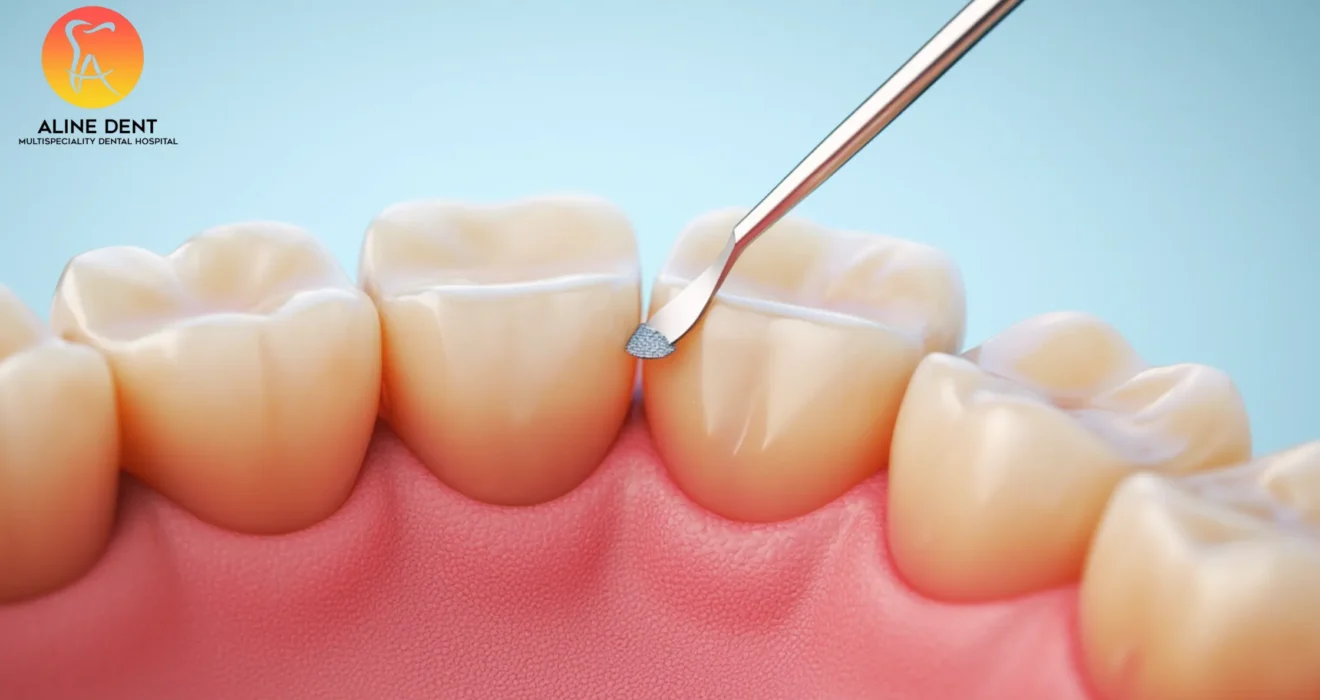
Interproximal reduction is a dental procedure where a very small amount of enamel is gently removed from between two adjacent teeth. This creates just enough space to allow teeth to align properly during orthodontic treatments like braces or clear aligners.
To put it simply, instead of extracting a tooth to fix crowding, dentists use IPR to reshape the sides of teeth slightly, making room for better alignment.
- Only the outer enamel layer is affected
- The amount removed is minimal (usually 0.2–0.5 mm per contact point)
- The procedure is highly controlled and precise
This technique is commonly used in modern orthodontics because it preserves your natural teeth while achieving excellent results.
Why is Interproximal Reduction Done?
Understanding why dentists recommend Interproximal reduction helps remove unnecessary fear around the procedure.
1. To Treat Crowded Teeth
When there isn’t enough space in your jaw, teeth overlap or rotate. IPR creates small spaces that allow teeth to move into proper alignment.
2. To Avoid Tooth Extraction
In many cases, instead of removing a tooth, dentists can use IPR to create space, making treatment less invasive.
3. To Improve Clear Aligner Results
Clear aligners rely on precise tooth movement. IPR helps create the exact spacing needed for aligners to work effectively.
4. To Enhance Smile Aesthetics
IPR can help reshape uneven or bulky teeth, leading to a more symmetrical and balanced smile.
5. To Reduce Black Triangles Between Teeth
Sometimes, after alignment, small gaps (called black triangles) appear near the gums. IPR helps reshape teeth to minimize these gaps.
How Interproximal Reduction Works: Step-by-Step
Knowing what happens during the procedure can make it feel much less intimidating.
Step 1: Detailed Assessment
Your dentist evaluates your teeth using digital scans, X-rays, or models to determine how much space is needed.
Step 2: Marking the Contact Points
The specific areas where enamel needs to be reduced are carefully identified.
Step 3: Enamel Reduction
Using specialized tools like:
- Fine abrasive strips
- Diamond-coated discs
- Precision handpieces
A tiny amount of enamel is removed between the teeth.
Step 4: Smoothing and Polishing
The treated surfaces are polished to ensure they feel smooth and natural.
Step 5: Fluoride Application (if needed)
Fluoride may be applied to strengthen the enamel after the procedure.
The entire process is quick, controlled, and usually completed within minutes.
Is Interproximal Reduction Safe?
This is one of the most common concerns, and rightfully so.
The short answer: Yes, Interproximal reduction is safe when performed by a qualified dental professional.
Why is it considered safe?
- Enamel removal is minimal and within safe limits
- Does not expose sensitive inner layers when done correctly
- Teeth remain strong and functional
- Backed by years of clinical research in orthodontics
Dentists carefully calculate how much enamel can be removed without compromising tooth health.
Does Interproximal Reduction Hurt?
One of the biggest misconceptions about Interproximal reduction is that it is painful.
In reality:
- The procedure is generally painless
- Enamel does not have nerves, so you won’t feel sharp pain
- Some patients may feel slight pressure or vibration
In rare cases of sensitivity, your dentist may use desensitizing agents.
Benefits of Interproximal Reduction
When used correctly, IPR offers several advantages over traditional methods.
Conservative Approach
No need for tooth extraction in many cases.
Faster Orthodontic Treatment
Creates immediate space, helping teeth move more efficiently.
Improved Aesthetic Results
Leads to better alignment and more natural-looking spacing.
Better Oral Hygiene
Properly aligned teeth are easier to clean, reducing plaque buildup.
Long-Term Stability
Helps maintain alignment results and reduces the risk of relapse.
Are There Any Risks or Side Effects?
Like any dental procedure, Interproximal reduction has potential risks, but they are minimal when performed properly.
Possible Concerns:
- Temporary tooth sensitivity
- Slight gum irritation
- Over-reduction (rare, when done by inexperienced practitioners)
This is why choosing an experienced dental clinic is crucial.
Interproximal Reduction for Clear Aligners
In modern orthodontics, Interproximal reduction for clear aligners plays a crucial role in ensuring that treatment progresses smoothly and delivers the expected results. Clear aligners are designed to move teeth in small, highly controlled steps, and for that movement to happen effectively, there must be just the right amount of space between teeth.
This is where Interproximal reduction and clear aligner treatment work hand in hand. By carefully removing a minimal amount of enamel between specific teeth, dentists are able to create the precise spacing required for aligners to guide teeth into their correct positions. Without this step, teeth may feel too tight or crowded, making it difficult for aligners to fit properly or apply the necessary pressure for movement.
Unlike traditional braces, which can sometimes force movement even in limited space, clear aligners depend heavily on accurate planning and spacing. Interproximal reduction ensures that each aligner tray fits snugly and functions as intended, allowing teeth to shift gradually and predictably. This not only improves the efficiency of the treatment but also helps reduce complications such as delayed progress or misalignment.
Another important advantage of Interproximal reduction for clear aligners is that it allows orthodontists to avoid more invasive procedures like tooth extraction in many cases. Instead of removing a tooth to create space, small adjustments are made across multiple teeth, preserving the natural structure while still achieving optimal alignment.
Overall, Interproximal reduction and clear aligner treatment together create a more precise, comfortable, and aesthetically pleasing orthodontic experience. It ensures that aligners work exactly as planned, leading to better-fitting trays, smoother transitions between stages, and more predictable final results.
Aline Dent: Expert Orthodontic Care with Precision Techniques
When it comes to procedures like Interproximal reduction, precision and expertise make all the difference. That’s exactly what you get at the best dental clinic in Thalassery, Aline Dent Multispeciality Dental Hospital in Thalassery.
At Aline Dent, every orthodontic treatment is carefully planned using advanced diagnostic tools. The dental team ensures that procedures like IPR are performed only when necessary and always within safe limits.
Why Choose Aline Dent?
- Experienced orthodontists trained in modern techniques
- Advanced imaging and digital planning tools
- Patient-focused approach with clear communication
- Safe and precise execution of procedures like IPR
- Comprehensive care from consultation to final results
Whether you’re considering braces or clear aligners, Aline Dent ensures your treatment is both effective and comfortable.
Interproximal Reduction vs Tooth Extraction
Many patients wonder which option is better.
Interproximal Reduction
- Minimally invasive
- Preserves natural teeth
- Ideal for mild to moderate crowding
Tooth Extraction
- Used in severe crowding cases
- Creates significant space
- More invasive
Dentists choose the method based on your specific dental condition.
Aftercare Tips Following Interproximal Reduction
Taking care of your teeth after IPR helps maintain results and prevent sensitivity.
- Maintain good oral hygiene (brushing and flossing)
- Use fluoride toothpaste
- Avoid very hard or sticky foods immediately after
- Follow your dentist’s instructions carefully
- Attend regular dental check-ups
Proper care ensures long-term success.
Final Thoughts
So, what should you really take away about Interproximal reduction?
It’s a modern, safe, and effective technique that helps create space for better tooth alignment — without the need for extractions in many cases. When performed by skilled professionals, it enhances both function and aesthetics while preserving your natural teeth.
If you’re planning orthodontic treatment, understanding IPR can help you feel more confident and informed about the process.
FAQs
What is Interproximal reduction in dentistry?
Interproximal reduction is a procedure where a small amount of enamel is removed between teeth to create space for alignment.
Is Interproximal reduction safe for teeth?
Yes, it is safe when performed by a qualified dentist within recommended limits.
Does Interproximal reduction hurt?
No, the procedure is usually painless since enamel does not contain nerves.
How much enamel is removed during IPR?
Typically, only 0.2–0.5 mm of enamel is removed per contact point.
Is IPR necessary for clear aligners?
In many cases, yes. It helps create the space needed for effective tooth movement.
Can Interproximal reduction damage teeth?
Not when done correctly. Dentists ensure enamel removal stays within safe limits to protect tooth strength.